№ 25 of 100
Orange-bellied Parrot
Neophema chrysogaster
One of only three migratory parrots on Earth — at its lowest, just 17 wild birds returned from migration.
- Range
- Australia
- Region
- Oceania
- Habitat
- Breeds in Tasmanian button-grass moorland; winters on mainland salt marshes
Field notes
- Weight
- ≈45 g
- Size
- ≈20 cm (length)
- Lifespan
- up to ~9 years (wild)
- Diet
- Herbivore
- Family
- Psittaculidae
- Order
- Psittaciformes
The story
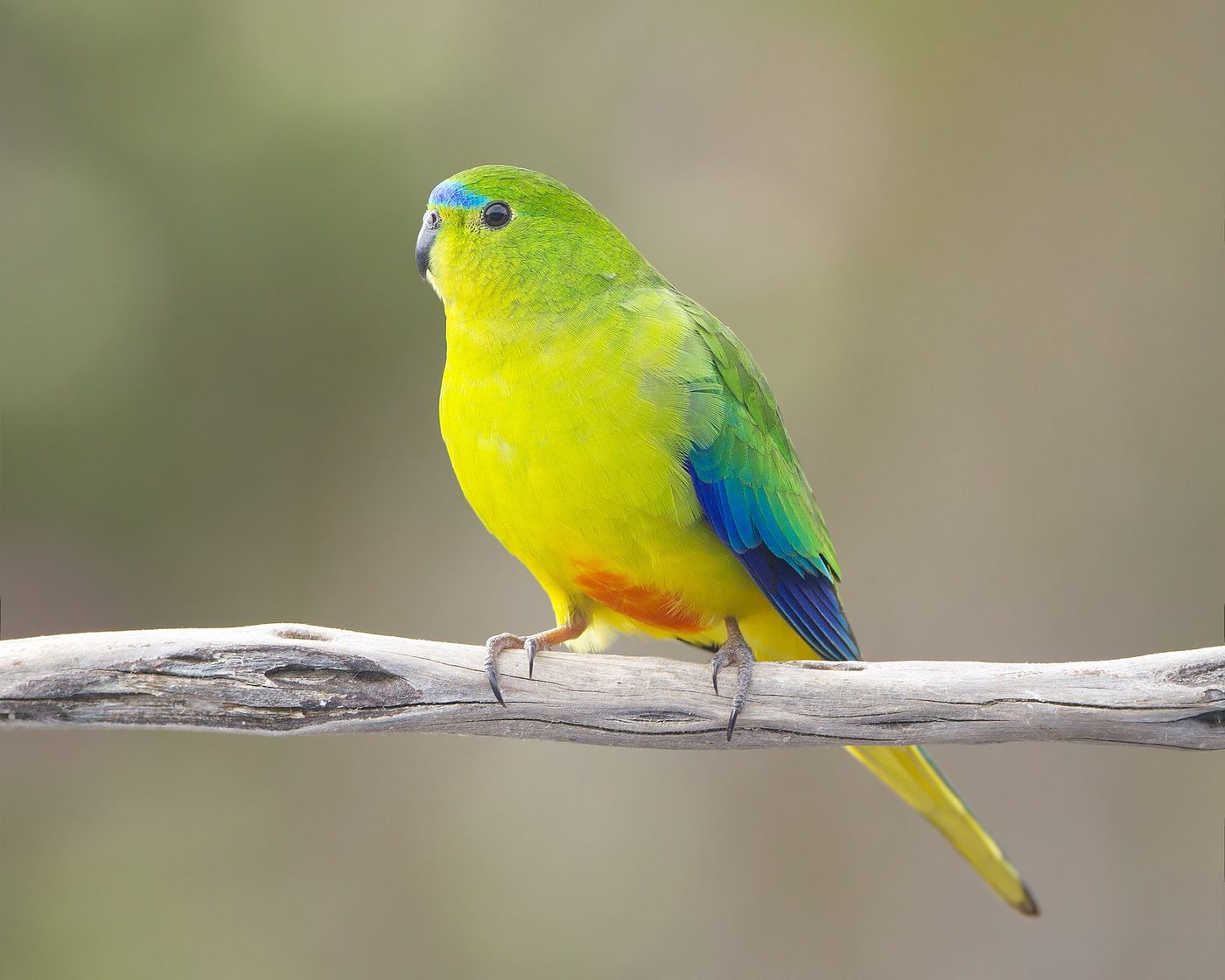
Each spring this small grass parrot crosses the wild Bass Strait to breed in Tasmania's far southwest. The wild flock collapsed to 17 birds in 2016; intensive captive releases, nest protection and ranching of young birds have since pushed annual returns to record highs.
What's killing them
- Migration mortality across Bass Strait
- Loss of winter salt-marsh habitat
- Tiny gene pool
- Disease
Who's fighting for them
 BirdLife InternationalBirdLife International Donate
 Australian Wildlife ConservancyAustralian Wildlife Conservancy Donate
 AZA SAFEAssociation of Zoos & Aquariums — SAFE Program Donate
Logos are the property of their respective organisations and link to their official sites.
Quick answers
How many Orange-bellied Parrot are left in the world?
Approximately ~100 wild (post-breeding). The Orange-bellied Parrot (Neophema chrysogaster) is listed as Critically Endangered on the IUCN Red List, and their population trend is recovering. Figures are estimates compiled from the IUCN Red List and conservation organisations.
Where does the Orange-bellied Parrot live?
The Orange-bellied Parrot is found in Australia (Oceania). Their habitat: Breeds in Tasmanian button-grass moorland; winters on mainland salt marshes.
Why is the Orange-bellied Parrot endangered?
The main threats to the Orange-bellied Parrot are: Migration mortality across Bass Strait; Loss of winter salt-marsh habitat; Tiny gene pool; Disease.
Who is working to save the Orange-bellied Parrot?
Organisations working on Orange-bellied Parrot conservation include BirdLife International; Australian Wildlife Conservancy; Association of Zoos & Aquariums — SAFE Program.
Where they live
Melaleuca, Southwest National Park, Tasmania · Australia · Oceania — Approximate range. Click the map to zoom.