№ 30 of 100
Great Indian Bustard
Ardeotis nigriceps
One of the heaviest flying birds on Earth, brought down by the power lines crossing their last desert grasslands.
- Range
- IndiaPakistan
- Region
- Asia
- Habitat
- Semi-arid grasslands and scrub, chiefly the Thar Desert of Rajasthan
Field notes
- Weight
- 8–14.5 kg (males); 2.5–6.75 kg (females)
- Size
- 1.0–1.07 m (males), 0.76–0.83 m (females) (body length)
- Diet
- Omnivore
- Family
- Otididae
- Order
- Otidiformes
The story
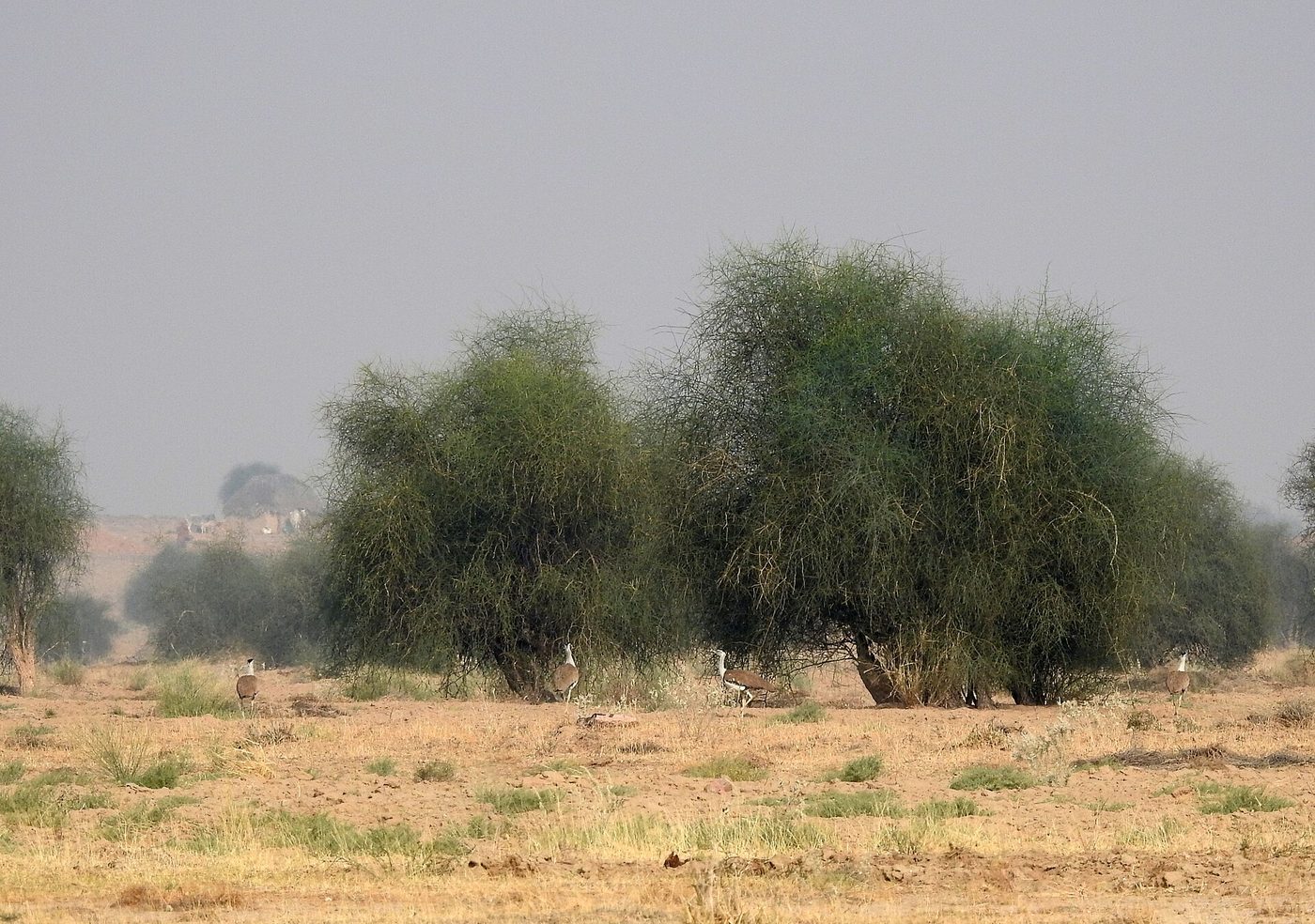
Standing a metre tall, the great Indian bustard has poor frontal vision and strikes wires they cannot see in time. Around 150 birds remain, mostly in Rajasthan, where courts have ordered cables buried, and a captive-breeding centre in Jaisalmer hatched its first chicks toward a future release flock.
What's killing them
- Collisions with power lines
- Grassland loss to farming and solar parks
- Slow breeding — one egg per year
Who's fighting for them
 BirdLife InternationalBirdLife International Donate
 WWFWorld Wide Fund for Nature Donate
 IUCN Red ListInternational Union for Conservation of Nature — Species Survival Commission Donate
Logos are the property of their respective organisations and link to their official sites.
Quick answers
How many Great Indian Bustard are left in the world?
Approximately ~150. The Great Indian Bustard (Ardeotis nigriceps) is listed as Critically Endangered on the IUCN Red List, and their population trend is declining. Figures are estimates compiled from the IUCN Red List and conservation organisations.
Where does the Great Indian Bustard live?
The Great Indian Bustard is found in India, Pakistan (Asia). Their habitat: Semi-arid grasslands and scrub, chiefly the Thar Desert of Rajasthan.
Why is the Great Indian Bustard endangered?
The main threats to the Great Indian Bustard are: Collisions with power lines; Grassland loss to farming and solar parks; Slow breeding — one egg per year.
Who is working to save the Great Indian Bustard?
Organisations working on Great Indian Bustard conservation include BirdLife International; World Wide Fund for Nature; International Union for Conservation of Nature — Species Survival Commission.
Where they live
Desert National Park, Rajasthan, India · India · Pakistan · Asia — Approximate range. Click the map to zoom.