№ 24 of 100
Saola
Pseudoryx nghetinhensis
The 'Asian unicorn', discovered in 1992 and last photographed in 2013, may be the rarest large animal on Earth.
- Range
- VietnamLaos
- Region
- Asia
- Habitat
- Wet evergreen forest of the Annamite Mountains
Field notes
- Weight
- 80–100 kg
- Size
- ≈1.5 m (head-and-body length)
- Diet
- Herbivore
- Family
- Bovidae
- Order
- Artiodactyla
The story
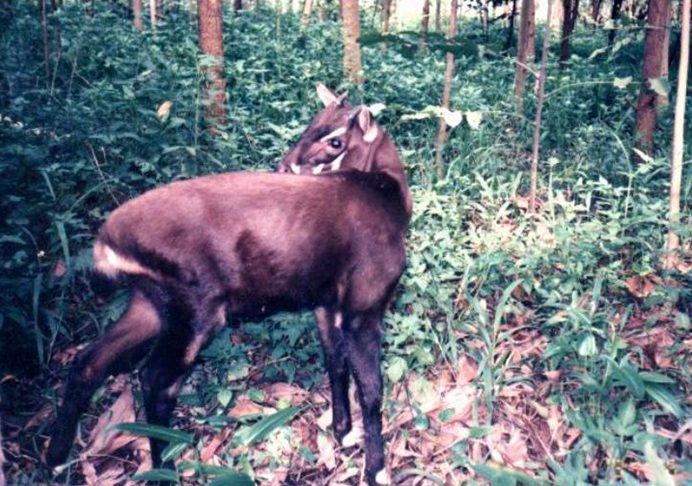
The saola is so elusive that no biologist has ever seen one in the wild; everything known comes from villagers, snapshots and camera traps. Teams in Vietnam and Laos have removed hundreds of thousands of snares from the Annamites and are using eDNA to find survivors for a last-chance conservation breeding programme.
What's killing them
- Industrial-scale wire snaring
- Habitat fragmentation
- Never bred in captivity
Who's fighting for them
 WWFWorld Wide Fund for Nature Donate
 Re:wildRe:wild — Global Wildlife Conservation Donate
 IUCN Red ListInternational Union for Conservation of Nature — Species Survival Commission Donate
Logos are the property of their respective organisations and link to their official sites.
Quick answers
How many Saola are left in the world?
Approximately Unknown — feared under 100. The Saola (Pseudoryx nghetinhensis) is listed as Critically Endangered on the IUCN Red List, and their population trend is declining. Figures are estimates compiled from the IUCN Red List and conservation organisations.
Where does the Saola live?
The Saola is found in Vietnam, Laos (Asia). Their habitat: Wet evergreen forest of the Annamite Mountains.
Why is the Saola endangered?
The main threats to the Saola are: Industrial-scale wire snaring; Habitat fragmentation; Never bred in captivity.
Who is working to save the Saola?
Organisations working on Saola conservation include World Wide Fund for Nature; Re:wild — Global Wildlife Conservation; International Union for Conservation of Nature — Species Survival Commission.
Where they live
Vũ Quang National Park, Hà Tĩnh, Vietnam · Vietnam · Laos · Asia — Approximate range. Click the map to zoom.