№ 54 of 100
Whooping Crane
Grus americana
North America's tallest bird came back from 15 individuals — taught new migration routes by pilots in ultralight aircraft.
- Range
- United StatesCanada
- Region
- North America
- Habitat
- Breeds in Wood Buffalo's boreal wetlands; winters on the Texas Gulf Coast
Field notes
- Weight
- 4.5–8.5 kg
- Size
- 1.24–1.6 m (height)
- Lifespan
- 22–30+ years (wild)
- Diet
- Omnivore
- Family
- Gruidae
- Order
- Gruiformes
The story
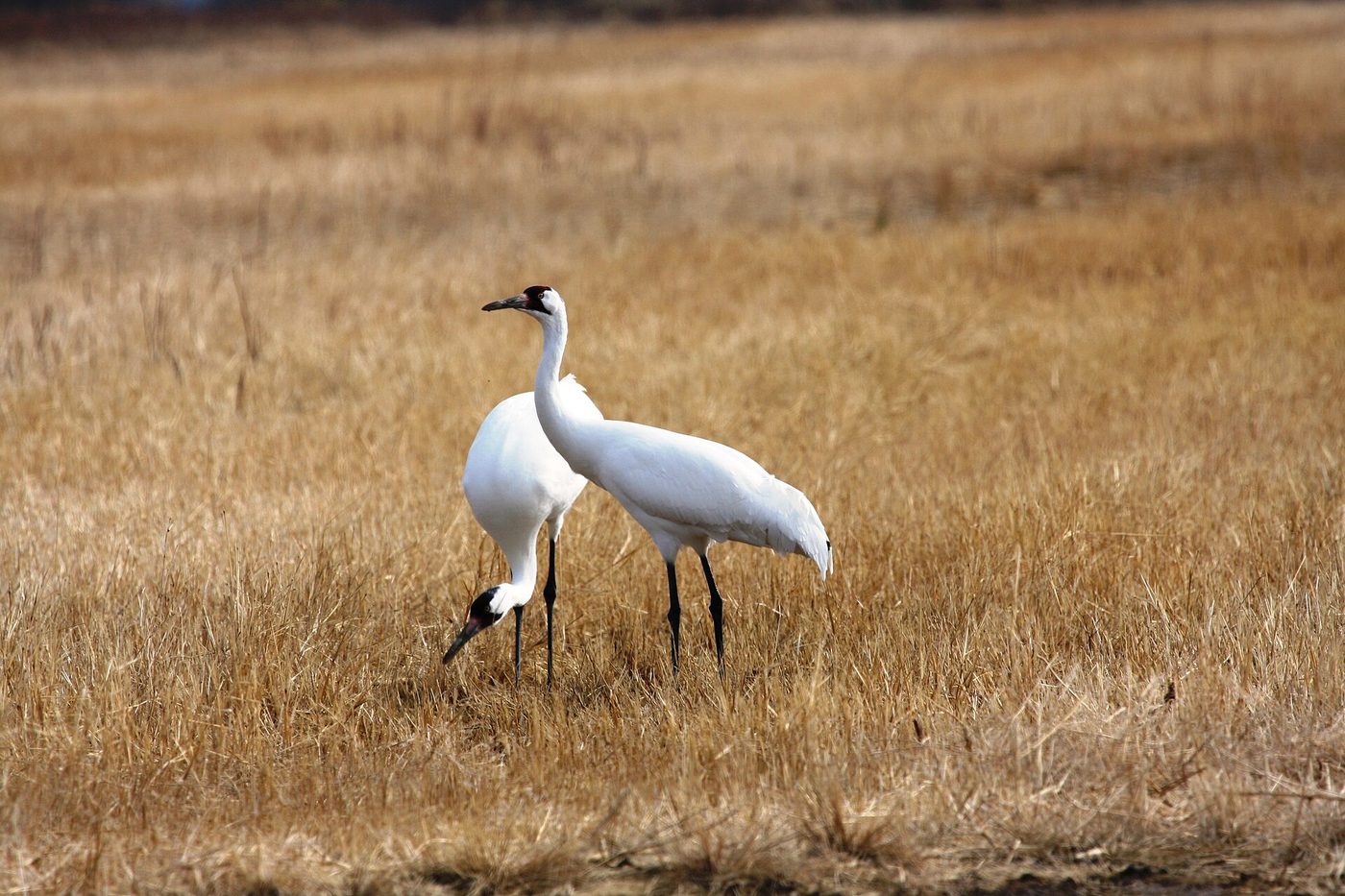
The whooping crane's recovery from 15 birds in 1941 to over 500 today spans eight decades of audacity: captive flocks, costume-rearing chicks, and ultralight-led migrations. The single wild flock that migrates 4,000 km between Canada and Texas remains the species' beating heart.
What's killing them
- Power-line collisions
- Coastal habitat loss and drought
- Illegal shooting
- Single main migratory flock
Who's fighting for them
 International Crane FoundationInternational Crane Foundation Donate
 U.S. Fish & WildlifeUnited States Fish & Wildlife Service Donate
 AZA SAFEAssociation of Zoos & Aquariums — SAFE Program Donate
Logos are the property of their respective organisations and link to their official sites.
Quick answers
How many Whooping Crane are left in the world?
Approximately ~540 wild. The Whooping Crane (Grus americana) is listed as Endangered on the IUCN Red List, and their population trend is recovering. Figures are estimates compiled from the IUCN Red List and conservation organisations.
Where does the Whooping Crane live?
The Whooping Crane is found in United States, Canada (North America). Their habitat: Breeds in Wood Buffalo's boreal wetlands; winters on the Texas Gulf Coast.
Why is the Whooping Crane endangered?
The main threats to the Whooping Crane are: Power-line collisions; Coastal habitat loss and drought; Illegal shooting; Single main migratory flock.
Who is working to save the Whooping Crane?
Organisations working on Whooping Crane conservation include International Crane Foundation; United States Fish & Wildlife Service; Association of Zoos & Aquariums — SAFE Program.
Where they live
Aransas National Wildlife Refuge, Texas · United States · Canada · North America — Approximate range. Click the map to zoom.