№ 14 of 100
Mountain Chicken Frog
Leptodactylus fallax
One of the world's largest frogs lost 99% of their population to disease in under two decades.
- Range
- DominicaMontserrat
- Region
- Caribbean
- Habitat
- Moist lowland forest and ravines of two Caribbean islands
Field notes
- Weight
- up to 1 kg
- Size
- 17–18 cm typical, up to 22 cm (snout–vent length)
- Lifespan
- ≈12 years
- Diet
- Carnivore
- Family
- Leptodactylidae
- Order
- Anura
The story
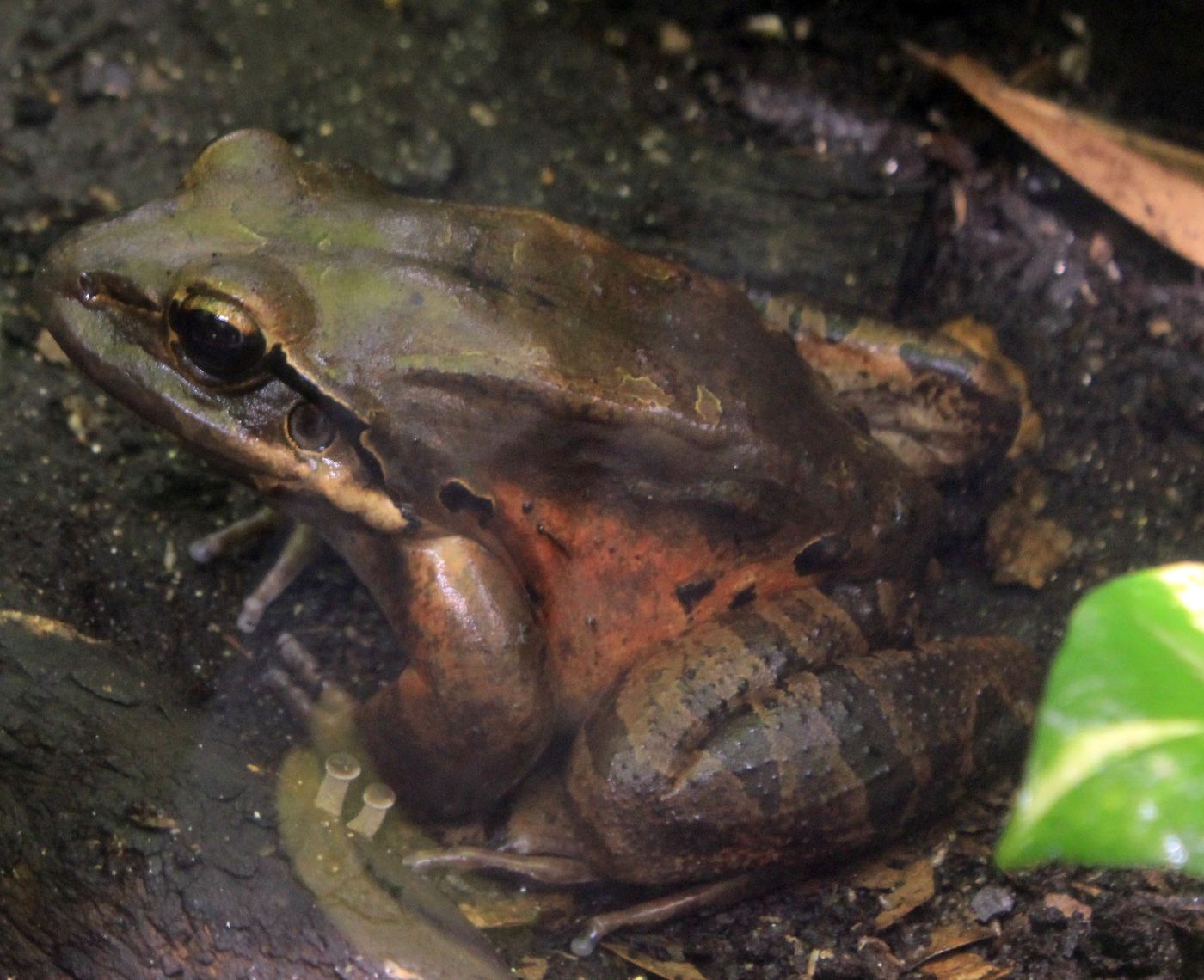
Named for their size and their former place in island cooking pots, the mountain chicken was devastated when chytrid fungus reached the Caribbean in 2002. Heated 'frog saunas', captive breeding in European zoos, and trial releases on Montserrat are now testing whether the species can live with the fungus that nearly erased them.
What's killing them
- Chytrid fungus
- Volcanic eruptions on Montserrat
- Historic hunting for food
- Invasive predators
Who's fighting for them
 DurrellDurrell Wildlife Conservation Trust Donate
 ZSL EDGEZoological Society of London — EDGE of Existence Donate
 Amphibian ArkAmphibian Ark Donate
Logos are the property of their respective organisations and link to their official sites.
Quick answers
How many Mountain Chicken Frog are left in the world?
Approximately ~30 wild. The Mountain Chicken Frog (Leptodactylus fallax) is listed as Critically Endangered on the IUCN Red List, and their population trend is declining. Figures are estimates compiled from the IUCN Red List and conservation organisations.
Where does the Mountain Chicken Frog live?
The Mountain Chicken Frog is found in Dominica, Montserrat (Caribbean). Their habitat: Moist lowland forest and ravines of two Caribbean islands.
Why is the Mountain Chicken Frog endangered?
The main threats to the Mountain Chicken Frog are: Chytrid fungus; Volcanic eruptions on Montserrat; Historic hunting for food; Invasive predators.
Who is working to save the Mountain Chicken Frog?
Organisations working on Mountain Chicken Frog conservation include Durrell Wildlife Conservation Trust; Zoological Society of London — EDGE of Existence; Amphibian Ark.
Where they live
Morne Trois Pitons National Park, Dominica · Dominica · Montserrat · Caribbean — Approximate range. Click the map to zoom.