№ 13 of 100
Lord Howe Island Stick Insect
Dryococelus australis
The 'land lobster' presumed extinct for 80 years was found alive on the world's tallest sea stack — under one bush.
- Range
- Australia
- Region
- Oceania
- Habitat
- A single melaleuca bush on Ball's Pyramid, a sea stack off Lord Howe Island
Field notes
- Weight
- ≈25 g
- Size
- up to 20 cm (length)
- Diet
- Folivore
- Family
- Phasmatidae
- Order
- Phasmatodea
The story
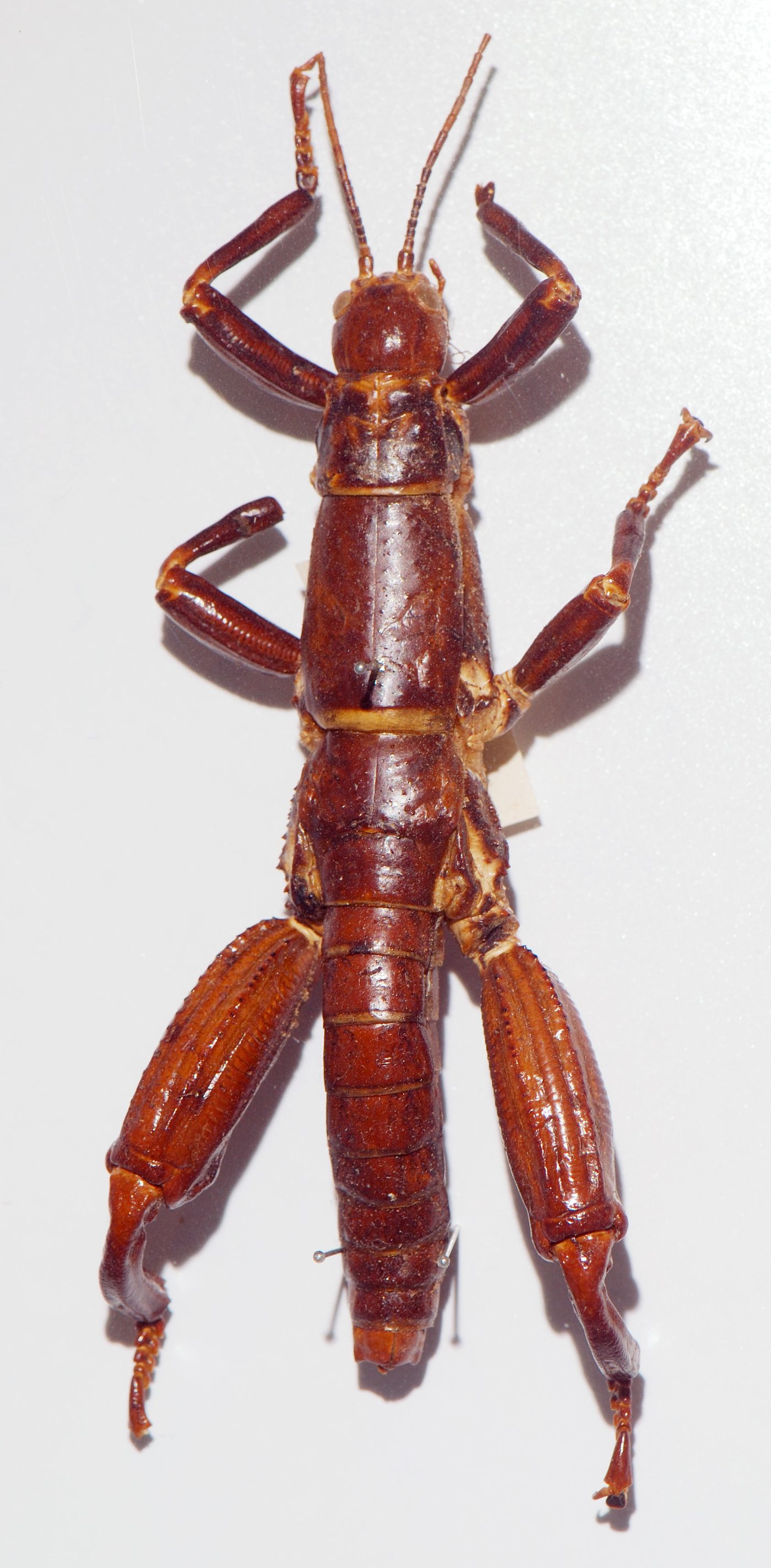
When rats from a shipwreck exterminated these hand-sized insects on Lord Howe Island, the species was written off. In 2001, climbers found about 24 survivors on a single shrub clinging to Ball's Pyramid. Zoos have since bred tens of thousands, and with rats now eradicated from Lord Howe, the land lobster is poised to come home.
What's killing them
- Black rats (introduced 1918, now eradicated on Lord Howe)
- Single-site vulnerability
- Inbreeding
Who's fighting for them
 AZA SAFEAssociation of Zoos & Aquariums — SAFE Program Donate
 Re:wildRe:wild — Global Wildlife Conservation Donate
 IUCN Red ListInternational Union for Conservation of Nature — Species Survival Commission Donate
Logos are the property of their respective organisations and link to their official sites.
Quick answers
How many Lord Howe Island Stick Insect are left in the world?
Approximately ~25–35 wild · thousands captive. The Lord Howe Island Stick Insect (Dryococelus australis) is listed as Critically Endangered on the IUCN Red List, and their population trend is recovering. Figures are estimates compiled from the IUCN Red List and conservation organisations.
Where does the Lord Howe Island Stick Insect live?
The Lord Howe Island Stick Insect is found in Australia (Oceania). Their habitat: A single melaleuca bush on Ball's Pyramid, a sea stack off Lord Howe Island.
Why is the Lord Howe Island Stick Insect endangered?
The main threats to the Lord Howe Island Stick Insect are: Black rats (introduced 1918, now eradicated on Lord Howe); Single-site vulnerability; Inbreeding.
Who is working to save the Lord Howe Island Stick Insect?
Organisations working on Lord Howe Island Stick Insect conservation include Association of Zoos & Aquariums — SAFE Program; Re:wild — Global Wildlife Conservation; International Union for Conservation of Nature — Species Survival Commission.
Where they live
Ball's Pyramid, Lord Howe Island Group, Australia · Australia · Oceania — Approximate range. Click the map to zoom.