№ 08 of 100
Wyoming Toad
Anaxyrus baxteri
One of North America's rarest amphibians, surviving only through captive breeding and yearly releases onto the Wyoming plains.
- Range
- United States
- Region
- North America
- Habitat
- Floodplain ponds and wet meadows of the Laramie Basin, Wyoming
Field notes
- Size
- up to 5.6 cm (length)
- Lifespan
- 1–3 years
- Diet
- Insectivore
- Family
- Bufonidae
- Order
- Anura
The story
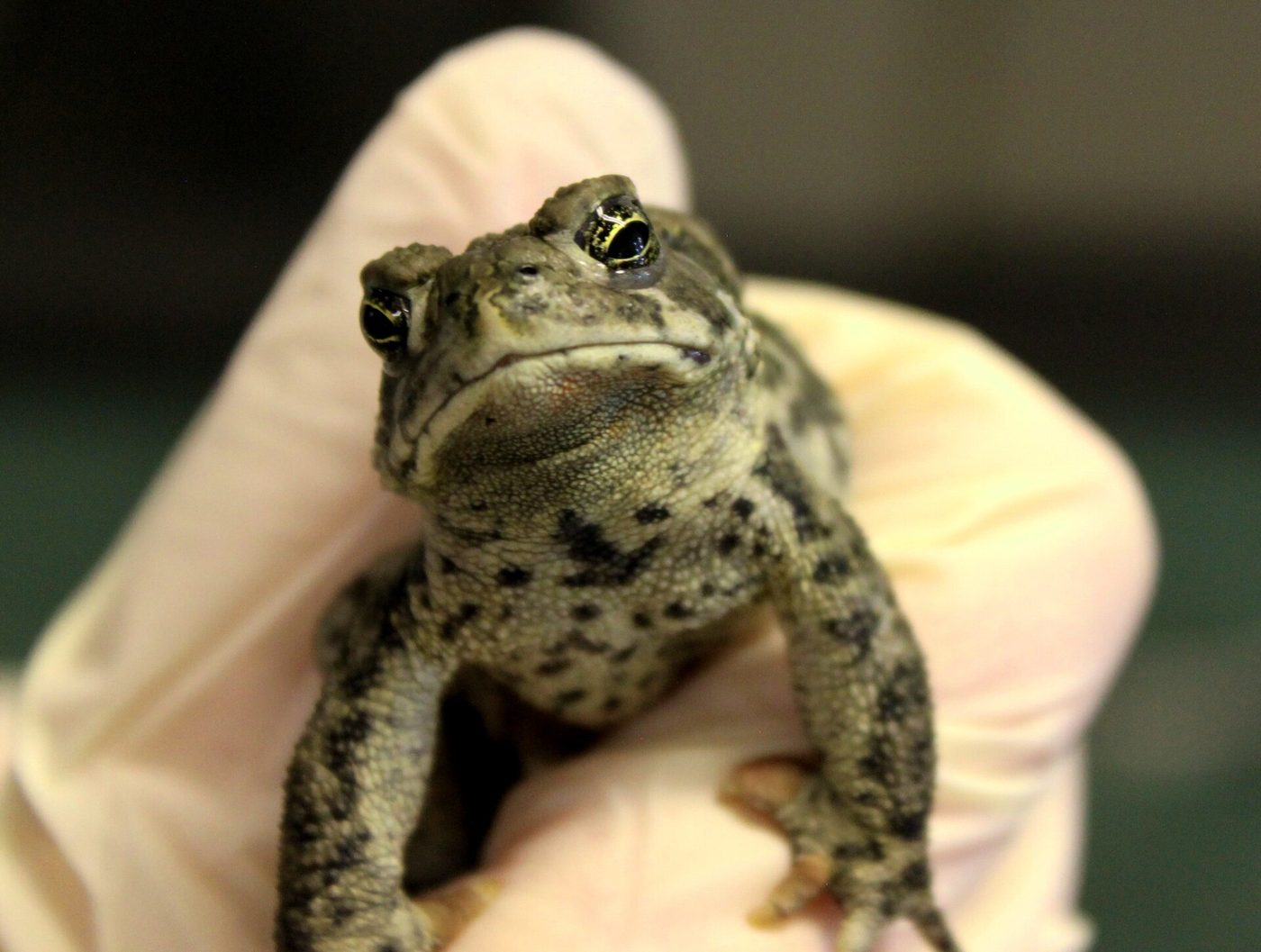
The Wyoming toad collapsed in the 1970s as pesticides, habitat change and disease swept the Laramie Basin. Declared extinct in the wild, they persist because zoos and federal hatcheries release thousands of tadpoles and toadlets each summer — and in recent years, wild-hatched toads have started to appear again.
What's killing them
- Chytrid fungus
- Pesticides
- Habitat alteration and drought
Who's fighting for them
 U.S. Fish & WildlifeUnited States Fish & Wildlife Service Donate
 Amphibian ArkAmphibian Ark Donate
 AZA SAFEAssociation of Zoos & Aquariums — SAFE Program Donate
Logos are the property of their respective organisations and link to their official sites.
Quick answers
How many Wyoming Toad are left in the world?
Approximately Extinct in the wild · reintroductions ongoing. The Wyoming Toad (Anaxyrus baxteri) is listed as Extinct in the Wild on the IUCN Red List, and their population trend is recovering. Figures are estimates compiled from the IUCN Red List and conservation organisations.
Where does the Wyoming Toad live?
The Wyoming Toad is found in United States (North America). Their habitat: Floodplain ponds and wet meadows of the Laramie Basin, Wyoming.
Why is the Wyoming Toad endangered?
The main threats to the Wyoming Toad are: Chytrid fungus; Pesticides; Habitat alteration and drought.
Who is working to save the Wyoming Toad?
Organisations working on Wyoming Toad conservation include United States Fish & Wildlife Service; Amphibian Ark; Association of Zoos & Aquariums — SAFE Program.
Where they live
Mortenson Lake National Wildlife Refuge, Wyoming · United States · North America — Approximate range. Click the map to zoom.