№ 15 of 100
Sumatran Rhinoceros
Dicerorhinus sumatrensis
The smallest and hairiest rhino — a living relic of the woolly rhino lineage — now numbers fewer than 50 animals.
- Range
- Indonesia
- Region
- Asia
- Habitat
- Dense lowland and montane rainforest of Sumatra and Indonesian Borneo
Field notes
- Weight
- 700–800 kg (up to 1,000 kg)
- Size
- 2.36–3.18 m (length)
- Lifespan
- 30–45 years (wild)
- Diet
- Folivore
- Family
- Rhinocerotidae
- Order
- Perissodactyla
The story
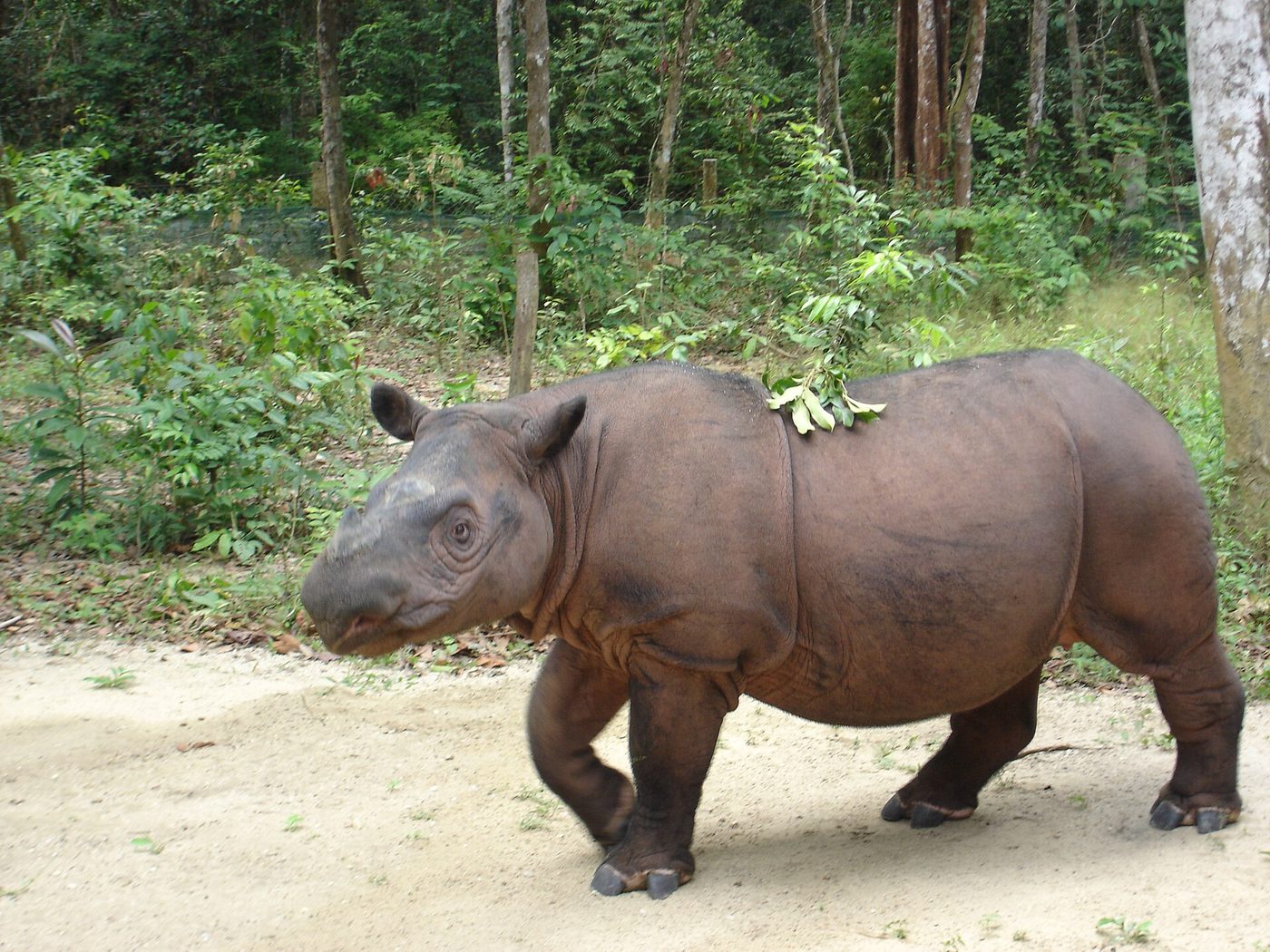
Scattered in pockets of Sumatran jungle too far apart to find each other, the species' greatest threat is now loneliness: isolated females lose fertility without regular breeding. A national sanctuary programme is gathering the last rhinos into protected breeding facilities, where five calves have been born since 2012.
What's killing them
- Tiny, isolated populations that rarely meet to breed
- Historic poaching
- Habitat fragmentation
Who's fighting for them
 International Rhino FoundationInternational Rhino Foundation Donate
 WWFWorld Wide Fund for Nature Donate
 Save the RhinoSave the Rhino International Donate
Logos are the property of their respective organisations and link to their official sites.
Quick answers
How many Sumatran Rhinoceros are left in the world?
Approximately ~34–47. The Sumatran Rhinoceros (Dicerorhinus sumatrensis) is listed as Critically Endangered on the IUCN Red List, and their population trend is declining. Figures are estimates compiled from the IUCN Red List and conservation organisations.
Where does the Sumatran Rhinoceros live?
The Sumatran Rhinoceros is found in Indonesia (Asia). Their habitat: Dense lowland and montane rainforest of Sumatra and Indonesian Borneo.
Why is the Sumatran Rhinoceros endangered?
The main threats to the Sumatran Rhinoceros are: Tiny, isolated populations that rarely meet to breed; Historic poaching; Habitat fragmentation.
Who is working to save the Sumatran Rhinoceros?
Organisations working on Sumatran Rhinoceros conservation include International Rhino Foundation; World Wide Fund for Nature; Save the Rhino International.
Where they live
Way Kambas National Park, Sumatra · Indonesia · Asia — Approximate range. Click the map to zoom.