№ 80 of 100
Kemp's Ridley Sea Turtle
Lepidochelys kempii
The world's smallest and most endangered sea turtle storms ashore in daytime mass nestings called 'arribadas' — once 40,000 strong in a single day.
- Range
- MexicoUnited States
- Region
- North America
- Habitat
- Gulf of Mexico waters; nests almost entirely on one Mexican beach, Rancho Nuevo
Field notes
- Weight
- 36–50 kg
- Size
- 58–75 cm (carapace length)
- Lifespan
- up to 50 years
- Diet
- Carnivore
- Family
- Cheloniidae
- Order
- Testudines
The story
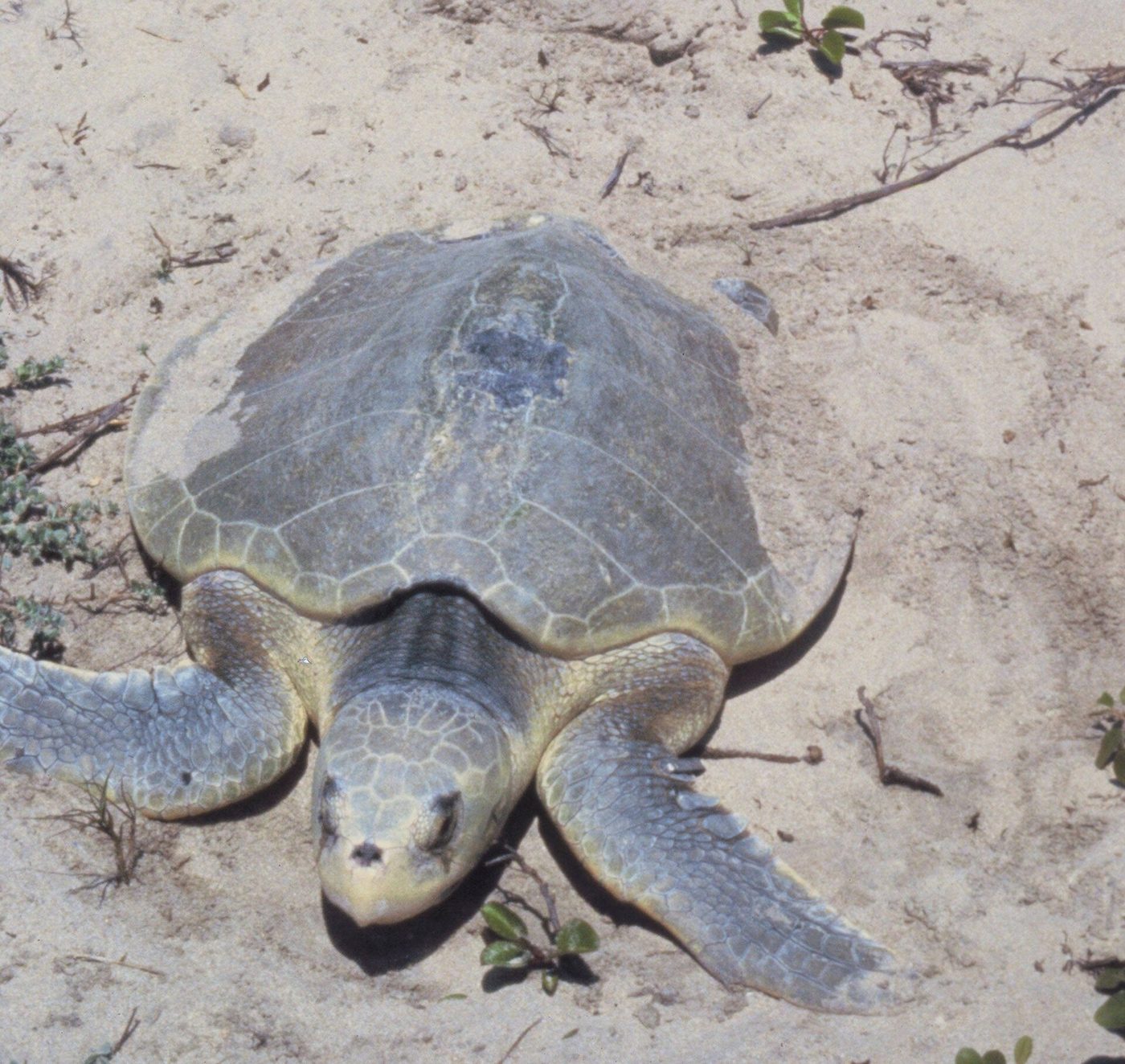
A 1947 film shows an estimated 40,000 Kemp's ridleys nesting at Rancho Nuevo in one day; by 1985 fewer than 250 females nested all year. Fifty years of binational beach protection and turtle-excluder devices in trawls rebuilt nesting to thousands — recovery that stalled after the Deepwater Horizon spill.
What's killing them
- Shrimp-trawl bycatch
- Oil spills in core habitat
- Cold-stunning events
- Single main nesting beach
Who's fighting for them
 NOAA FisheriesNOAA Fisheries — Protected Resources Donate
 U.S. Fish & WildlifeUnited States Fish & Wildlife Service Donate
 WWFWorld Wide Fund for Nature Donate
Logos are the property of their respective organisations and link to their official sites.
Quick answers
How many Kemp's Ridley Sea Turtle are left in the world?
Approximately ~7,000–9,000 nesting females. The Kemp's Ridley Sea Turtle (Lepidochelys kempii) is listed as Critically Endangered on the IUCN Red List, and their population trend is stable. Figures are estimates compiled from the IUCN Red List and conservation organisations.
Where does the Kemp's Ridley Sea Turtle live?
The Kemp's Ridley Sea Turtle is found in Mexico, United States (North America). Their habitat: Gulf of Mexico waters; nests almost entirely on one Mexican beach, Rancho Nuevo.
Why is the Kemp's Ridley Sea Turtle endangered?
The main threats to the Kemp's Ridley Sea Turtle are: Shrimp-trawl bycatch; Oil spills in core habitat; Cold-stunning events; Single main nesting beach.
Who is working to save the Kemp's Ridley Sea Turtle?
Organisations working on Kemp's Ridley Sea Turtle conservation include NOAA Fisheries — Protected Resources; United States Fish & Wildlife Service; World Wide Fund for Nature.
Where they live
Rancho Nuevo, Tamaulipas, Mexico · Mexico · United States · North America — Approximate range. Click the map to zoom.