№ 71 of 100
Chinese Crocodile Lizard
Shinisaurus crocodilurus
A living fossil — the only living member of an ancient family — that naps motionless on branches above forest pools for hours.
- Range
- ChinaVietnam
- Region
- Asia
- Habitat
- Slow forest streams and pools in subtropical hill forest
Field notes
- Size
- 40–46 cm (total length)
- Diet
- Carnivore
- Family
- Shinisauridae
- Order
- Squamata
The story
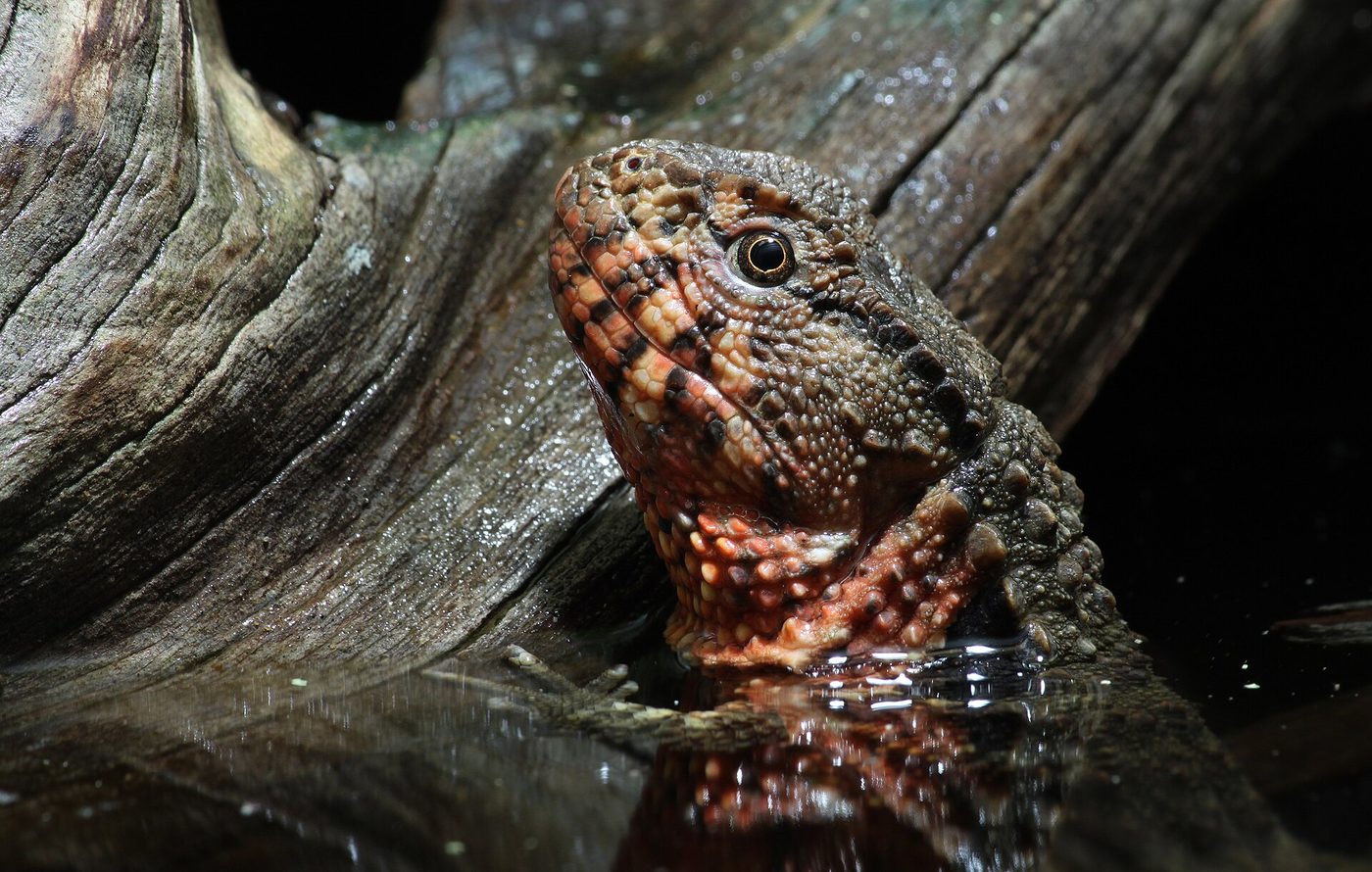
Locals call them the 'sleeping snake' for their motionless basking trances. The only living species of an ancient reptile family, they are poached for the pet trade from tiny stream fragments in southern China and northern Vietnam, where breeding stations and trade enforcement fight to hold the line.
What's killing them
- Illegal collection for pet trade and traditional medicine
- Streamside forest clearance
- Pollution and dams on small streams
Who's fighting for them
 ZSL EDGEZoological Society of London — EDGE of Existence Donate
 Fauna & FloraFauna & Flora International Donate
 TRAFFICTRAFFIC — Wildlife Trade Monitoring Network Donate
Logos are the property of their respective organisations and link to their official sites.
Quick answers
How many Chinese Crocodile Lizard are left in the world?
Approximately ~1,200 wild. The Chinese Crocodile Lizard (Shinisaurus crocodilurus) is listed as Endangered on the IUCN Red List, and their population trend is declining. Figures are estimates compiled from the IUCN Red List and conservation organisations.
Where does the Chinese Crocodile Lizard live?
The Chinese Crocodile Lizard is found in China, Vietnam (Asia). Their habitat: Slow forest streams and pools in subtropical hill forest.
Why is the Chinese Crocodile Lizard endangered?
The main threats to the Chinese Crocodile Lizard are: Illegal collection for pet trade and traditional medicine; Streamside forest clearance; Pollution and dams on small streams.
Who is working to save the Chinese Crocodile Lizard?
Organisations working on Chinese Crocodile Lizard conservation include Zoological Society of London — EDGE of Existence; Fauna & Flora International; TRAFFIC — Wildlife Trade Monitoring Network.
Where they live
Daguishan National Nature Reserve, Guangxi, China · China · Vietnam · Asia — Approximate range. Click the map to zoom.