№ 98 of 100
Black-and-white Ruffed Lemur
Varecia variegata
The world's largest pollinator of their size class — they spread pollen face-first from the traveller's tree — is losing the tall forest they cannot live without.
- Range
- Madagascar
- Region
- Africa
- Habitat
- Tall eastern rainforest of Madagascar — strictly canopy-dwelling
Field notes
- Weight
- 3.1–4.1 kg
- Size
- 100–120 cm (length, incl. tail)
- Lifespan
- up to 36 years (captivity)
- Diet
- Frugivore
- Family
- Lemuridae
- Order
- Primates
The story
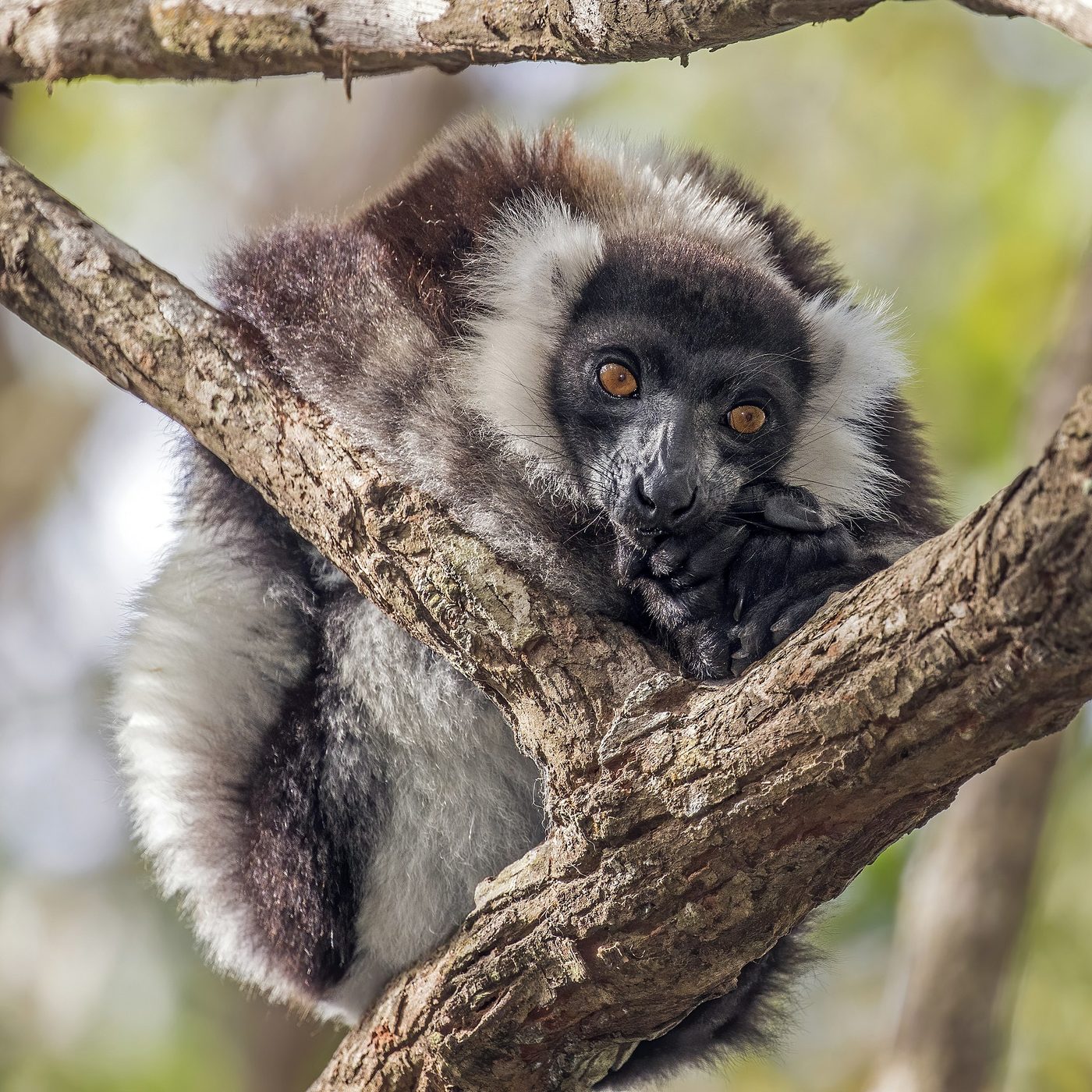
Ruffed lemurs need mature rainforest with giant fruiting trees, making them the first to vanish when forests are logged — and key seed dispersers whose loss echoes for centuries. Reforestation corridors and community reserves around Ranomafana and Masoala anchor their future.
What's killing them
- Slash-and-burn deforestation
- Bushmeat hunting
- Cyclones intensified by climate change
- Dependence on big old fruit trees
Who's fighting for them
 DurrellDurrell Wildlife Conservation Trust Donate
 Conservation InternationalConservation International Donate
 Re:wildRe:wild — Global Wildlife Conservation Donate
Logos are the property of their respective organisations and link to their official sites.
Quick answers
How many Black-and-white Ruffed Lemur are left in the world?
Approximately Unknown — declined >80%. The Black-and-white Ruffed Lemur (Varecia variegata) is listed as Critically Endangered on the IUCN Red List, and their population trend is declining. Figures are estimates compiled from the IUCN Red List and conservation organisations.
Where does the Black-and-white Ruffed Lemur live?
The Black-and-white Ruffed Lemur is found in Madagascar (Africa). Their habitat: Tall eastern rainforest of Madagascar — strictly canopy-dwelling.
Why is the Black-and-white Ruffed Lemur endangered?
The main threats to the Black-and-white Ruffed Lemur are: Slash-and-burn deforestation; Bushmeat hunting; Cyclones intensified by climate change; Dependence on big old fruit trees.
Who is working to save the Black-and-white Ruffed Lemur?
Organisations working on Black-and-white Ruffed Lemur conservation include Durrell Wildlife Conservation Trust; Conservation International; Re:wild — Global Wildlife Conservation.
Where they live
Nosy Mangabe, Antongil Bay, Madagascar · Madagascar · Africa — Approximate range. Click the map to zoom.