№ 99 of 100
Rusty Patched Bumble Bee
Bombus affinis
Twenty-five years ago they buzzed through backyards from Maine to Minnesota; they have vanished from nearly nine-tenths of their range.
- Range
- United StatesCanada
- Region
- North America
- Habitat
- Prairie, meadows and gardens of the American Midwest and Northeast
Field notes
- Size
- 20–22 mm (queen body length)
- Lifespan
- colony ~4–5 months; queens ≈77 days
- Diet
- Nectarivore
- Family
- Apidae
- Order
- Hymenoptera
The story
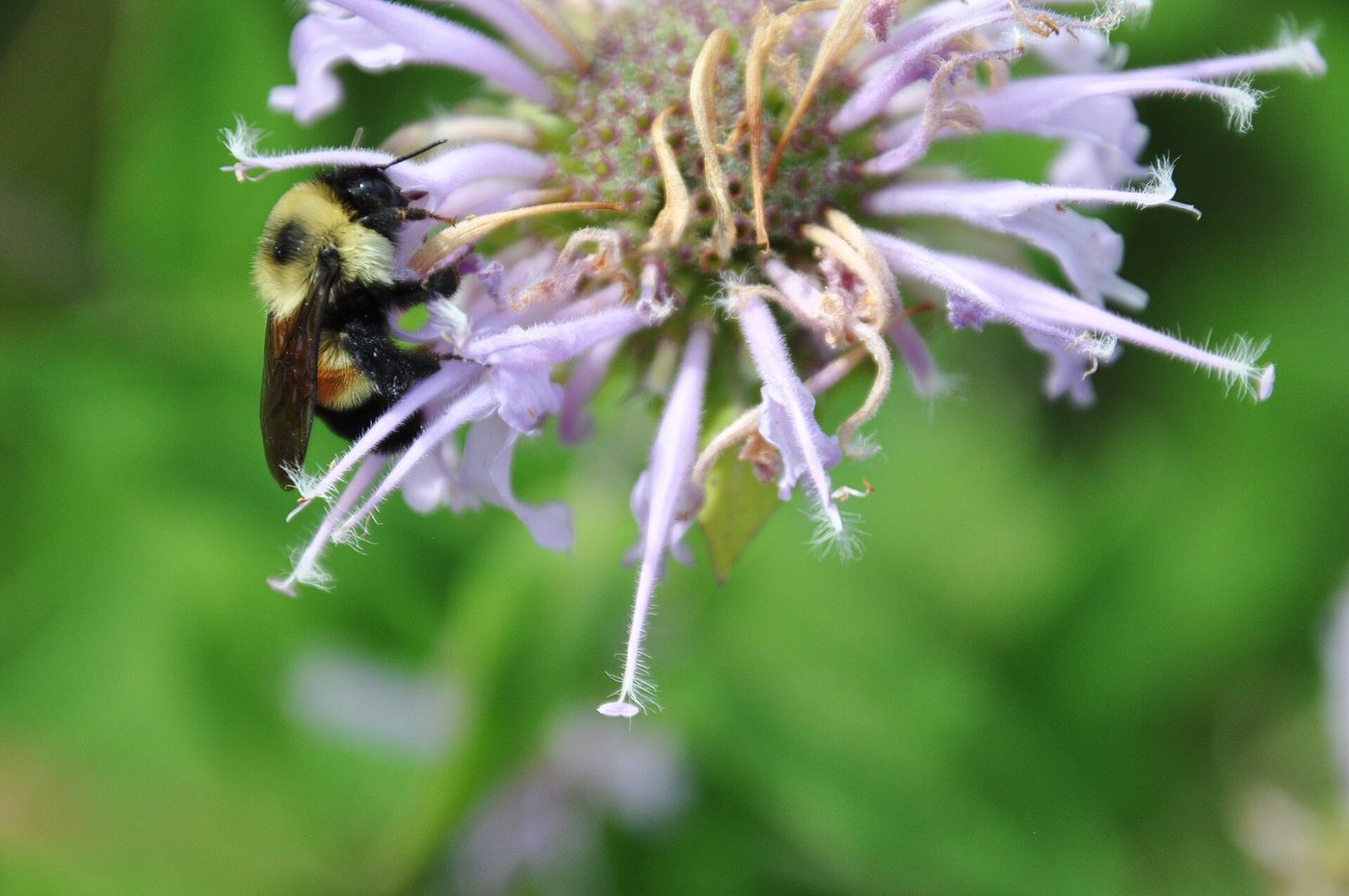
The first bumble bee ever federally listed as endangered in the continental US, the rusty patched bee likely fell to diseases spilling from commercial greenhouse bees, compounded by pesticides. Their survivors persist in scattered Midwestern pockets where prairie restoration and pesticide-free corridors give colonies room to recover.
What's killing them
- Pathogens from commercial bumble bee trade
- Neonicotinoid pesticides
- Prairie habitat loss
- Climate stress
Who's fighting for them
 U.S. Fish & WildlifeUnited States Fish & Wildlife Service Donate
 IUCN Red ListInternational Union for Conservation of Nature — Species Survival Commission Donate
Logos are the property of their respective organisations and link to their official sites.
Quick answers
How many Rusty Patched Bumble Bee are left in the world?
Approximately Unknown — gone from 87% of range. The Rusty Patched Bumble Bee (Bombus affinis) is listed as Critically Endangered on the IUCN Red List, and their population trend is declining. Figures are estimates compiled from the IUCN Red List and conservation organisations.
Where does the Rusty Patched Bumble Bee live?
The Rusty Patched Bumble Bee is found in United States, Canada (North America). Their habitat: Prairie, meadows and gardens of the American Midwest and Northeast.
Why is the Rusty Patched Bumble Bee endangered?
The main threats to the Rusty Patched Bumble Bee are: Pathogens from commercial bumble bee trade; Neonicotinoid pesticides; Prairie habitat loss; Climate stress.
Who is working to save the Rusty Patched Bumble Bee?
Organisations working on Rusty Patched Bumble Bee conservation include United States Fish & Wildlife Service; International Union for Conservation of Nature — Species Survival Commission.
Where they live
Minnesota Valley National Wildlife Refuge, Minnesota · United States · Canada · North America — Approximate range. Click the map to zoom.