№ 73 of 100
Axolotl
Ambystoma mexicanum
Millions live in laboratories and aquariums — yet the axolotl is nearly gone from the one lake system they call home.
- Range
- Mexico
- Region
- North America
- Habitat
- Canals and wetlands of Lake Xochimilco, Mexico City
Field notes
- Size
- 15–45 cm, commonly ~23 cm (total length)
- Lifespan
- 10–15 years in the wild
- Diet
- Carnivore
- Family
- Ambystomatidae
- Order
- Urodela
The story
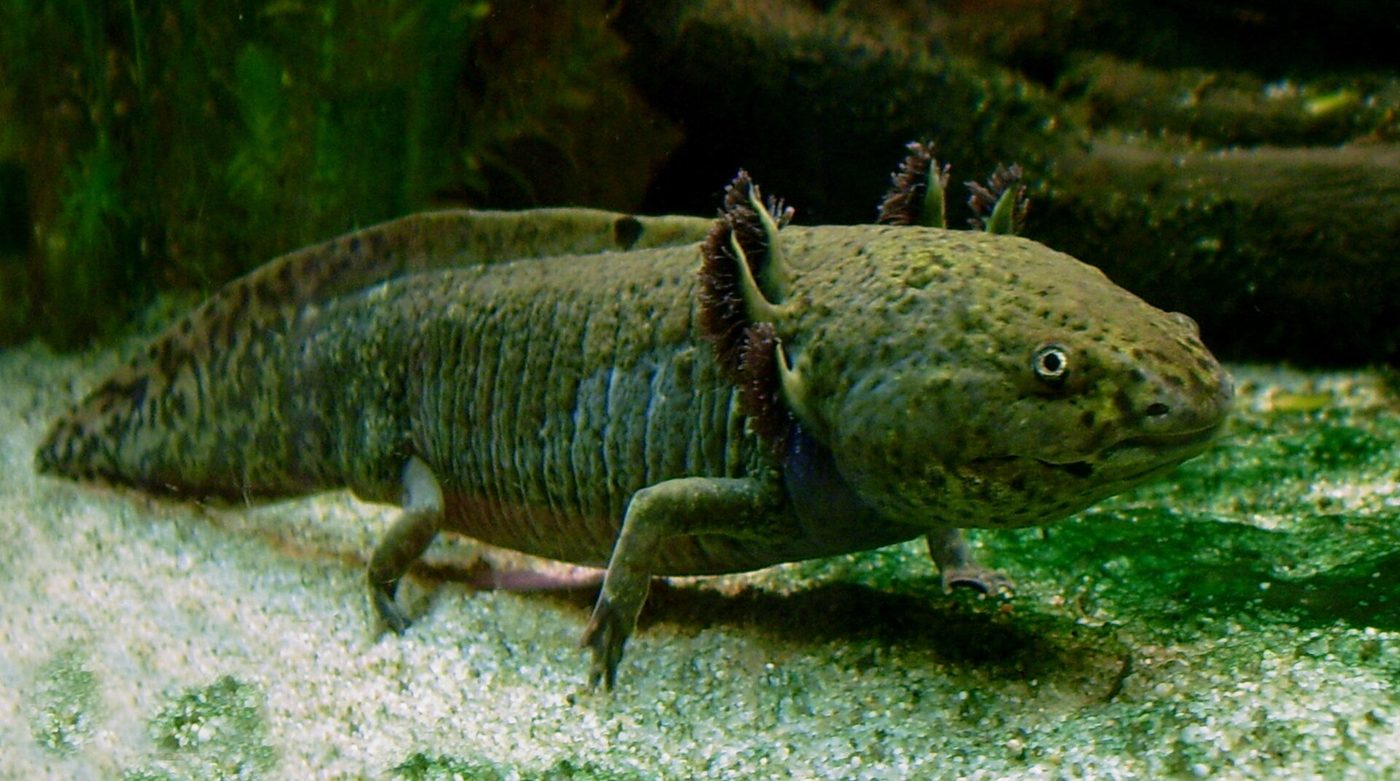
The Aztecs knew the axolotl as the incarnation of the god Xolotl; science knows them as masters of regeneration, able to regrow limbs and parts of their brain. In Xochimilco's last canals, conservationists work with chinampa farmers to build pesticide-free refuges filtered by aquatic plants.
What's killing them
- Urban pollution of remnant canals
- Invasive tilapia and carp
- Water extraction for the city
- Disease
Who's fighting for them
 Amphibian ArkAmphibian Ark Donate
 IUCN Red ListInternational Union for Conservation of Nature — Species Survival Commission Donate
 ZSL EDGEZoological Society of London — EDGE of Existence Donate
Logos are the property of their respective organisations and link to their official sites.
Quick answers
How many Axolotl are left in the world?
Approximately ~50–1,000 wild. The Axolotl (Ambystoma mexicanum) is listed as Critically Endangered on the IUCN Red List, and their population trend is declining. Figures are estimates compiled from the IUCN Red List and conservation organisations.
Where does the Axolotl live?
The Axolotl is found in Mexico (North America). Their habitat: Canals and wetlands of Lake Xochimilco, Mexico City.
Why is the Axolotl endangered?
The main threats to the Axolotl are: Urban pollution of remnant canals; Invasive tilapia and carp; Water extraction for the city; Disease.
Who is working to save the Axolotl?
Organisations working on Axolotl conservation include Amphibian Ark; International Union for Conservation of Nature — Species Survival Commission; Zoological Society of London — EDGE of Existence.
Where they live
Lake Xochimilco, Mexico City · Mexico · North America — Approximate range. Click the map to zoom.