№ 92 of 100
Titicaca Water Frog
Telmatobius culeus
The world's largest fully aquatic frog breathes through extravagant folds of skin — locals call them the 'scrotum frog', and blenders empty the lake of them.
- Range
- PeruBolivia
- Region
- South America
- Habitat
- Entirely aquatic, in the cold high-altitude waters of Lake Titicaca at 3,800 m
Field notes
- Weight
- up to 1 kg
- Size
- 7.5–20 cm (body length)
- Lifespan
- up to 20 years
- Diet
- Carnivore
- Family
- Telmatobiidae
- Order
- Anura
The story
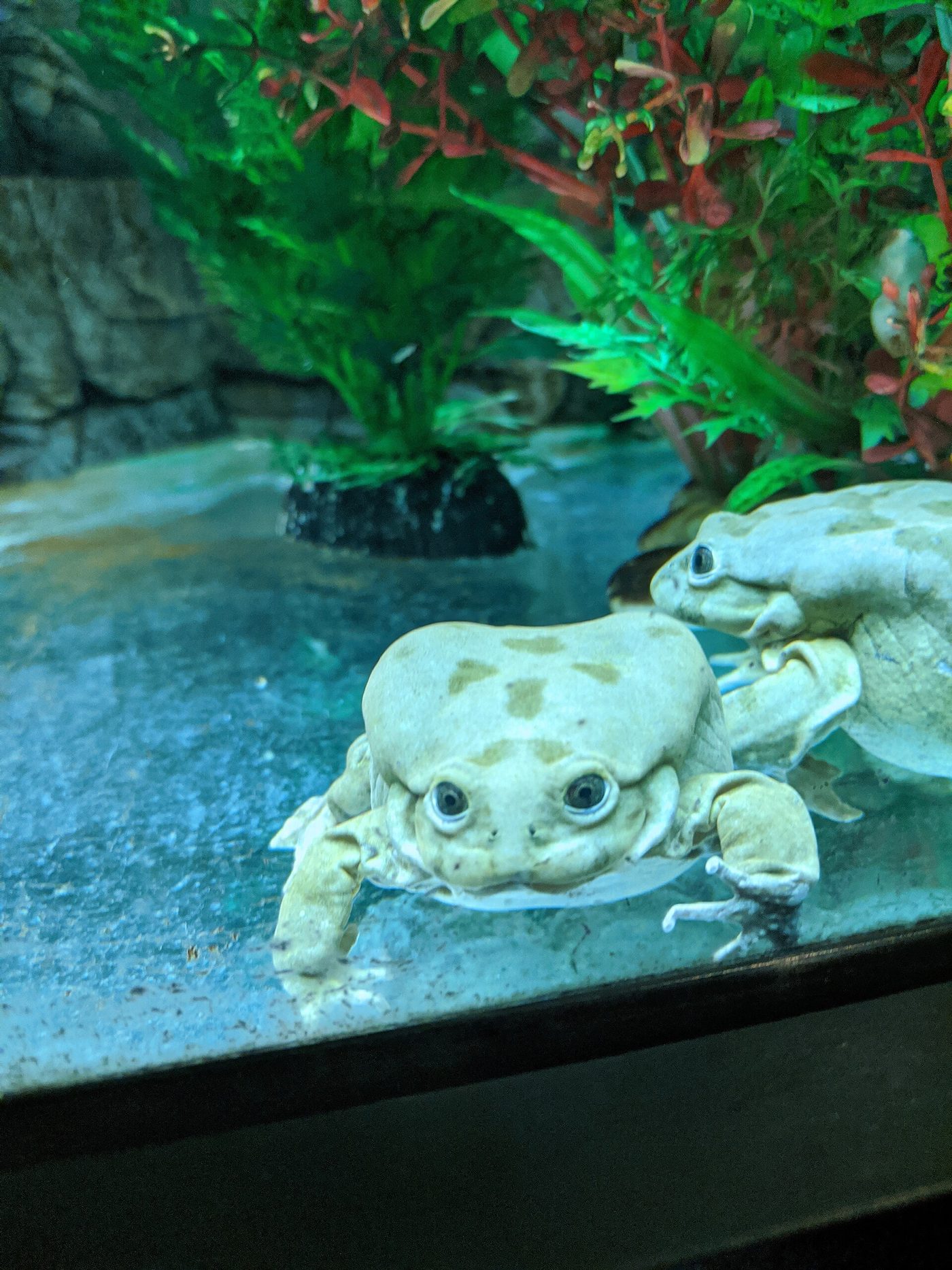
Adapted to the thin air of the Andes, this frog never needs to surface, breathing through baggy skin folds. Thousands are harvested for supposed virility tonics, and pollution events have killed frogs by the ten-thousand; a binational programme now links lakeside communities, zoos and regulators in their defence.
What's killing them
- Harvesting for 'frog juice' tonics
- Untreated sewage and mining pollution
- Invasive trout
- Climate-driven lake changes
Who's fighting for them
 DurrellDurrell Wildlife Conservation Trust Donate
 Amphibian ArkAmphibian Ark Donate
 IUCN Red ListInternational Union for Conservation of Nature — Species Survival Commission Donate
Logos are the property of their respective organisations and link to their official sites.
Quick answers
How many Titicaca Water Frog are left in the world?
Approximately Unknown — mass die-offs recorded. The Titicaca Water Frog (Telmatobius culeus) is listed as Endangered on the IUCN Red List, and their population trend is declining. Figures are estimates compiled from the IUCN Red List and conservation organisations.
Where does the Titicaca Water Frog live?
The Titicaca Water Frog is found in Peru, Bolivia (South America). Their habitat: Entirely aquatic, in the cold high-altitude waters of Lake Titicaca at 3,800 m.
Why is the Titicaca Water Frog endangered?
The main threats to the Titicaca Water Frog are: Harvesting for 'frog juice' tonics; Untreated sewage and mining pollution; Invasive trout; Climate-driven lake changes.
Who is working to save the Titicaca Water Frog?
Organisations working on Titicaca Water Frog conservation include Durrell Wildlife Conservation Trust; Amphibian Ark; International Union for Conservation of Nature — Species Survival Commission.
Where they live
Lake Titicaca, Peru/Bolivia · Peru · Bolivia · South America — Approximate range. Click the map to zoom.