№ 100 of 100
Staghorn Coral
Acropora cervicornis
An animal that builds cities — staghorn thickets once sheltered a quarter of all Caribbean reef life, and 2023's record heat bleached even the nurseries meant to save them.
- Range
- Caribbean — 30+ countries and territories
- Region
- Caribbean
- Habitat
- Shallow fore-reefs of the Caribbean, Florida and the Bahamas
Field notes
- Size
- up to >2 m (6.5 ft) colony height; branches 2.5–7.5 cm wide
- Diet
- Filter feeder
- Family
- Acroporidae
- Order
- Scleractinia
The story
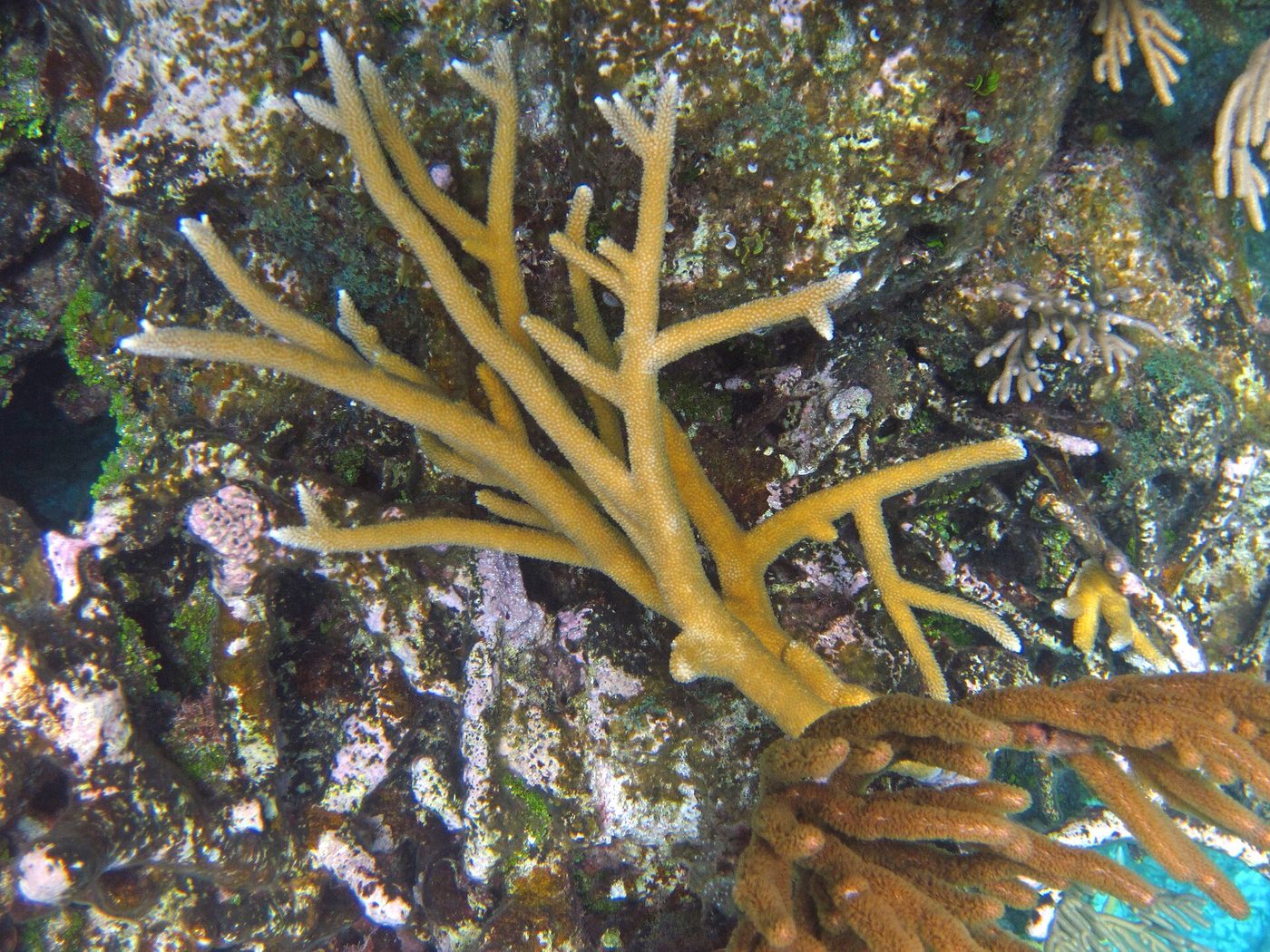
Staghorn coral grows like an antlered forest, fast enough to rebuild reefs within decades — which makes them restoration's great hope. Tens of thousands of nursery-grown fragments are planted yearly, with heat-tolerant strains and 'coral gene banks' emerging after the 2023 Florida marine heatwave killed entire restoration sites.
What's killing them
- Marine heatwaves and bleaching
- White-band disease
- Ocean acidification
- Storms and pollution
Who's fighting for them
 NOAA FisheriesNOAA Fisheries — Protected Resources Donate
 Conservation InternationalConservation International Donate
 Re:wildRe:wild — Global Wildlife Conservation Donate
Logos are the property of their respective organisations and link to their official sites.
Quick answers
How many Staghorn Coral are left in the world?
Approximately Unknown — declined >80% since 1980s. The Staghorn Coral (Acropora cervicornis) is listed as Critically Endangered on the IUCN Red List, and their population trend is declining. Figures are estimates compiled from the IUCN Red List and conservation organisations.
Where does the Staghorn Coral live?
The Staghorn Coral is found in Caribbean — 30+ countries and territories (Caribbean). Their habitat: Shallow fore-reefs of the Caribbean, Florida and the Bahamas.
Why is the Staghorn Coral endangered?
The main threats to the Staghorn Coral are: Marine heatwaves and bleaching; White-band disease; Ocean acidification; Storms and pollution.
Who is working to save the Staghorn Coral?
Organisations working on Staghorn Coral conservation include NOAA Fisheries — Protected Resources; Conservation International; Re:wild — Global Wildlife Conservation.
Where they live
Looe Key Reef, Florida Keys National Marine Sanctuary · Caribbean — 30+ countries and territories · Caribbean — Approximate range. Click the map to zoom.