№ 10 of 100
Spix's Macaw
Cyanopsitta spixii
The little blue macaw that inspired the film 'Rio' vanished from the wild in 2000 — and flew free again in 2022.
- Range
- Brazil
- Region
- South America
- Habitat
- Caraíba gallery woodland along seasonal creeks in the Bahian caatinga
Field notes
- Weight
- ≈290–320 g
- Size
- ≈56 cm (length, incl. tail)
- Lifespan
- up to 34 years (captivity)
- Diet
- Herbivore
- Family
- Psittacidae
- Order
- Psittaciformes
The story
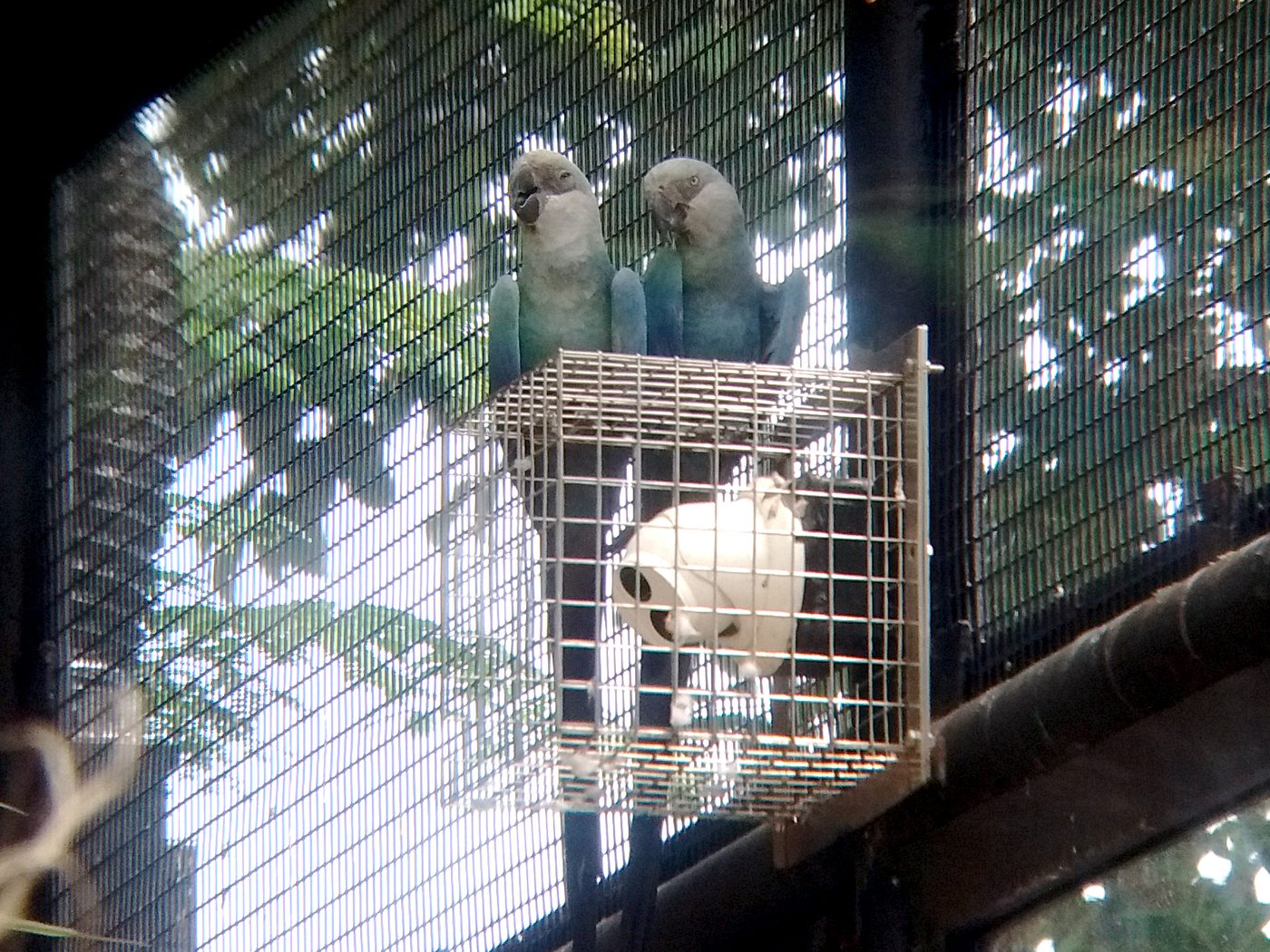
Driven extinct in the wild by trappers and habitat loss, Spix's macaw survived only in private collections. An international breeding programme returned the first birds to the Brazilian caatinga in 2022, and reintroduced pairs have since nested — the first wild Spix's eggs in a generation.
What's killing them
- Trapping for the illegal pet trade
- Loss of caraíba woodland
- Tiny gene pool
Who's fighting for them
 BirdLife InternationalBirdLife International Donate
 Re:wildRe:wild — Global Wildlife Conservation Donate
 IUCN Red ListInternational Union for Conservation of Nature — Species Survival Commission Donate
Logos are the property of their respective organisations and link to their official sites.
Quick answers
How many Spix's Macaw are left in the world?
Approximately ~20 wild (reintroduced) · ~180 captive. The Spix's Macaw (Cyanopsitta spixii) is listed as Critically Endangered on the IUCN Red List, and their population trend is recovering. Figures are estimates compiled from the IUCN Red List and conservation organisations.
Where does the Spix's Macaw live?
The Spix's Macaw is found in Brazil (South America). Their habitat: Caraíba gallery woodland along seasonal creeks in the Bahian caatinga.
Why is the Spix's Macaw endangered?
The main threats to the Spix's Macaw are: Trapping for the illegal pet trade; Loss of caraíba woodland; Tiny gene pool.
Who is working to save the Spix's Macaw?
Organisations working on Spix's Macaw conservation include BirdLife International; Re:wild — Global Wildlife Conservation; International Union for Conservation of Nature — Species Survival Commission.
Where they live
Curaçá, Bahia, Brazil · Brazil · South America — Approximate range. Click the map to zoom.