№ 04 of 100
ʻAkikiki
Oreomystis bairdi
A tiny grey Hawaiian songbird being erased by mosquito-borne malaria — only a handful of wild birds remain on Kauaʻi.
- Range
- United States
- Region
- Oceania
- Habitat
- High-elevation ʻōhiʻa rainforest on the island of Kauaʻi, Hawaiʻi
Field notes
- Weight
- 12–17 g
- Size
- 13 cm (length)
- Diet
- Insectivore
- Family
- Fringillidae
- Order
- Passeriformes
The story
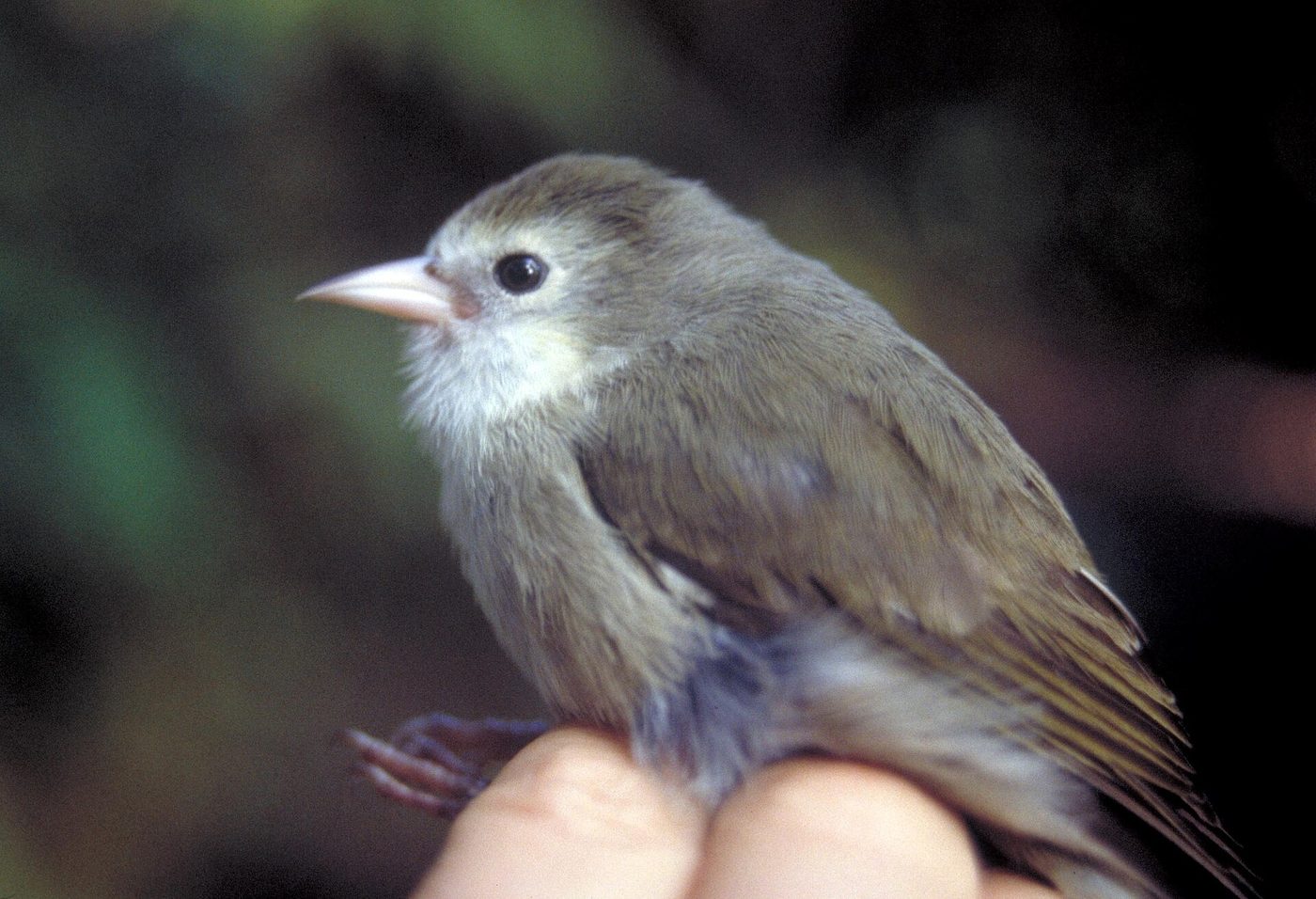
As a warming climate lets mosquitoes climb into Kauaʻi's last high forests, avian malaria has collapsed the ʻakikiki population with terrifying speed. Biologists have airlifted eggs to biosecure facilities, and a landscape-scale release of incompatible male mosquitoes is underway to crash the malaria cycle before the species is lost.
What's killing them
- Avian malaria spread by invasive mosquitoes
- Climate change pushing mosquitoes uphill
- Invasive predators
- Habitat degradation
Who's fighting for them
 BirdLife InternationalBirdLife International Donate
 U.S. Fish & WildlifeUnited States Fish & Wildlife Service Donate
 AZA SAFEAssociation of Zoos & Aquariums — SAFE Program Donate
Logos are the property of their respective organisations and link to their official sites.
Quick answers
How many ʻAkikiki are left in the world?
Approximately ~5 wild · ~50 in care. The ʻAkikiki (Oreomystis bairdi) is listed as Critically Endangered on the IUCN Red List, and their population trend is declining. Figures are estimates compiled from the IUCN Red List and conservation organisations.
Where does the ʻAkikiki live?
The ʻAkikiki is found in United States (Oceania). Their habitat: High-elevation ʻōhiʻa rainforest on the island of Kauaʻi, Hawaiʻi.
Why is the ʻAkikiki endangered?
The main threats to the ʻAkikiki are: Avian malaria spread by invasive mosquitoes; Climate change pushing mosquitoes uphill; Invasive predators; Habitat degradation.
Who is working to save the ʻAkikiki?
Organisations working on ʻAkikiki conservation include BirdLife International; United States Fish & Wildlife Service; Association of Zoos & Aquariums — SAFE Program.
Where they live
Alakaʻi Wilderness Preserve, Kauaʻi, Hawaii · United States · Oceania — Approximate range. Click the map to zoom.