№ 94 of 100
Radiated Tortoise
Astrochelys radiata
Ten thousand starburst-shelled tortoises were found crammed in a single smuggler's house in 2018 — the spiny forest is being emptied.
- Range
- Madagascar
- Region
- Africa
- Habitat
- Spiny forest of southern Madagascar
Field notes
- Weight
- 2.5–8.8 kg
- Size
- 26–38 cm (carapace)
- Lifespan
- up to ~188 years
- Diet
- Herbivore
- Family
- Testudinidae
- Order
- Testudines
The story
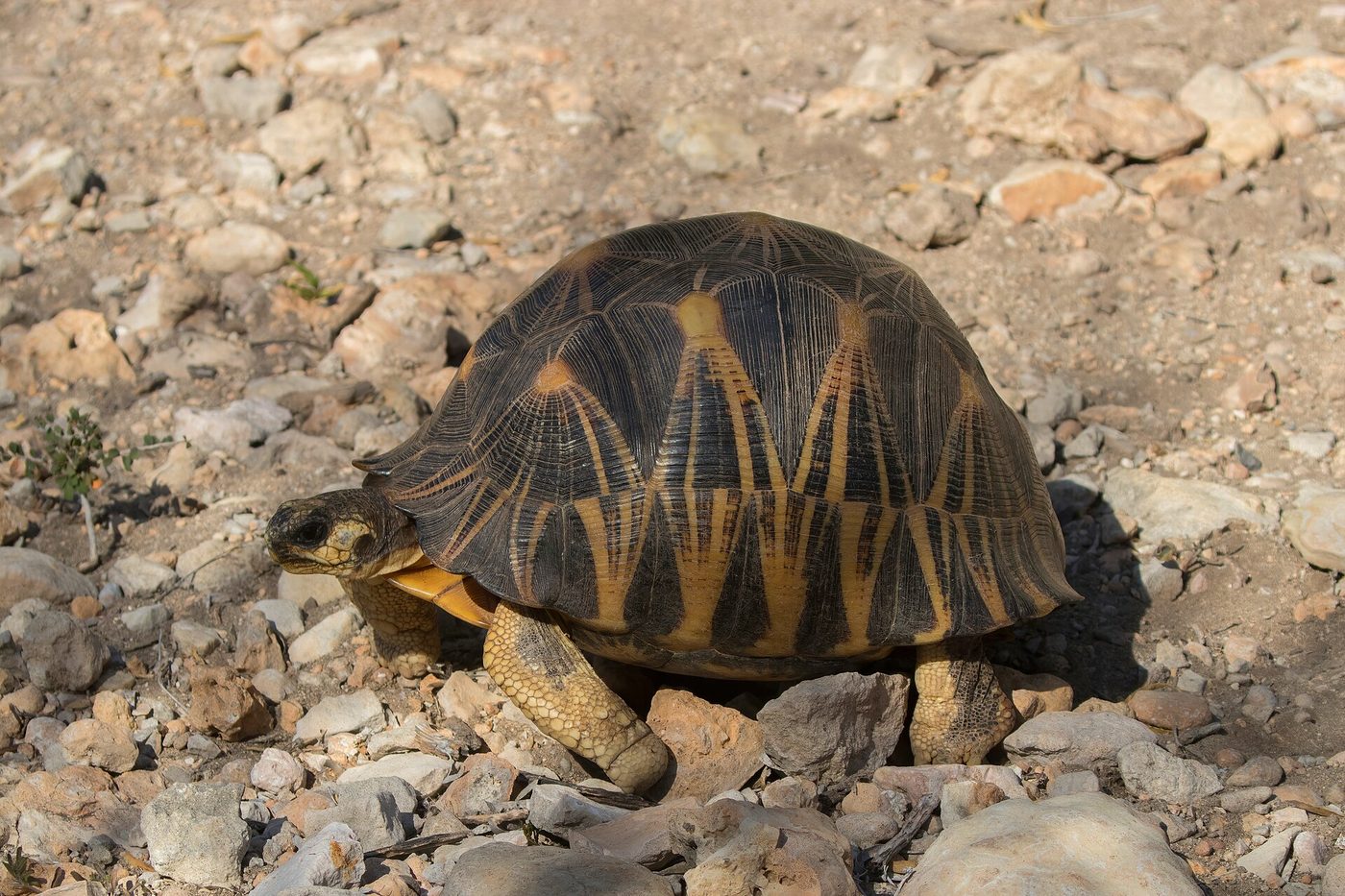
The radiated tortoise's golden star-patterned shell makes them both a beauty of the spiny forest and a trafficker's prize. Confiscations now number in the tens of thousands, overwhelming rescue centres that rehabilitate tortoises for staged returns to community-guarded forest.
What's killing them
- Industrial-scale poaching for meat and pets
- Spiny forest clearance for charcoal
- Drought
- Trafficking networks
Who's fighting for them
 Turtle Survival AllianceTurtle Survival Alliance Donate
 DurrellDurrell Wildlife Conservation Trust Donate
 TRAFFICTRAFFIC — Wildlife Trade Monitoring Network Donate
Logos are the property of their respective organisations and link to their official sites.
Quick answers
How many Radiated Tortoise are left in the world?
Approximately Millions historically — collapsing fast. The Radiated Tortoise (Astrochelys radiata) is listed as Critically Endangered on the IUCN Red List, and their population trend is declining. Figures are estimates compiled from the IUCN Red List and conservation organisations.
Where does the Radiated Tortoise live?
The Radiated Tortoise is found in Madagascar (Africa). Their habitat: Spiny forest of southern Madagascar.
Why is the Radiated Tortoise endangered?
The main threats to the Radiated Tortoise are: Industrial-scale poaching for meat and pets; Spiny forest clearance for charcoal; Drought; Trafficking networks.
Who is working to save the Radiated Tortoise?
Organisations working on Radiated Tortoise conservation include Turtle Survival Alliance; Durrell Wildlife Conservation Trust; TRAFFIC — Wildlife Trade Monitoring Network.
Where they live
Tsimanampetsotsa National Park, Madagascar · Madagascar · Africa — Approximate range. Click the map to zoom.