№ 69 of 100
Mountain Gorilla
Gorilla beringei beringei
The only great ape whose numbers are rising — from 254 in 1981 to over 1,000, guarded by rangers who risk everything.
- Range
- RwandaUgandaDR Congo
- Region
- Africa
- Habitat
- Misty montane forest of the Virunga volcanoes and Bwindi
Field notes
- Weight
- 120–191 kg (males); 70–98 kg (females)
- Size
- 1.61–1.71 m (standing height, males)
- Lifespan
- up to ~43 years (wild)
- Diet
- Folivore
- Family
- Hominidae
- Order
- Primates
The story
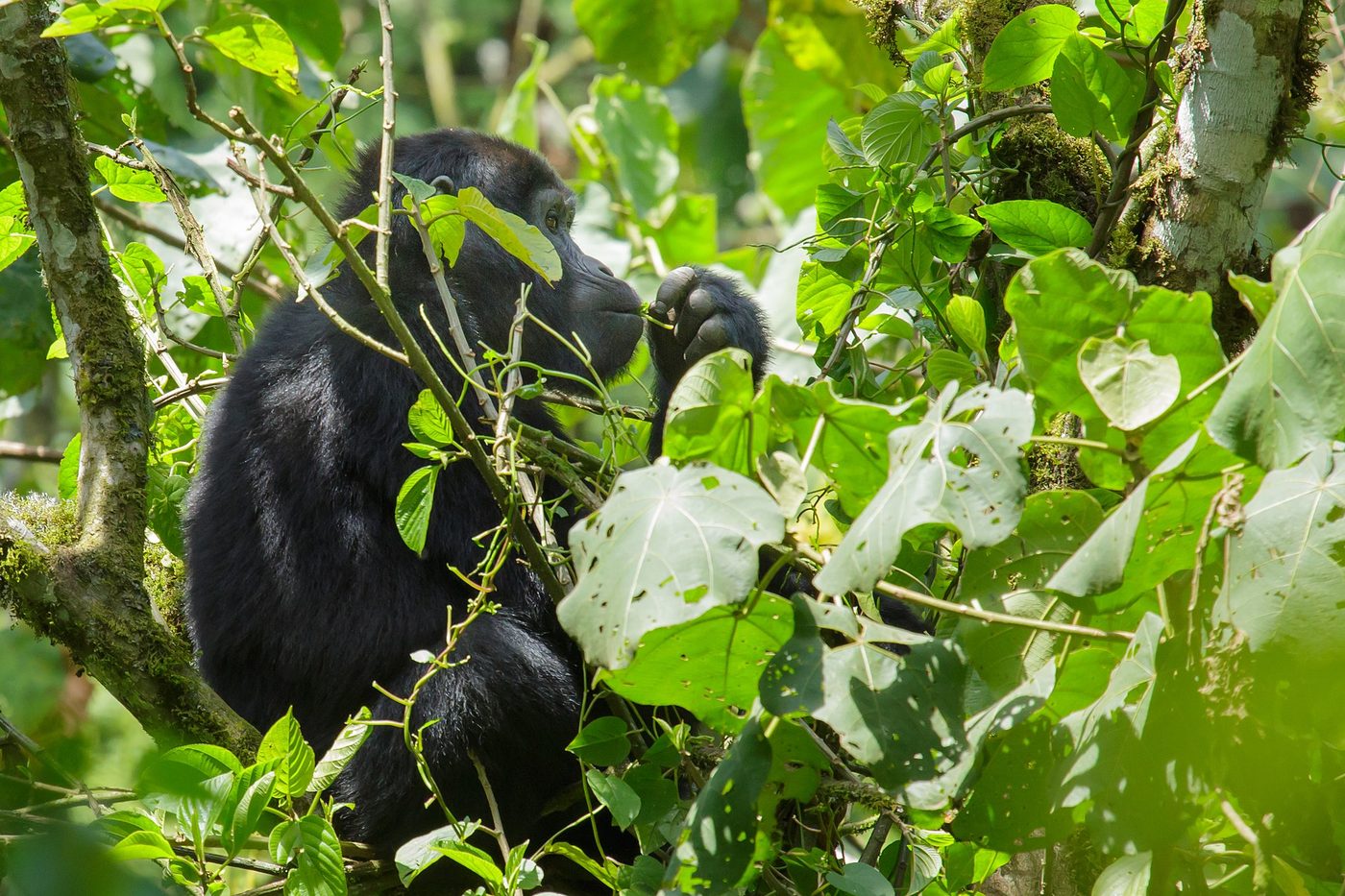
Mountain gorillas became conservation's defining cause through Dian Fossey's work in the Virungas. Gorilla tourism now funds armies of trackers and vets who treat snare wounds in the forest, and the population has more than quadrupled — hope, hard-earned and still fragile.
What's killing them
- Human disease transmission
- Snares set for other animals
- Civil unrest around parks
- Tiny total range
Who's fighting for them
 Dian Fossey Gorilla FundDian Fossey Gorilla Fund International Donate
 WWFWorld Wide Fund for Nature Donate
 African ParksAfrican Parks Network Donate
Logos are the property of their respective organisations and link to their official sites.
Quick answers
How many Mountain Gorilla are left in the world?
Approximately ~1,063. The Mountain Gorilla (Gorilla beringei beringei) is listed as Endangered on the IUCN Red List, and their population trend is recovering. Figures are estimates compiled from the IUCN Red List and conservation organisations.
Where does the Mountain Gorilla live?
The Mountain Gorilla is found in Rwanda, Uganda, DR Congo (Africa). Their habitat: Misty montane forest of the Virunga volcanoes and Bwindi.
Why is the Mountain Gorilla endangered?
The main threats to the Mountain Gorilla are: Human disease transmission; Snares set for other animals; Civil unrest around parks; Tiny total range.
Who is working to save the Mountain Gorilla?
Organisations working on Mountain Gorilla conservation include Dian Fossey Gorilla Fund International; World Wide Fund for Nature; African Parks Network.
Where they live
Bwindi Impenetrable National Park, Uganda · Rwanda · Uganda · DR Congo · Africa — Approximate range. Click the map to zoom.