№ 33 of 100
Kakī / Black Stilt
Himantopus novaezelandiae
The world's rarest wading bird, jet-black on pink legs, survives on New Zealand's braided alpine rivers.
- Range
- New Zealand
- Region
- Oceania
- Habitat
- Braided glacial rivers of the Mackenzie Basin, South Island
Field notes
- Weight
- ≈220 g
- Size
- ≈40 cm (length)
- Lifespan
- up to 15 years
- Diet
- Carnivore
- Family
- Recurvirostridae
- Order
- Charadriiformes
The story
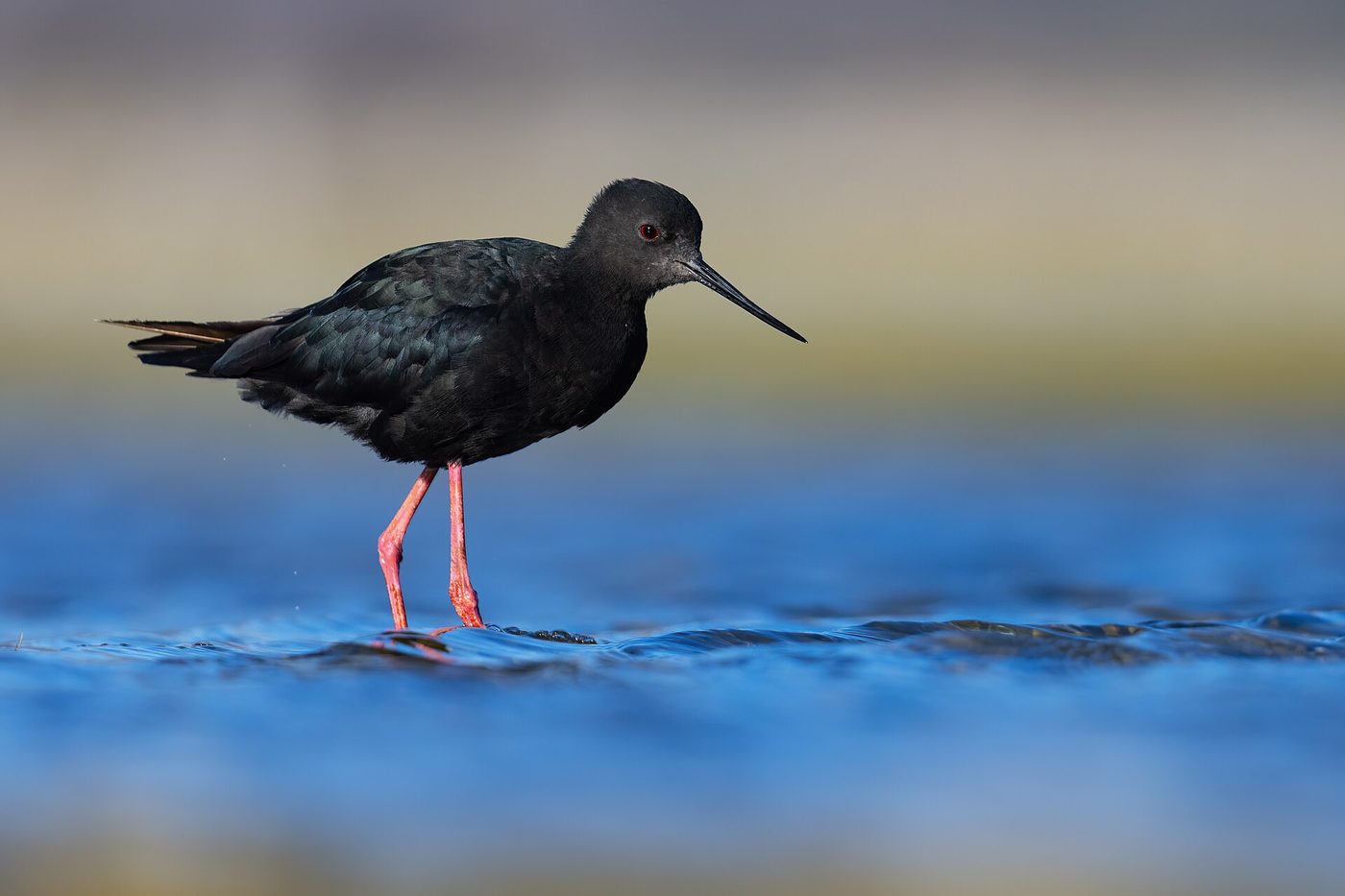
Kakī dropped to just 23 birds in 1981 as introduced predators raided their riverbed nests. Nearly every wild egg is now hatched in incubators and the chicks released at nine months old — a programme that has hauled the adult population to about 170, its highest in decades.
What's killing them
- Introduced stoats, ferrets and cats
- Hydro development on braided rivers
- Hybridisation with pied stilts
Who's fighting for them
 NZ Dept. of ConservationNew Zealand Department of Conservation Donate
 BirdLife InternationalBirdLife International Donate
Logos are the property of their respective organisations and link to their official sites.
Quick answers
How many Kakī / Black Stilt are left in the world?
Approximately ~170 adults. The Kakī / Black Stilt (Himantopus novaezelandiae) is listed as Critically Endangered on the IUCN Red List, and their population trend is recovering. Figures are estimates compiled from the IUCN Red List and conservation organisations.
Where does the Kakī / Black Stilt live?
The Kakī / Black Stilt is found in New Zealand (Oceania). Their habitat: Braided glacial rivers of the Mackenzie Basin, South Island.
Why is the Kakī / Black Stilt endangered?
The main threats to the Kakī / Black Stilt are: Introduced stoats, ferrets and cats; Hydro development on braided rivers; Hybridisation with pied stilts.
Who is working to save the Kakī / Black Stilt?
Organisations working on Kakī / Black Stilt conservation include New Zealand Department of Conservation; BirdLife International.
Where they live
Lake Tekapo, Mackenzie Basin, South Island, New Zealand · New Zealand · Oceania — Approximate range. Click the map to zoom.