№ 32 of 100
La Gomera Giant Lizard
Gallotia bravoana
A half-metre lizard presumed extinct for 500 years, found alive in 1999 on a single Canary Island cliff.
- Range
- Spain
- Region
- Europe
- Habitat
- Two inaccessible cliff ledges on La Gomera, Canary Islands
Field notes
- Size
- up to ~21 cm (snout-vent length); ~50 cm total
- Diet
- Herbivore
- Family
- Lacertidae
- Order
- Squamata
The story
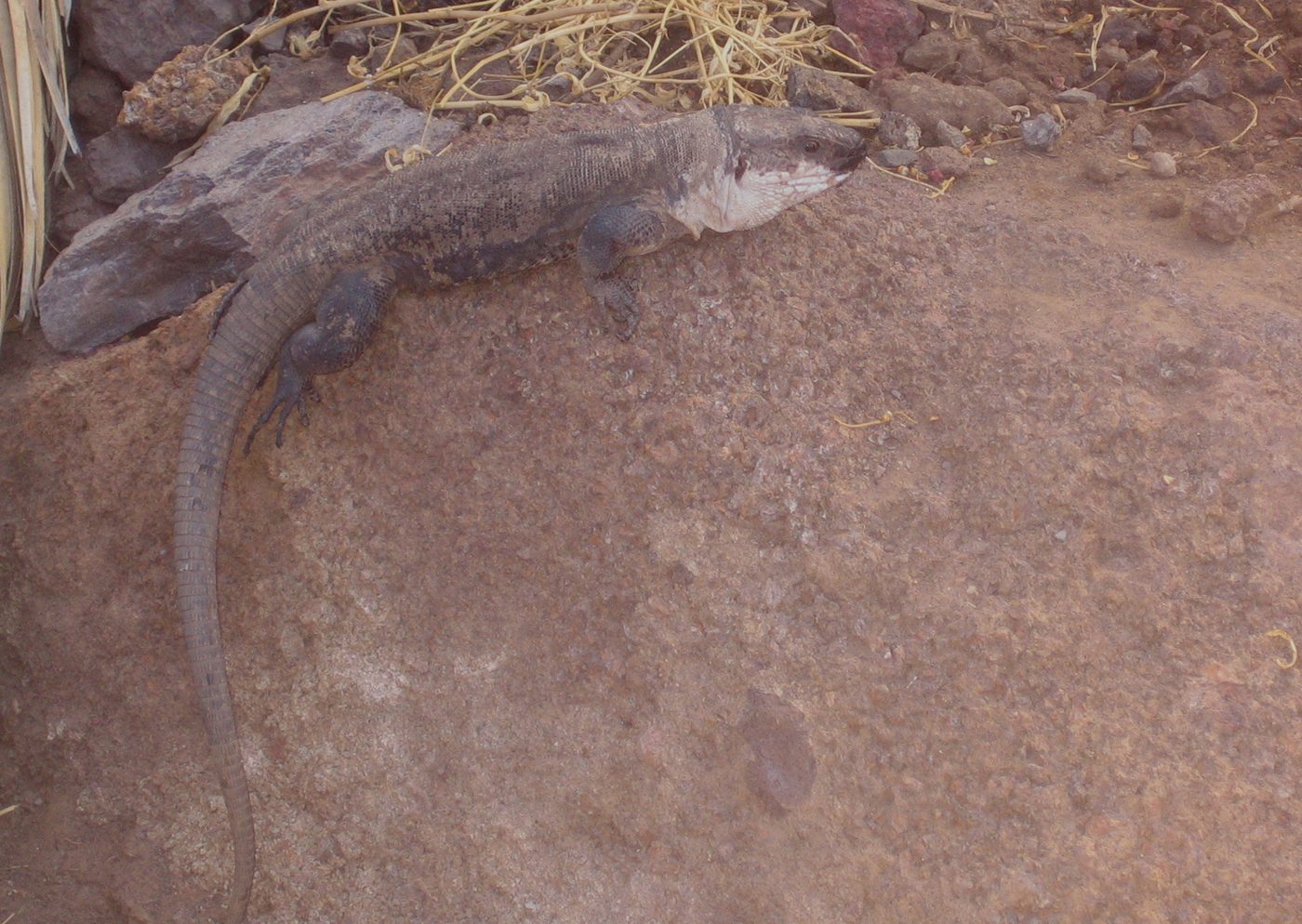
Cats brought by settlers drove this giant lizard from the whole of La Gomera, leaving survivors only on cliffs cats couldn't reach. A recovery centre above the Valle Gran Rey now breeds hundreds, and the species has become a flagship for restoring the Canaries' lost reptile giants.
What's killing them
- Feral cats and rats
- Historic collection
- Rockfalls on its last cliffs
- Minute range
Who's fighting for them
 IUCN Red ListInternational Union for Conservation of Nature — Species Survival Commission Donate
 ZSL EDGEZoological Society of London — EDGE of Existence Donate
Logos are the property of their respective organisations and link to their official sites.
Quick answers
How many La Gomera Giant Lizard are left in the world?
Approximately ~160 wild. The La Gomera Giant Lizard (Gallotia bravoana) is listed as Critically Endangered on the IUCN Red List, and their population trend is stable. Figures are estimates compiled from the IUCN Red List and conservation organisations.
Where does the La Gomera Giant Lizard live?
The La Gomera Giant Lizard is found in Spain (Europe). Their habitat: Two inaccessible cliff ledges on La Gomera, Canary Islands.
Why is the La Gomera Giant Lizard endangered?
The main threats to the La Gomera Giant Lizard are: Feral cats and rats; Historic collection; Rockfalls on its last cliffs; Minute range.
Who is working to save the La Gomera Giant Lizard?
Organisations working on La Gomera Giant Lizard conservation include International Union for Conservation of Nature — Species Survival Commission; Zoological Society of London — EDGE of Existence.
Where they live
Valle Gran Rey, La Gomera (Canary Islands) · Spain · Europe — Approximate range. Click the map to zoom.