№ 48 of 100
Hirola
Beatragus hunteri
The world's rarest antelope — the 'four-eyed' hirola — would be the first mammalian genus lost since the thylacine.
- Range
- KenyaSomalia
- Region
- Africa
- Habitat
- Open grasslands of the Kenya–Somalia borderlands
Field notes
- Weight
- 73–118 kg
- Size
- 99–125 cm (shoulder height)
- Lifespan
- up to 15 years (captivity)
- Diet
- Herbivore
- Family
- Bovidae
- Order
- Artiodactyla
The story
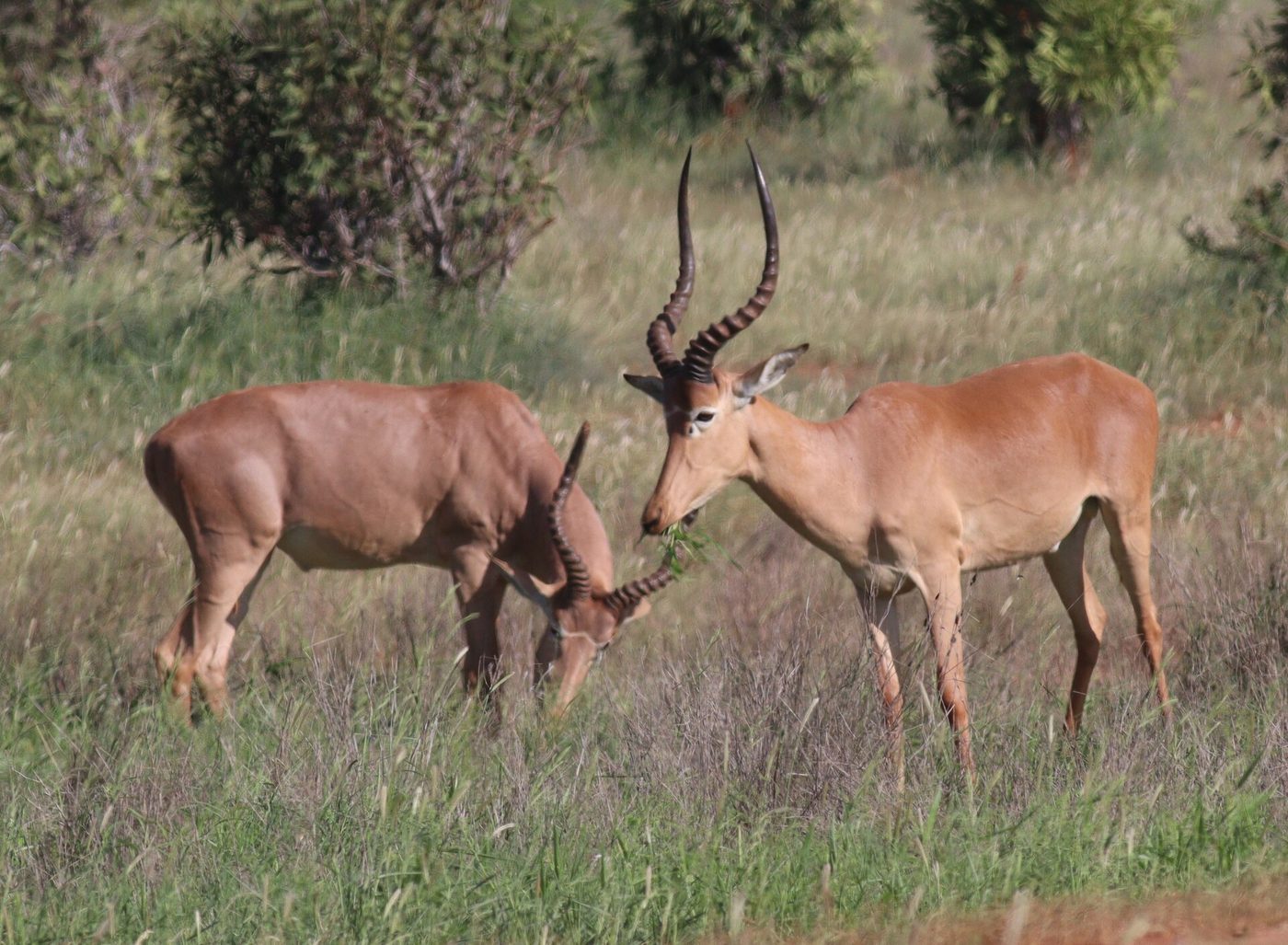
Named for the dark glands beneath their eyes that look like spectacles, the hirola has no captive population anywhere: if they disappear from the Kenyan border grasslands, an entire genus disappears with them. Community conservancies led by Somali pastoralists run predator-proof sanctuaries that have begun raising numbers.
What's killing them
- Rinderpest legacy and disease
- Drought and habitat loss to bush encroachment
- Predation on tiny herds
- Regional insecurity
Who's fighting for them
 Re:wildRe:wild — Global Wildlife Conservation Donate
 IUCN Red ListInternational Union for Conservation of Nature — Species Survival Commission Donate
 African ParksAfrican Parks Network Donate
Logos are the property of their respective organisations and link to their official sites.
Quick answers
How many Hirola are left in the world?
Approximately ~300–500. The Hirola (Beatragus hunteri) is listed as Critically Endangered on the IUCN Red List, and their population trend is declining. Figures are estimates compiled from the IUCN Red List and conservation organisations.
Where does the Hirola live?
The Hirola is found in Kenya, Somalia (Africa). Their habitat: Open grasslands of the Kenya–Somalia borderlands.
Why is the Hirola endangered?
The main threats to the Hirola are: Rinderpest legacy and disease; Drought and habitat loss to bush encroachment; Predation on tiny herds; Regional insecurity.
Who is working to save the Hirola?
Organisations working on Hirola conservation include Re:wild — Global Wildlife Conservation; International Union for Conservation of Nature — Species Survival Commission; African Parks Network.
Where they live
Tsavo East National Park, Kenya · Kenya · Somalia · Africa — Approximate range. Click the map to zoom.