№ 91 of 100
Chinese Giant Salamander
Andrias davidianus
The world's largest amphibian — up to 1.8 metres, essentially unchanged for 170 million years — has been eaten out of their rivers.
- Range
- China
- Region
- Asia
- Habitat
- Cool, fast mountain streams and rivers across central and southern China
Field notes
- Weight
- 25–30 kg (avg); up to 50 kg
- Size
- 1.3 m avg, up to 1.8 m (total length)
- Lifespan
- at least 60 years (captivity)
- Diet
- Carnivore
- Family
- Cryptobranchidae
- Order
- Caudata
The story
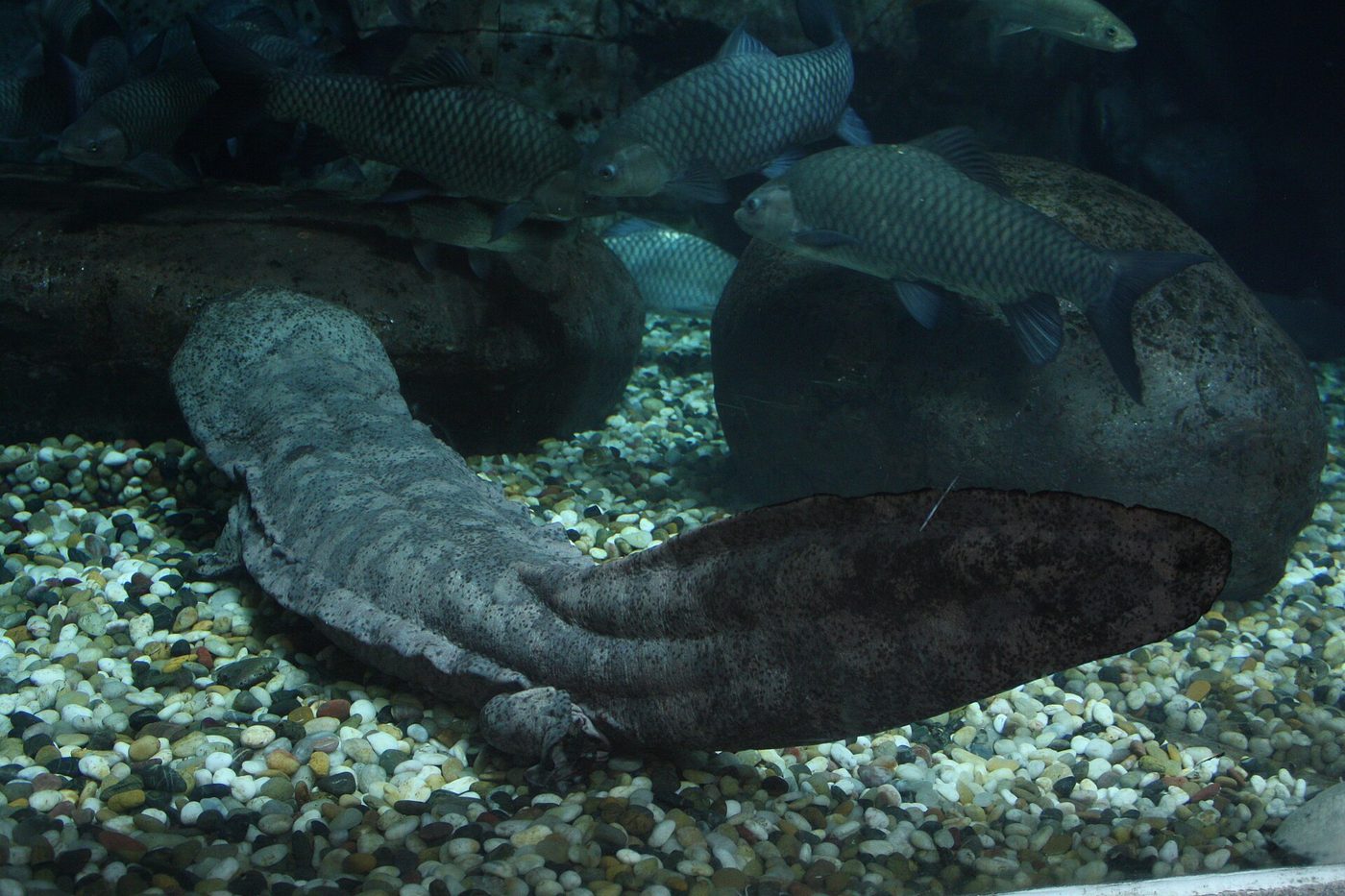
Despite millions living on commercial farms, wild giant salamanders have all but disappeared, harvested for banquets where they sell by the kilo. Surveys of hundreds of rivers found almost none; conservation breeding of genetically distinct lineages — likely several separate species — is now a race against homogenisation.
What's killing them
- Poaching for luxury food trade
- Farm escapes mixing distinct lineages
- Dams and water pollution
- Habitat fragmentation
Who's fighting for them
 ZSL EDGEZoological Society of London — EDGE of Existence Donate
 Fauna & FloraFauna & Flora International Donate
 Amphibian ArkAmphibian Ark Donate
Logos are the property of their respective organisations and link to their official sites.
Quick answers
How many Chinese Giant Salamander are left in the world?
Approximately Unknown — wild populations crashed >80%. The Chinese Giant Salamander (Andrias davidianus) is listed as Critically Endangered on the IUCN Red List, and their population trend is declining. Figures are estimates compiled from the IUCN Red List and conservation organisations.
Where does the Chinese Giant Salamander live?
The Chinese Giant Salamander is found in China (Asia). Their habitat: Cool, fast mountain streams and rivers across central and southern China.
Why is the Chinese Giant Salamander endangered?
The main threats to the Chinese Giant Salamander are: Poaching for luxury food trade; Farm escapes mixing distinct lineages; Dams and water pollution; Habitat fragmentation.
Who is working to save the Chinese Giant Salamander?
Organisations working on Chinese Giant Salamander conservation include Zoological Society of London — EDGE of Existence; Fauna & Flora International; Amphibian Ark.
Where they live
Zhangjiajie Giant Salamander National Nature Reserve, Hunan, China · China · Asia — Approximate range. Click the map to zoom.