№ 90 of 100
Angelshark
Squatina squatina
A flat shark that buries themselves in sand to ambush prey — trawl nets swept them from almost the entire European coast.
- Range
- Spain (Canary Islands)United KingdomIreland
- Region
- Europe
- Habitat
- Sandy seabeds of the eastern Atlantic and Mediterranean; stronghold in the Canary Islands
Field notes
- Weight
- up to 80 kg
- Size
- 1.8–2.4 m (total length)
- Diet
- Piscivore
- Family
- Squatinidae
- Order
- Squatiniformes
The story
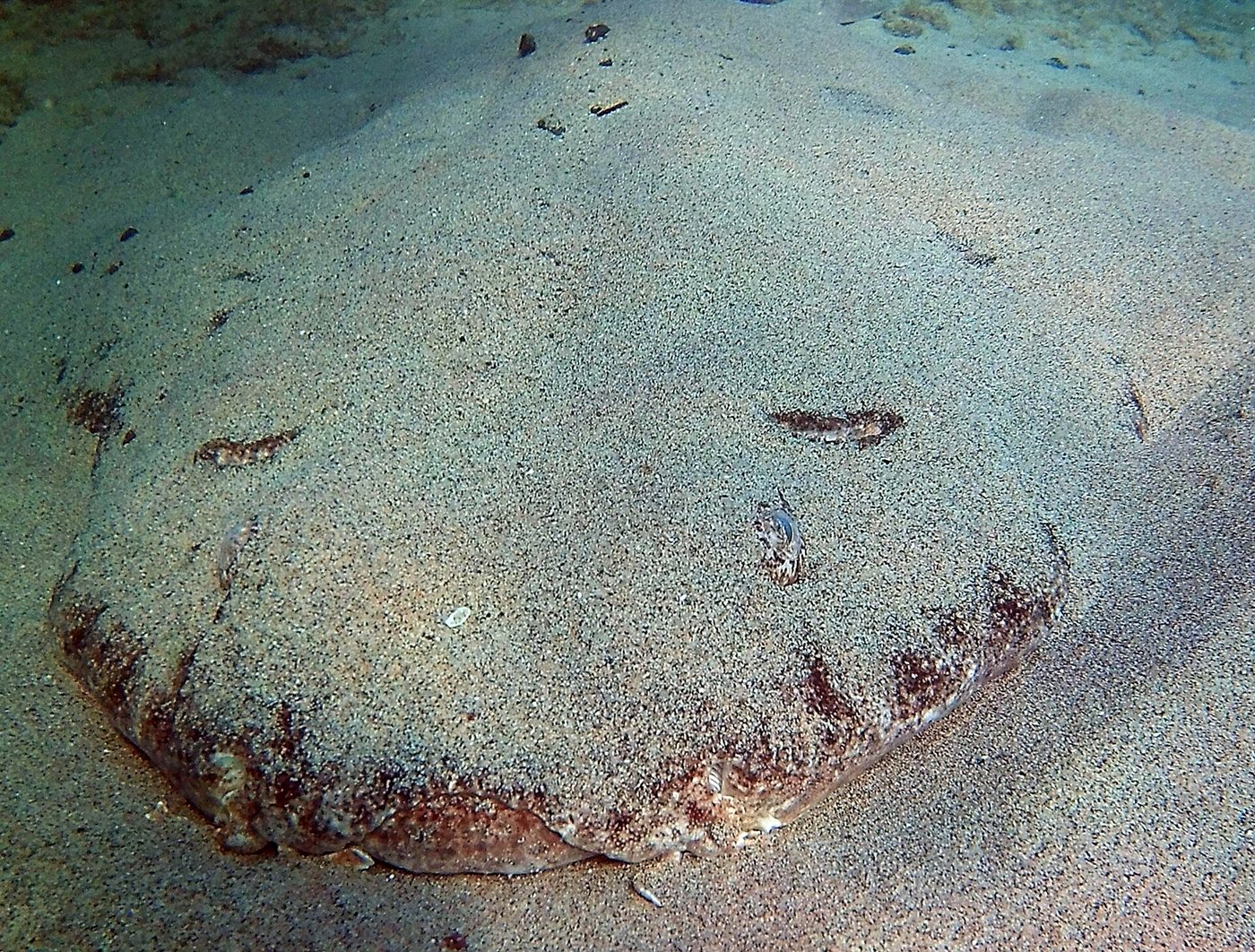
Once common enough to be a fishmonger's staple across Europe, the angelshark now survives mainly around the Canary Islands, where divers report sightings to a community science atlas. Nursery beaches are gaining protection, and tagging is revealing the secret lives of one of Europe's rarest fish.
What's killing them
- Centuries of trawl bycatch
- Coastal development on nursery beaches
- Slow reproduction
- Disturbance from marine tourism
Who's fighting for them
 ZSL EDGEZoological Society of London — EDGE of Existence Donate
 IUCN Red ListInternational Union for Conservation of Nature — Species Survival Commission Donate
Logos are the property of their respective organisations and link to their official sites.
Quick answers
How many Angelshark are left in the world?
Approximately Unknown — vanished from most of its range. The Angelshark (Squatina squatina) is listed as Critically Endangered on the IUCN Red List, and their population trend is declining. Figures are estimates compiled from the IUCN Red List and conservation organisations.
Where does the Angelshark live?
The Angelshark is found in Spain (Canary Islands), United Kingdom, Ireland (Europe). Their habitat: Sandy seabeds of the eastern Atlantic and Mediterranean; stronghold in the Canary Islands.
Why is the Angelshark endangered?
The main threats to the Angelshark are: Centuries of trawl bycatch; Coastal development on nursery beaches; Slow reproduction; Disturbance from marine tourism.
Who is working to save the Angelshark?
Organisations working on Angelshark conservation include Zoological Society of London — EDGE of Existence; International Union for Conservation of Nature — Species Survival Commission.
Where they live
Lanzarote, Canary Islands, Spain · Spain (Canary Islands) · United Kingdom · Ireland · Europe — Approximate range. Click the map to zoom.