№ 60 of 100
Bengal Florican
Houbaropsis bengalensis
A bustard that leaps black-and-white above the grass in display — their floodplain home is vanishing into rice paddies.
- Range
- CambodiaIndiaNepal
- Region
- Asia
- Habitat
- Seasonally flooded grasslands of the Tonle Sap and Brahmaputra basins
Field notes
- Weight
- 1.2–1.9 kg
- Size
- 66–68 cm (length)
- Diet
- Omnivore
- Family
- Otididae
- Order
- Otidiformes
The story
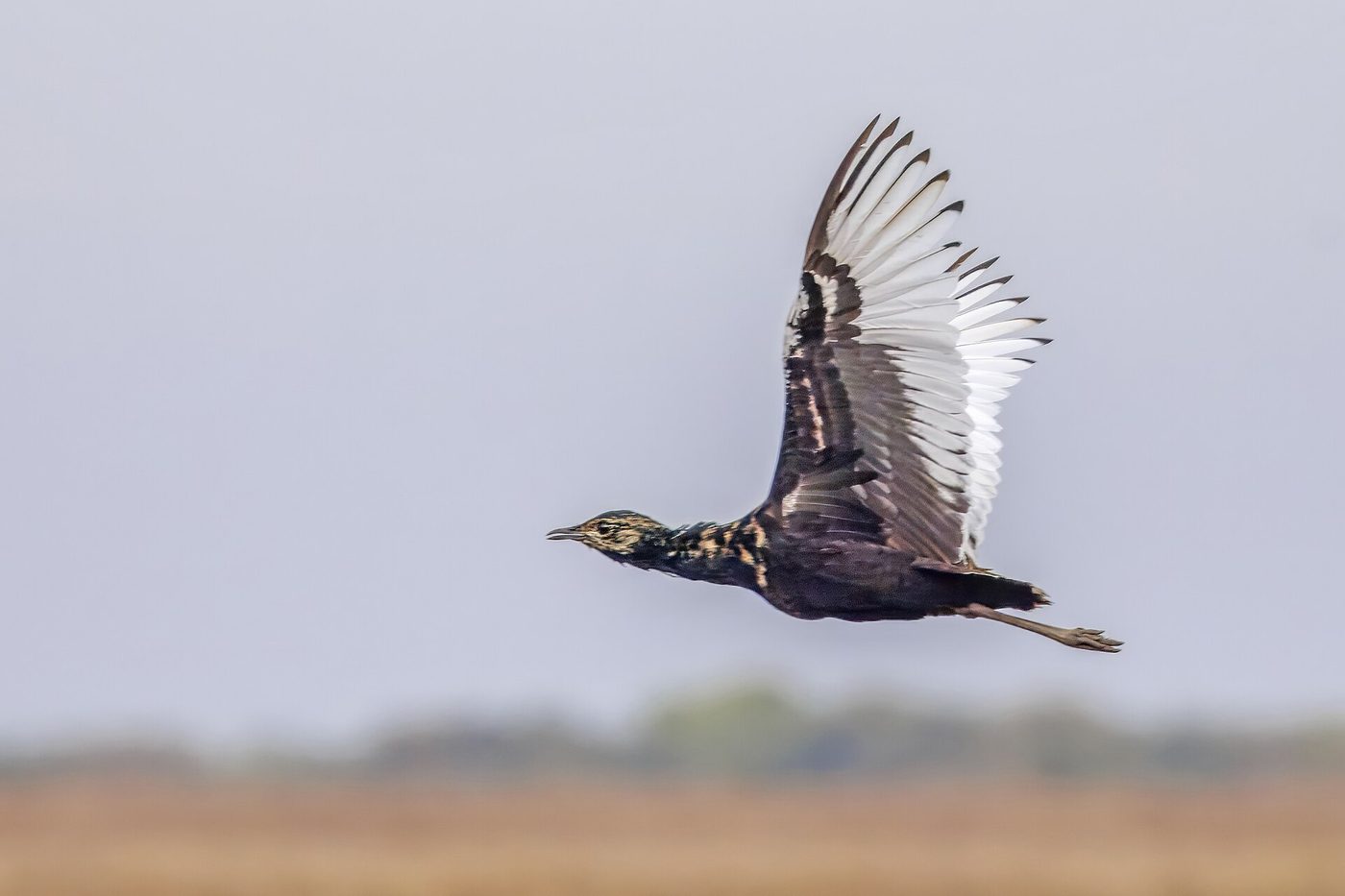
Most of the world's Bengal floricans display over the grasslands around Cambodia's Tonle Sap lake, a landscape transformed by industrial rice. Protected grassland reserves and bird-friendly rice schemes pay farmers to keep the floodplain mosaic the florican's dance requires.
What's killing them
- Grassland conversion to dry-season rice
- Dam-driven changes to flood cycles
- Hunting
Who's fighting for them


Logos are the property of their respective organisations and link to their official sites.
Quick answers
How many Bengal Florican are left in the world?
Approximately ~600–800. The Bengal Florican (Houbaropsis bengalensis) is listed as Critically Endangered on the IUCN Red List, and their population trend is declining. Figures are estimates compiled from the IUCN Red List and conservation organisations.
Where does the Bengal Florican live?
The Bengal Florican is found in Cambodia, India, Nepal (Asia). Their habitat: Seasonally flooded grasslands of the Tonle Sap and Brahmaputra basins.
Why is the Bengal Florican endangered?
The main threats to the Bengal Florican are: Grassland conversion to dry-season rice; Dam-driven changes to flood cycles; Hunting.
Who is working to save the Bengal Florican?
Organisations working on Bengal Florican conservation include Wildlife Conservation Society; BirdLife International.
Where they live
Bakan Grassland Protected Landscape, Tonle Sap floodplain, Cambodia · Cambodia · India · Nepal · Asia — Approximate range. Click the map to zoom.