№ 61 of 100
Philippine Eagle
Pithecophaga jefferyi
One of the largest, rarest eagles on Earth — each pair needs up to 100 km² of old-growth Philippine rainforest.
- Range
- Philippines
- Region
- Asia
- Habitat
- Old-growth dipterocarp rainforest on Luzon, Samar, Leyte and Mindanao
Field notes
- Weight
- 4.0–8.0 kg
- Size
- 1.84–2.2 m (wingspan)
- Lifespan
- 30–60 years (wild); up to 46 years (captivity)
- Diet
- Carnivore
- Family
- Accipitridae
- Order
- Accipitriformes
The story
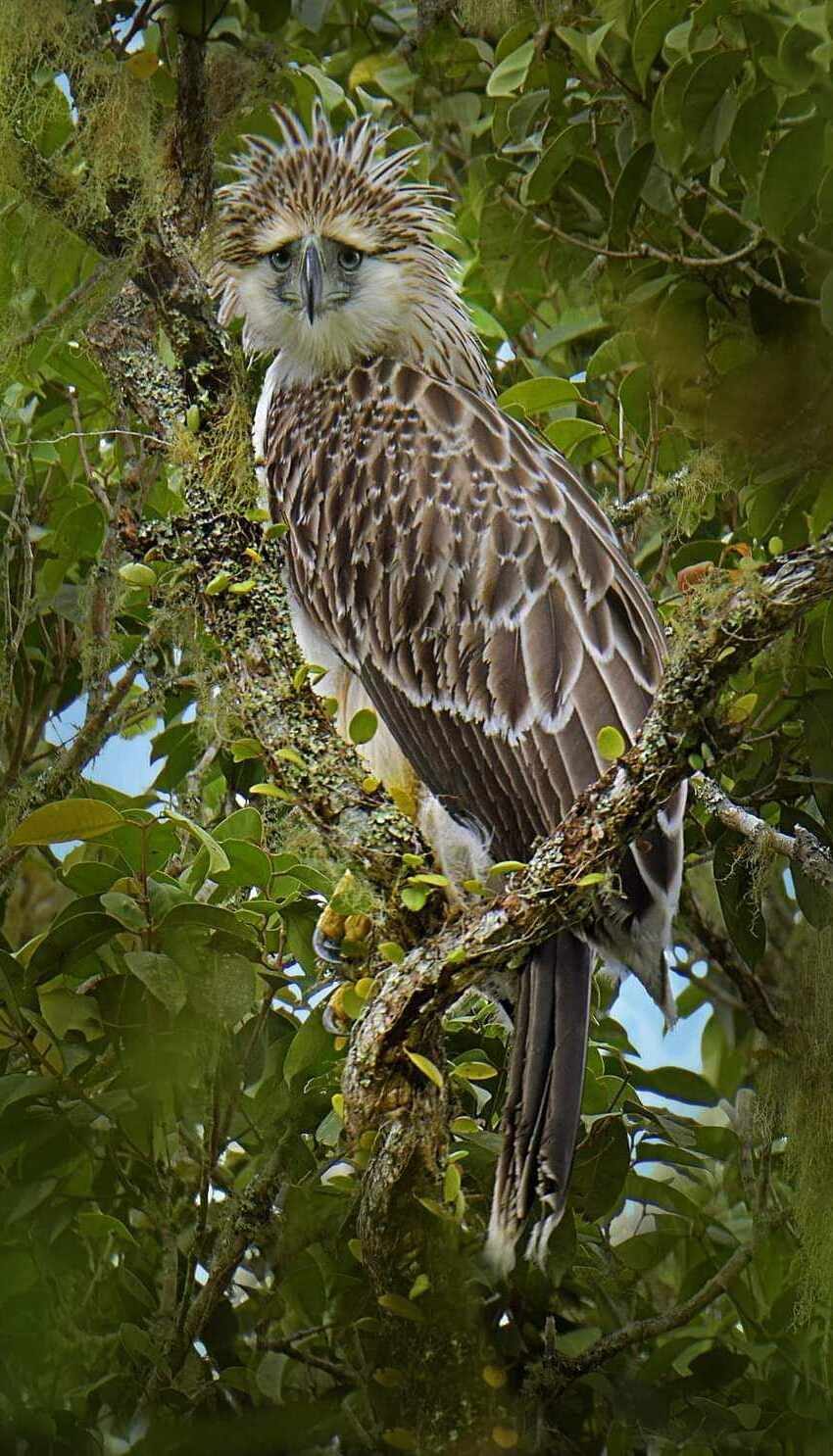
Crowned with a shaggy crest, the Philippine eagle is the national bird of a country that has lost most of its old-growth forest. The Philippine Eagle Foundation pairs captive breeding with Indigenous forest-guard programmes, because every wild nest protected matters more than any aviary.
What's killing them
- Deforestation of nesting forest
- Shooting despite legal protection
- Slow breeding — one chick every two years
Who's fighting for them
 Philippine Eagle FoundationPhilippine Eagle Foundation Donate
 BirdLife InternationalBirdLife International Donate
Logos are the property of their respective organisations and link to their official sites.
Quick answers
How many Philippine Eagle are left in the world?
Approximately ~600–800 (~400 pairs). The Philippine Eagle (Pithecophaga jefferyi) is listed as Critically Endangered on the IUCN Red List, and their population trend is declining. Figures are estimates compiled from the IUCN Red List and conservation organisations.
Where does the Philippine Eagle live?
The Philippine Eagle is found in Philippines (Asia). Their habitat: Old-growth dipterocarp rainforest on Luzon, Samar, Leyte and Mindanao.
Why is the Philippine Eagle endangered?
The main threats to the Philippine Eagle are: Deforestation of nesting forest; Shooting despite legal protection; Slow breeding — one chick every two years.
Who is working to save the Philippine Eagle?
Organisations working on Philippine Eagle conservation include Philippine Eagle Foundation; BirdLife International.
Where they live
Philippine Eagle Center, Davao City, Mindanao · Philippines · Asia — Approximate range. Click the map to zoom.