№ 12 of 100
Asiatic Cheetah
Acinonyx jubatus venaticus
The cheetah once raced across Asia from Arabia to India — today fewer than thirty survive in the deserts of Iran.
- Range
- Iran
- Region
- Asia
- Habitat
- Arid steppe and desert ranges of Iran's central plateau
Field notes
- Weight
- 34–54 kg
- Size
- 1.12–1.35 m (head-body length)
- Diet
- Carnivore
- Family
- Felidae
- Order
- Carnivora
The story
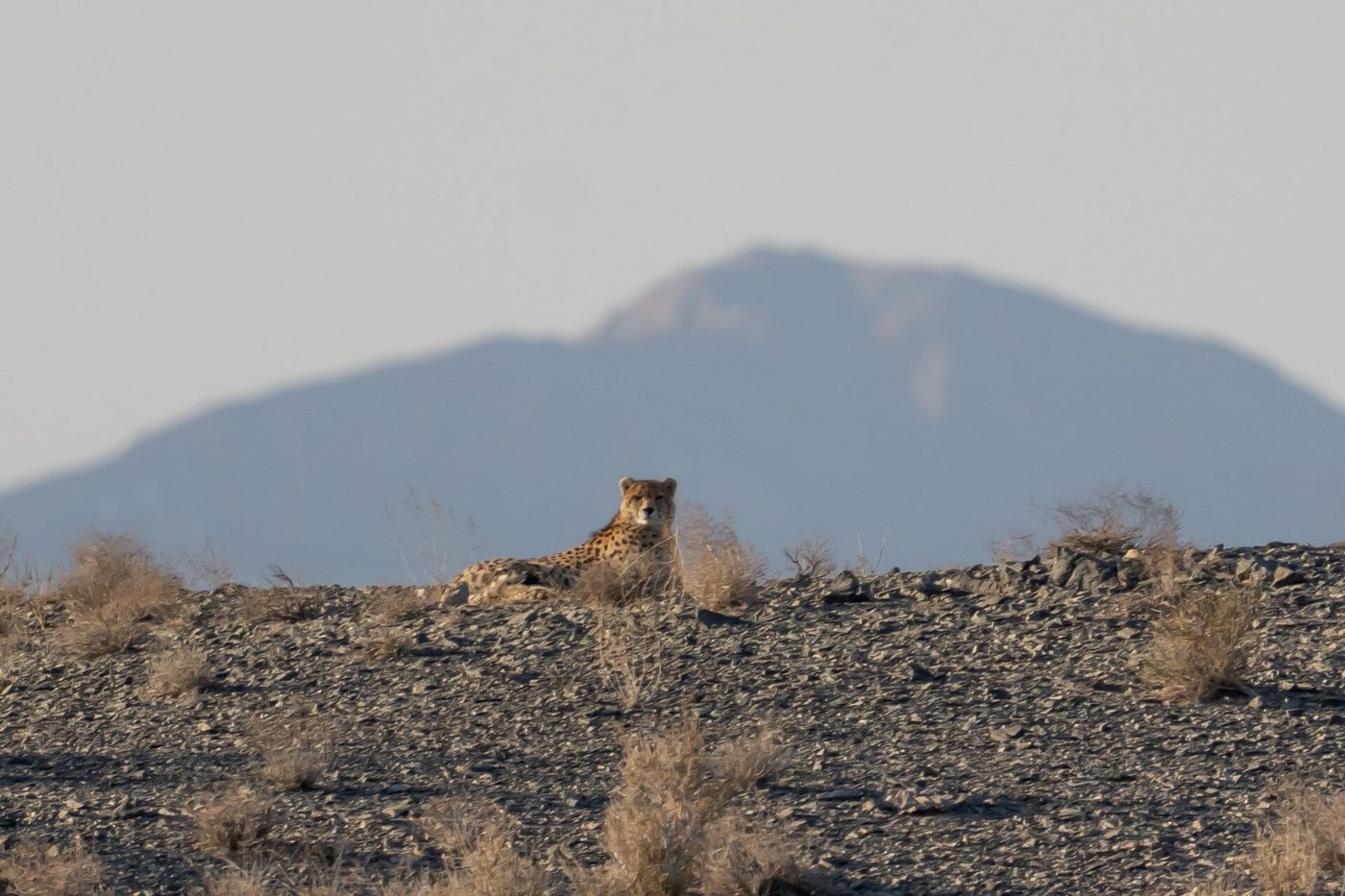
The world's last Asiatic cheetahs live at impossibly low densities across Iran's vast central deserts, where roads between reserves kill more cheetahs than any predator. Iranian conservationists camera-trap waterholes and campaign for road fencing, and a first cub was born in captivity in 2022.
What's killing them
- Vehicle collisions
- Prey depletion
- Herding-dog and farmer conflict
- Tiny fragmented population
Who's fighting for them
 IUCN Red ListInternational Union for Conservation of Nature — Species Survival Commission Donate
 PantheraPanthera — Wild Cat Conservation Donate
 WCSWildlife Conservation Society Donate
Logos are the property of their respective organisations and link to their official sites.
Quick answers
How many Asiatic Cheetah are left in the world?
Approximately ~20–30. The Asiatic Cheetah (Acinonyx jubatus venaticus) is listed as Critically Endangered on the IUCN Red List, and their population trend is declining. Figures are estimates compiled from the IUCN Red List and conservation organisations.
Where does the Asiatic Cheetah live?
The Asiatic Cheetah is found in Iran (Asia). Their habitat: Arid steppe and desert ranges of Iran's central plateau.
Why is the Asiatic Cheetah endangered?
The main threats to the Asiatic Cheetah are: Vehicle collisions; Prey depletion; Herding-dog and farmer conflict; Tiny fragmented population.
Who is working to save the Asiatic Cheetah?
Organisations working on Asiatic Cheetah conservation include International Union for Conservation of Nature — Species Survival Commission; Panthera — Wild Cat Conservation; Wildlife Conservation Society.
Where they live
Khar Turan National Park, Semnan Province, Iran · Iran · Asia — Approximate range. Click the map to zoom.