№ 23 of 100
Addax
Addax nasomaculatus
The ghost of the Sahara — a spiral-horned antelope that never needs to drink — has been hunted to the brink in their dune refuges.
- Range
- NigerChad
- Region
- Africa
- Habitat
- Hyper-arid sand seas and gravel plains of the central Sahara
Field notes
- Weight
- 60–125 kg
- Size
- 1.2–1.3 m (head-and-body length)
- Lifespan
- up to 19 years (wild); ~25 years (captivity)
- Diet
- Herbivore
- Family
- Bovidae
- Order
- Artiodactyla
The story
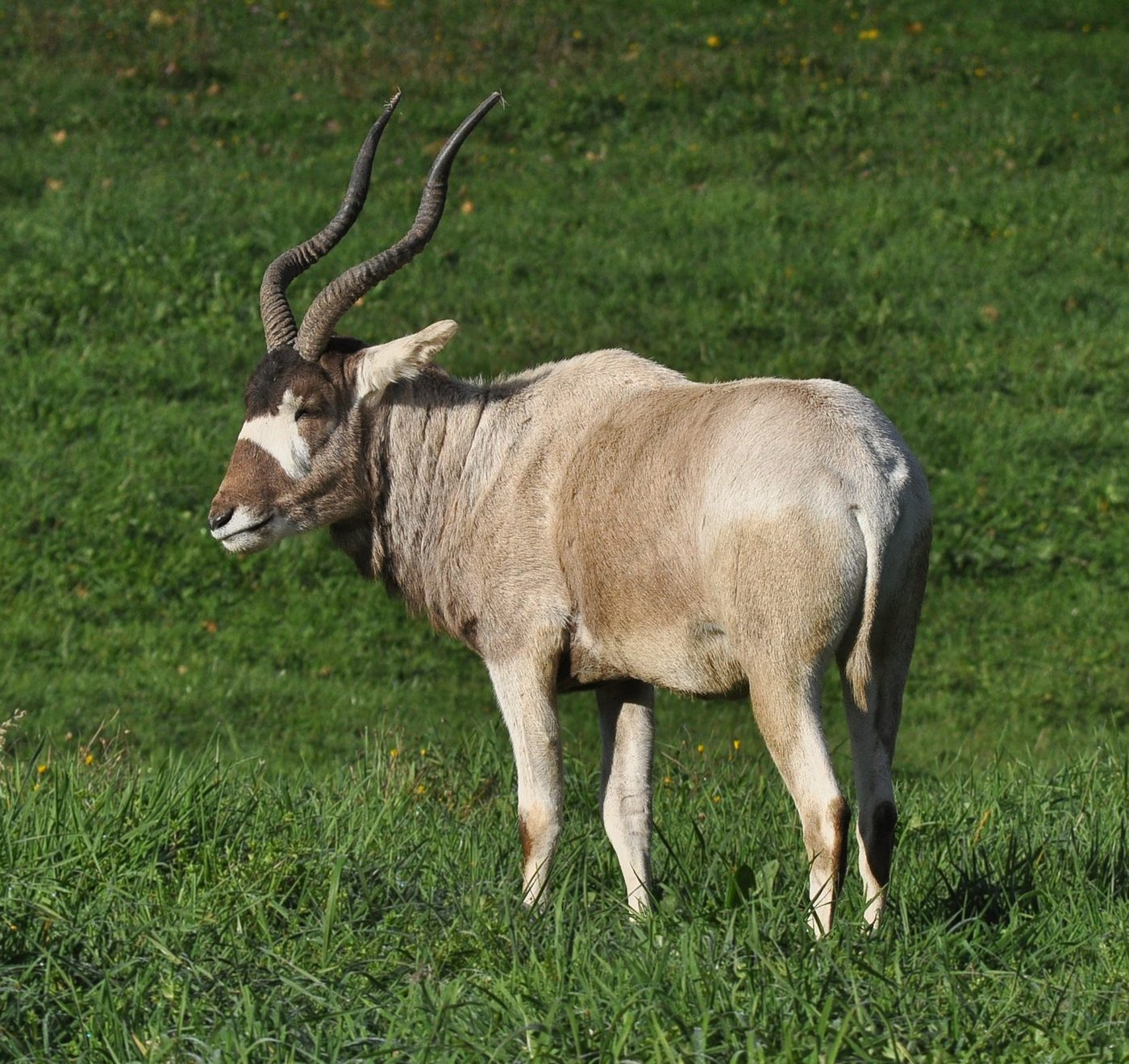
Addax once moved in herds of thousands across the entire Sahara, tracking rain none of us would notice. Decades of conflict and motorised hunting have left scattered survivors in Niger and Chad, while large semi-wild herds in reserves and a major reintroduction in Chad offer a path back to the sands.
What's killing them
- Poaching by armed groups
- Disturbance from oil exploration
- Drought
- Extreme remoteness hampering protection
Who's fighting for them
 Sahara ConservationSahara Conservation Donate
 African ParksAfrican Parks Network Donate
 IUCN Red ListInternational Union for Conservation of Nature — Species Survival Commission Donate
Logos are the property of their respective organisations and link to their official sites.
Quick answers
How many Addax are left in the world?
Approximately <100 wild. The Addax (Addax nasomaculatus) is listed as Critically Endangered on the IUCN Red List, and their population trend is declining. Figures are estimates compiled from the IUCN Red List and conservation organisations.
Where does the Addax live?
The Addax is found in Niger, Chad (Africa). Their habitat: Hyper-arid sand seas and gravel plains of the central Sahara.
Why is the Addax endangered?
The main threats to the Addax are: Poaching by armed groups; Disturbance from oil exploration; Drought; Extreme remoteness hampering protection.
Who is working to save the Addax?
Organisations working on Addax conservation include Sahara Conservation; African Parks Network; International Union for Conservation of Nature — Species Survival Commission.
Where they live
Termit and Tin Toumma National Nature Reserve, Niger · Niger · Chad · Africa — Approximate range. Click the map to zoom.