№ 40 of 100
Silky Sifaka
Propithecus candidus
The 'angel of the forest' — a white silk-furred lemur — leaps through Madagascar's misty peaks in dwindling numbers.
- Range
- Madagascar
- Region
- Africa
- Habitat
- Montane rainforest of the Marojejy massif, northeastern Madagascar
Field notes
- Weight
- 5–6.5 kg
- Size
- 48–54 cm (head-body)
- Diet
- Folivore
- Family
- Indriidae
- Order
- Primates
The story
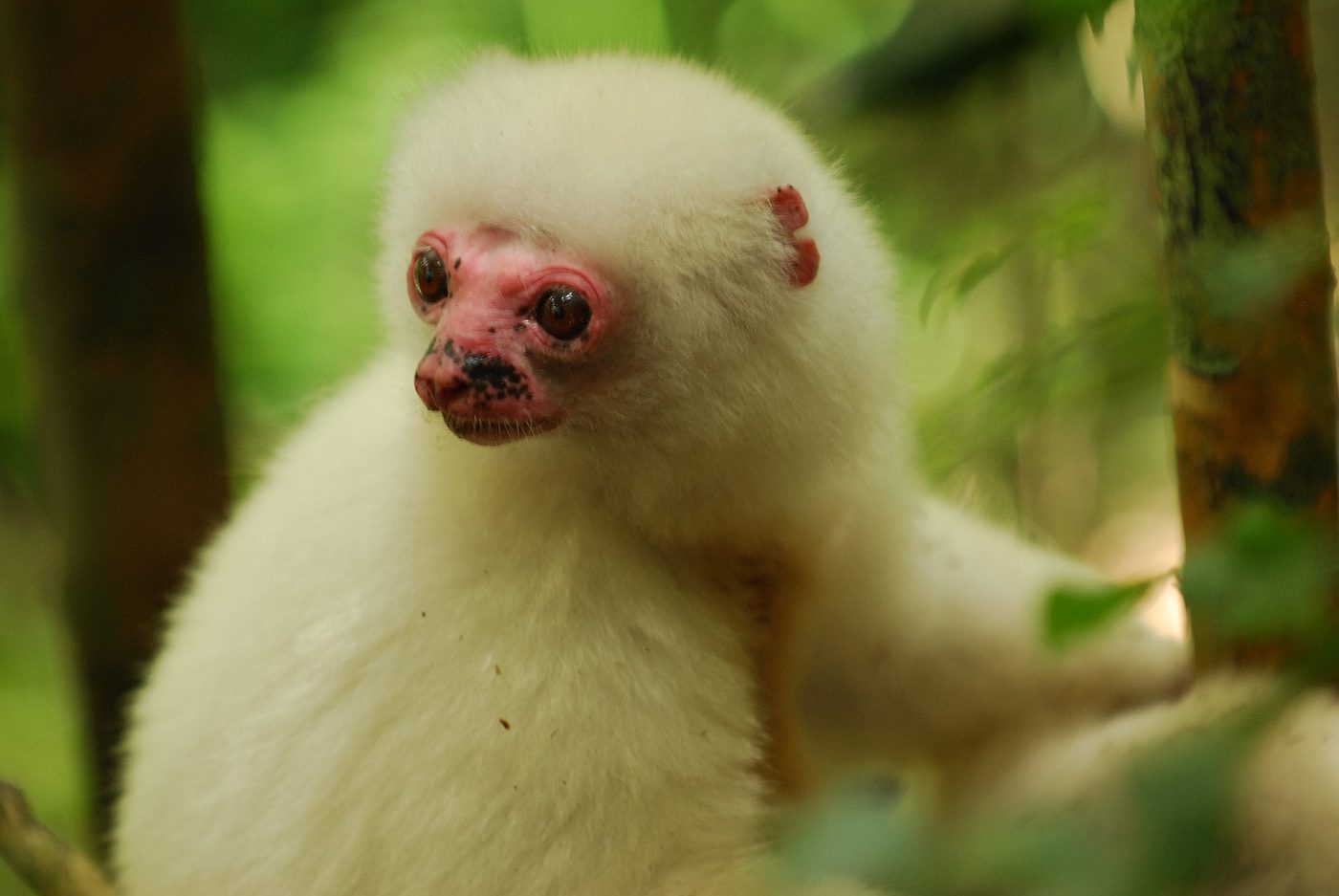
Silky sifakas cannot survive in captivity, so their fate rests entirely on Marojejy's forests, which were plundered for rosewood during political crises. Local guides, ecotourism and ranger patrols are now the species' main shield.
What's killing them
- Slash-and-burn clearance
- Illegal rosewood logging
- Hunting
- No captive population exists
Who's fighting for them
 ZSL EDGEZoological Society of London — EDGE of Existence Donate
 Conservation InternationalConservation International Donate
 Re:wildRe:wild — Global Wildlife Conservation Donate
Logos are the property of their respective organisations and link to their official sites.
Quick answers
How many Silky Sifaka are left in the world?
Approximately ~250 (est. 100–1,000). The Silky Sifaka (Propithecus candidus) is listed as Critically Endangered on the IUCN Red List, and their population trend is declining. Figures are estimates compiled from the IUCN Red List and conservation organisations.
Where does the Silky Sifaka live?
The Silky Sifaka is found in Madagascar (Africa). Their habitat: Montane rainforest of the Marojejy massif, northeastern Madagascar.
Why is the Silky Sifaka endangered?
The main threats to the Silky Sifaka are: Slash-and-burn clearance; Illegal rosewood logging; Hunting; No captive population exists.
Who is working to save the Silky Sifaka?
Organisations working on Silky Sifaka conservation include Zoological Society of London — EDGE of Existence; Conservation International; Re:wild — Global Wildlife Conservation.
Where they live
Marojejy National Park, Madagascar · Madagascar · Africa — Approximate range. Click the map to zoom.