№ 44 of 100
Regent Honeyeater
Anthochaera phrygia
A gold-embroidered nomad so rare that young males are forgetting the species' own song.
- Range
- Australia
- Region
- Oceania
- Habitat
- Box-ironbark woodland of southeastern Australia
Field notes
- Weight
- ≈43 g (35–50 g)
- Size
- 20–24 cm (body length)
- Diet
- Nectarivore
- Family
- Meliphagidae
- Order
- Passeriformes
The story
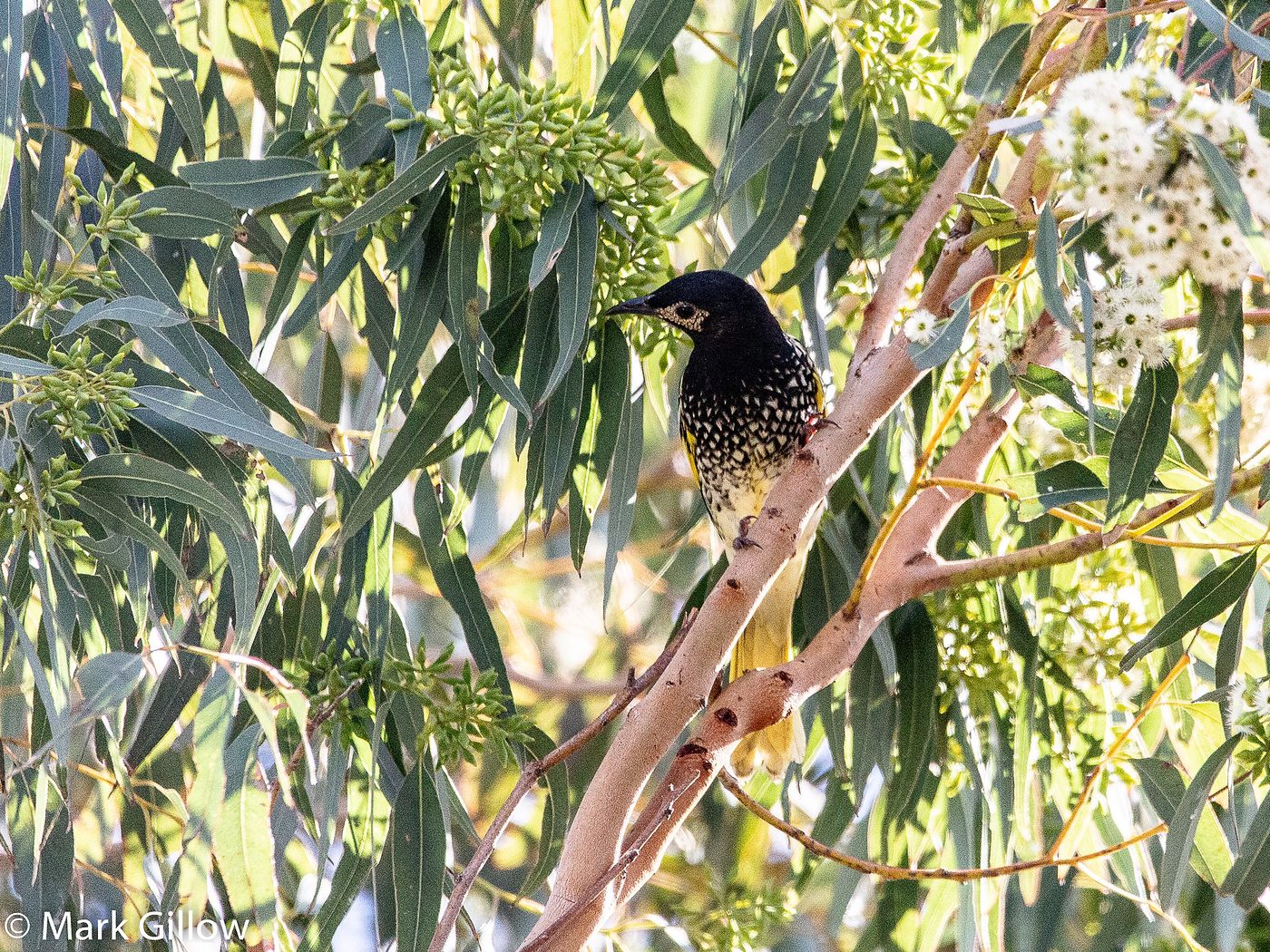
Regent honeyeaters once moved in flocks of hundreds tracking eucalypt blossom; now the survivors are so scattered that wild chicks fail to learn their courtship song, deepening the decline. Zoo-bred birds are taught wild song from recordings before release into restored woodland corridors.
What's killing them
- Loss of 90% of woodland habitat
- Competition from aggressive miners
- Population too sparse to maintain song culture
Who's fighting for them
 BirdLife InternationalBirdLife International Donate
 Australian Wildlife ConservancyAustralian Wildlife Conservancy Donate
 AZA SAFEAssociation of Zoos & Aquariums — SAFE Program Donate
Logos are the property of their respective organisations and link to their official sites.
Quick answers
How many Regent Honeyeater are left in the world?
Approximately ~250–350 wild. The Regent Honeyeater (Anthochaera phrygia) is listed as Critically Endangered on the IUCN Red List, and their population trend is declining. Figures are estimates compiled from the IUCN Red List and conservation organisations.
Where does the Regent Honeyeater live?
The Regent Honeyeater is found in Australia (Oceania). Their habitat: Box-ironbark woodland of southeastern Australia.
Why is the Regent Honeyeater endangered?
The main threats to the Regent Honeyeater are: Loss of 90% of woodland habitat; Competition from aggressive miners; Population too sparse to maintain song culture.
Who is working to save the Regent Honeyeater?
Organisations working on Regent Honeyeater conservation include BirdLife International; Australian Wildlife Conservancy; Association of Zoos & Aquariums — SAFE Program.
Where they live
Capertee Valley, New South Wales, Australia · Australia · Oceania — Approximate range. Click the map to zoom.