№ 38 of 100
Kākāpō
Strigops habroptilus
The world's only flightless parrot — nocturnal, moss-green and owl-faced — is counted so closely every bird has a name.
- Range
- New Zealand
- Region
- Oceania
- Habitat
- Predator-free island sanctuaries (Whenua Hou, Anchor and Te Hauturu-o-Toi)
Field notes
- Weight
- 0.95–3 kg
- Size
- up to 64 cm (length)
- Lifespan
- average ~60 years (up to ~90)
- Diet
- Herbivore
- Family
- Strigopidae
- Order
- Psittaciformes
The story
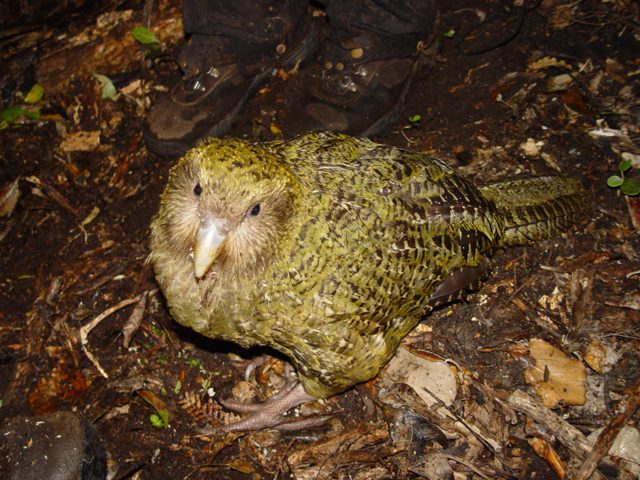
Kākāpō evolved with no mammalian predators and nearly vanished when rats, cats and stoats arrived; by 1995 only 51 remained. Every bird now wears a transmitter on a predator-free island, with genomics-guided matchmaking and smart feeders driving record breeding seasons.
What's killing them
- Introduced predators on the mainland
- Infertility and inbreeding
- Disease (aspergillosis)
- Boom-bust breeding tied to rimu fruiting
Who's fighting for them
 NZ Dept. of ConservationNew Zealand Department of Conservation Donate
 Re:wildRe:wild — Global Wildlife Conservation Donate
 BirdLife InternationalBirdLife International Donate
Logos are the property of their respective organisations and link to their official sites.
Quick answers
How many Kākāpō are left in the world?
Approximately ~244. The Kākāpō (Strigops habroptilus) is listed as Critically Endangered on the IUCN Red List, and their population trend is recovering. Figures are estimates compiled from the IUCN Red List and conservation organisations.
Where does the Kākāpō live?
The Kākāpō is found in New Zealand (Oceania). Their habitat: Predator-free island sanctuaries (Whenua Hou, Anchor and Te Hauturu-o-Toi).
Why is the Kākāpō endangered?
The main threats to the Kākāpō are: Introduced predators on the mainland; Infertility and inbreeding; Disease (aspergillosis); Boom-bust breeding tied to rimu fruiting.
Who is working to save the Kākāpō?
Organisations working on Kākāpō conservation include New Zealand Department of Conservation; Re:wild — Global Wildlife Conservation; BirdLife International.
Where they live
Codfish Island / Whenua Hou, New Zealand · New Zealand · Oceania — Approximate range. Click the map to zoom.