№ 57 of 100
Jamaican Iguana
Cyclura collei
Declared extinct in 1948, Jamaica's largest native land animal was rediscovered by a hunter's dog in 1990.
- Range
- Jamaica
- Region
- Caribbean
- Habitat
- Tropical dry forest of the Hellshire Hills, southern Jamaica
Field notes
- Weight
- males over 2 kg
- Size
- up to 43 cm (total length, males); ~38 cm (females)
- Diet
- Herbivore
- Family
- Iguanidae
- Order
- Squamata
The story
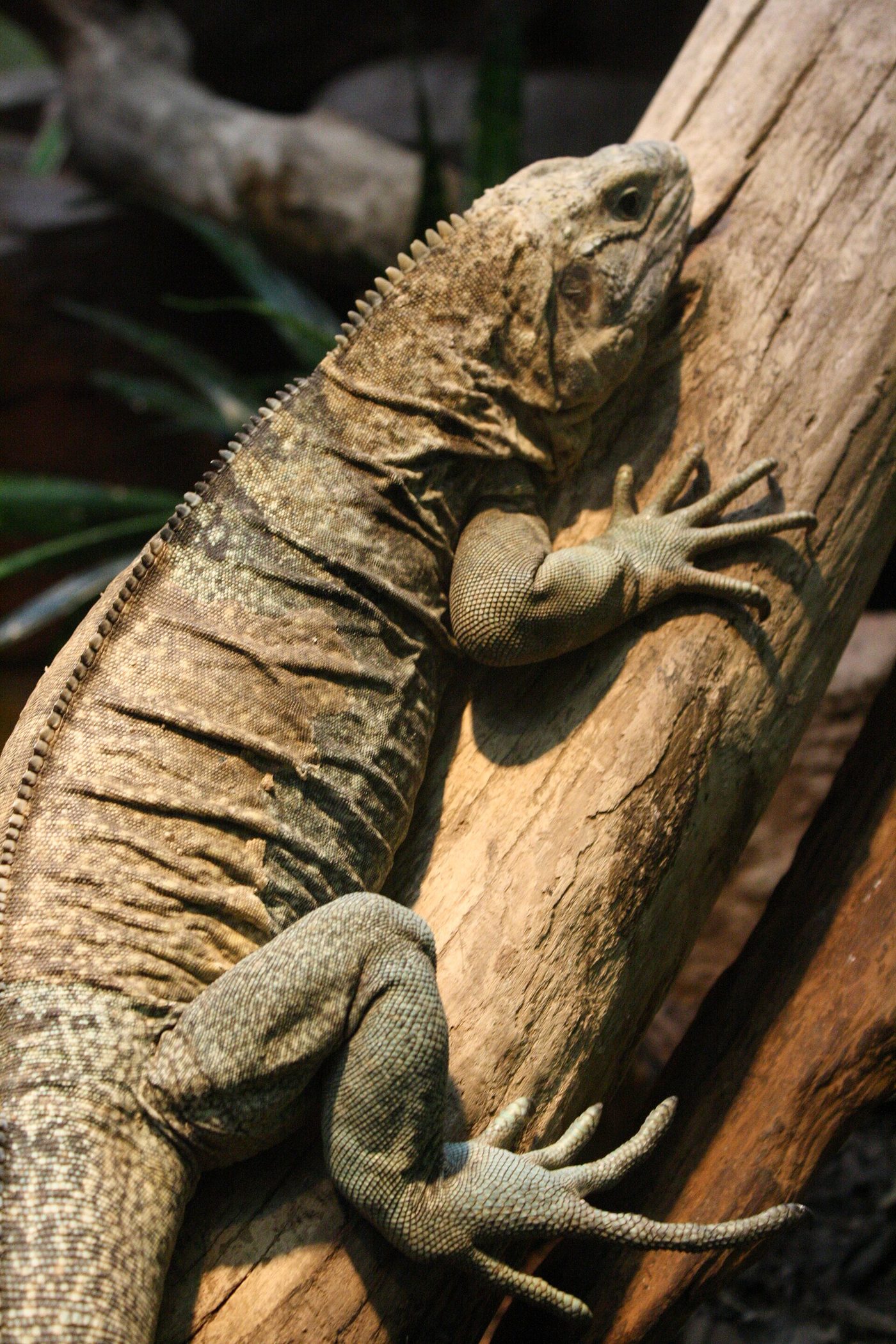
The Jamaican iguana's rediscovery in the Hellshire Hills launched one of herpetology's great rescues: headstarting hatchlings at Hope Zoo until they outgrow mongoose jaws has raised the wild population from fewer than 50 to several hundred, all in one last patch of dry forest.
What's killing them
- Invasive mongooses, cats and pigs
- Charcoal burning destroying dry forest
- Proposed port development
Who's fighting for them
 DurrellDurrell Wildlife Conservation Trust Donate
 IUCN Red ListInternational Union for Conservation of Nature — Species Survival Commission Donate
 AZA SAFEAssociation of Zoos & Aquariums — SAFE Program Donate
Logos are the property of their respective organisations and link to their official sites.
Quick answers
How many Jamaican Iguana are left in the world?
Approximately ~500–600. The Jamaican Iguana (Cyclura collei) is listed as Critically Endangered on the IUCN Red List, and their population trend is recovering. Figures are estimates compiled from the IUCN Red List and conservation organisations.
Where does the Jamaican Iguana live?
The Jamaican Iguana is found in Jamaica (Caribbean). Their habitat: Tropical dry forest of the Hellshire Hills, southern Jamaica.
Why is the Jamaican Iguana endangered?
The main threats to the Jamaican Iguana are: Invasive mongooses, cats and pigs; Charcoal burning destroying dry forest; Proposed port development.
Who is working to save the Jamaican Iguana?
Organisations working on Jamaican Iguana conservation include Durrell Wildlife Conservation Trust; International Union for Conservation of Nature — Species Survival Commission; Association of Zoos & Aquariums — SAFE Program.
Where they live
Hellshire Hills, Jamaica · Jamaica · Caribbean — Approximate range. Click the map to zoom.