№ 63 of 100
Hooded Grebe
Podiceps gallardoi
Discovered only in 1974, this Patagonian dancer performs one of the most spectacular courtship ballets in nature.
- Range
- ArgentinaChile
- Region
- South America
- Habitat
- Windswept basaltic plateau lakes of Santa Cruz, Patagonia
Field notes
- Size
- ≈32 cm (body length)
- Diet
- Insectivore
- Family
- Podicipedidae
- Order
- Podicipediformes
The story
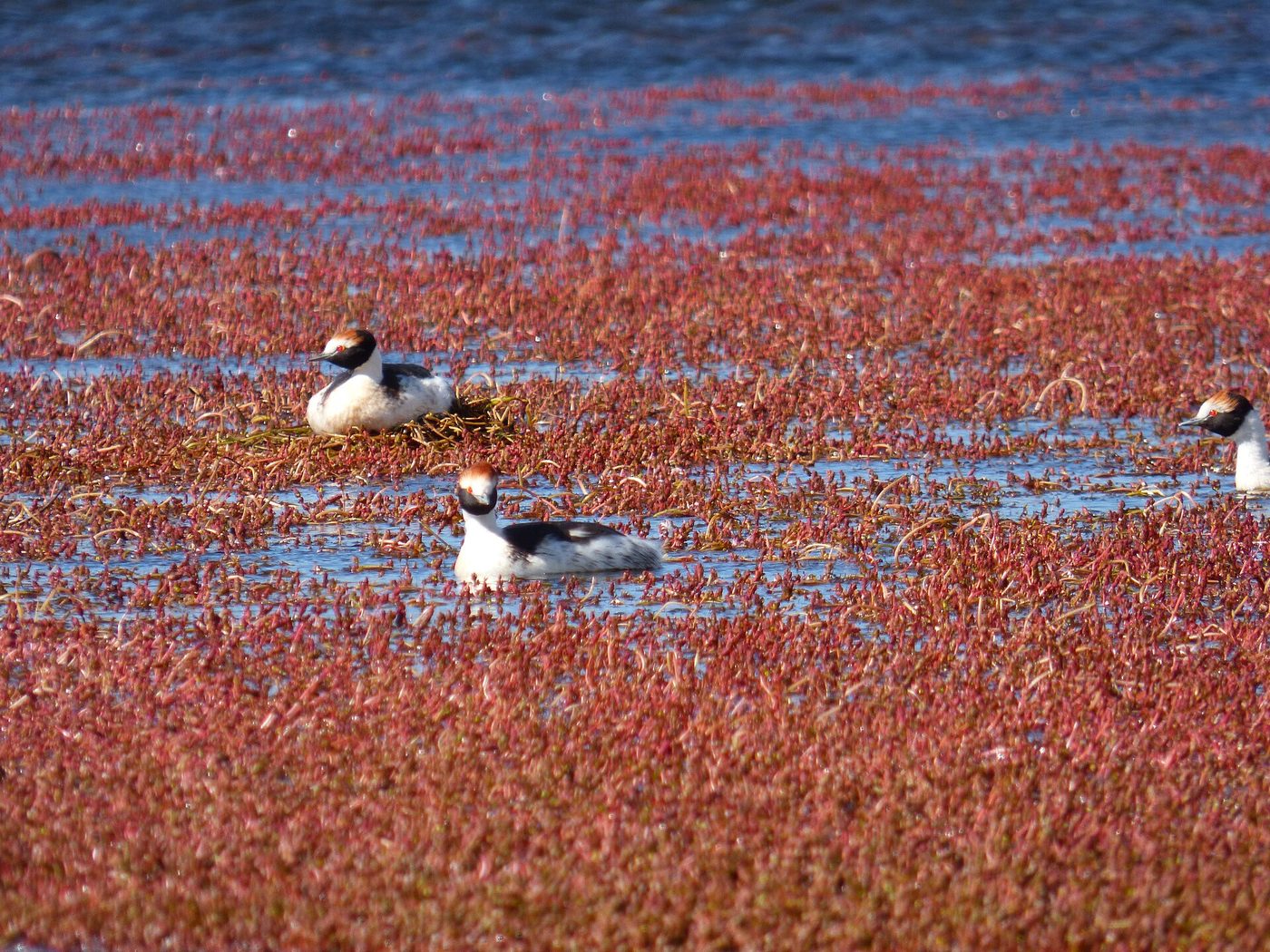
Hooded grebes breed on remote plateau lakes where introduced mink can destroy a whole colony in a night. 'Colony guardian' biologists camp beside every known breeding lake each summer — a thin human shield credited with halting the species' free-fall.
What's killing them
- Invasive American mink
- Introduced trout eating food supply
- Kelp-gull predation
- Drying lakes under climate change
Who's fighting for them
 BirdLife InternationalBirdLife International Donate
 Re:wildRe:wild — Global Wildlife Conservation Donate
Logos are the property of their respective organisations and link to their official sites.
Quick answers
How many Hooded Grebe are left in the world?
Approximately ~750–800. The Hooded Grebe (Podiceps gallardoi) is listed as Critically Endangered on the IUCN Red List, and their population trend is declining. Figures are estimates compiled from the IUCN Red List and conservation organisations.
Where does the Hooded Grebe live?
The Hooded Grebe is found in Argentina, Chile (South America). Their habitat: Windswept basaltic plateau lakes of Santa Cruz, Patagonia.
Why is the Hooded Grebe endangered?
The main threats to the Hooded Grebe are: Invasive American mink; Introduced trout eating food supply; Kelp-gull predation; Drying lakes under climate change.
Who is working to save the Hooded Grebe?
Organisations working on Hooded Grebe conservation include BirdLife International; Re:wild — Global Wildlife Conservation.
Where they live
Laguna Los Escarchados Provincial Reserve, Santa Cruz, Argentina · Argentina · Chile · South America — Approximate range. Click the map to zoom.