№ 88 of 100
European Eel
Anguilla anguilla
Every European eel is born in the Sargasso Sea and crosses an ocean twice — a migration now ambushed by 1.3 million barriers and a billion-euro smuggling trade.
- Range
- Across EuropeNorth Africa
- Region
- Europe
- Habitat
- Born in the Sargasso Sea; lives in European rivers and lakes for decades before returning
Field notes
- Weight
- typically 1–2 kg, up to 6.6 kg
- Size
- 45–65 cm typical, up to 1.33 m (length)
- Lifespan
- 15–20 years (wild)
- Diet
- Carnivore
- Family
- Anguillidae
- Order
- Anguilliformes
The story
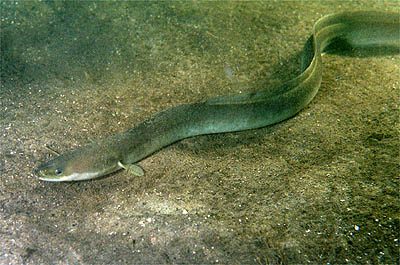
The arrival of juvenile 'glass eels' on European coasts has collapsed by around 95% since the 1980s. Eel trafficking to Asian farms is considered one of the world's largest wildlife crimes by volume, while dam removal and 'eel passes' slowly reopen the rivers of a once-ubiquitous fish.
What's killing them
- Illegal glass-eel trafficking to Asia
- Hydropower turbines and barriers
- Habitat loss
- Parasites and pollutants
Who's fighting for them
 ZSL EDGEZoological Society of London — EDGE of Existence Donate
 TRAFFICTRAFFIC — Wildlife Trade Monitoring Network Donate
 IUCN Red ListInternational Union for Conservation of Nature — Species Survival Commission Donate
Logos are the property of their respective organisations and link to their official sites.
Quick answers
How many European Eel are left in the world?
Approximately Unknown — glass eel arrivals down ~95%. The European Eel (Anguilla anguilla) is listed as Critically Endangered on the IUCN Red List, and their population trend is declining. Figures are estimates compiled from the IUCN Red List and conservation organisations.
Where does the European Eel live?
The European Eel is found in Across Europe, North Africa (Europe). Their habitat: Born in the Sargasso Sea; lives in European rivers and lakes for decades before returning.
Why is the European Eel endangered?
The main threats to the European Eel are: Illegal glass-eel trafficking to Asia; Hydropower turbines and barriers; Habitat loss; Parasites and pollutants.
Who is working to save the European Eel?
Organisations working on European Eel conservation include Zoological Society of London — EDGE of Existence; TRAFFIC — Wildlife Trade Monitoring Network; International Union for Conservation of Nature — Species Survival Commission.
Where they live
IJsselmeer, Netherlands · Across Europe · North Africa · Europe — Approximate range. Click the map to zoom.