№ 51 of 100
Ethiopian Wolf
Canis simensis
Africa's most endangered carnivore — a russet highland wolf that hunts giant mole-rats alone above the clouds.
- Range
- Ethiopia
- Region
- Africa
- Habitat
- Afro-alpine moorland above 3,000 m in the Ethiopian highlands
Field notes
- Weight
- 11.2–19.3 kg
- Size
- 0.84–1.01 m (head-and-body length)
- Lifespan
- 8–10 years (wild), up to 12 (captivity)
- Diet
- Carnivore
- Family
- Canidae
- Order
- Carnivora
The story
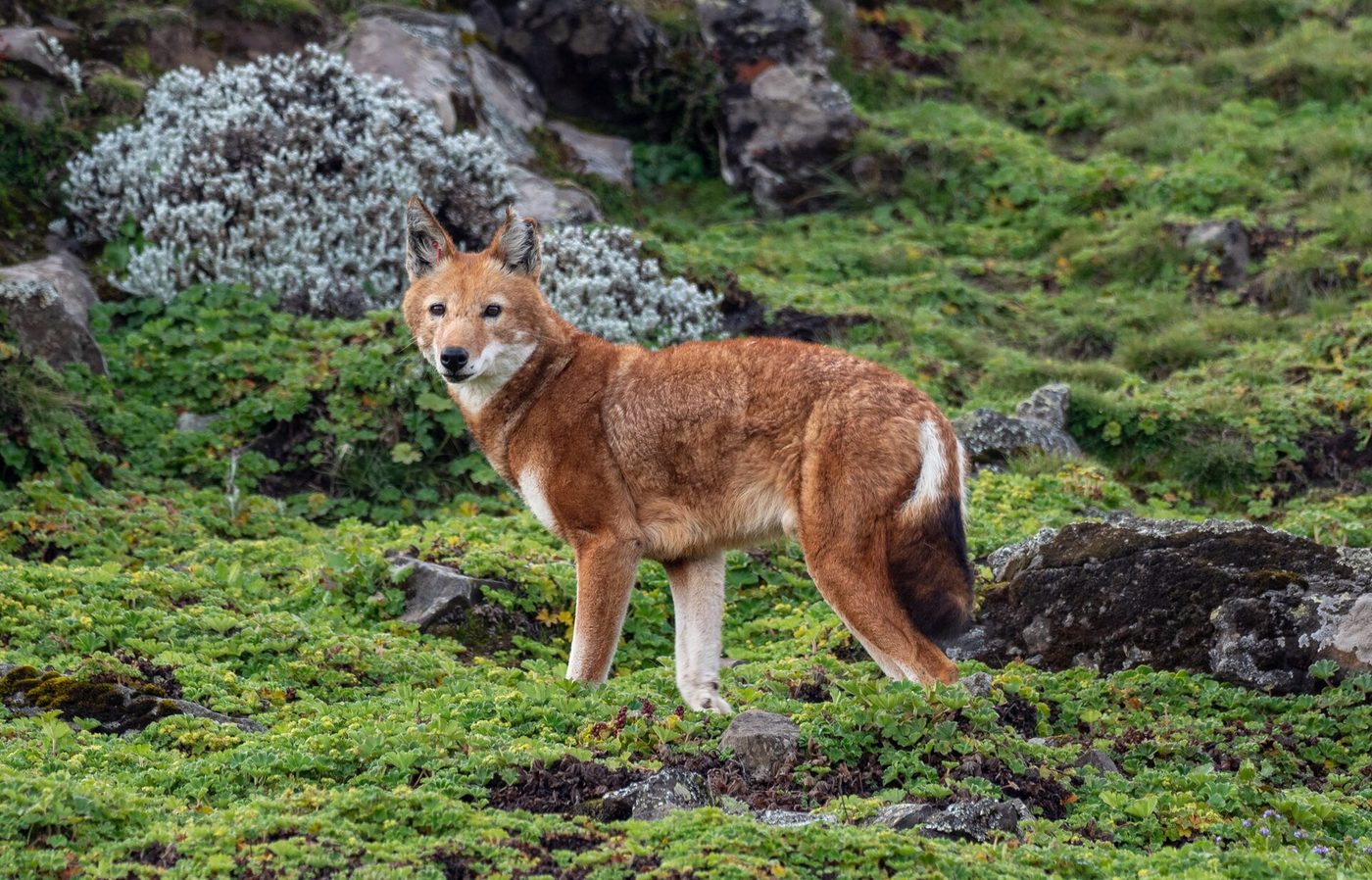
Ethiopian wolves live only on a handful of alpine 'sky islands', where one rabies outbreak from village dogs can erase a third of a population in months. Vaccination campaigns — including oral baits for the wolves themselves — have become the species' lifeline.
What's killing them
- Rabies and distemper from domestic dogs
- Loss of alpine habitat to farming
- Tiny isolated populations
Who's fighting for them
 IUCN Red ListInternational Union for Conservation of Nature — Species Survival Commission Donate
 Re:wildRe:wild — Global Wildlife Conservation Donate
 African ParksAfrican Parks Network Donate
Logos are the property of their respective organisations and link to their official sites.
Quick answers
How many Ethiopian Wolf are left in the world?
Approximately ~500. The Ethiopian Wolf (Canis simensis) is listed as Endangered on the IUCN Red List, and their population trend is declining. Figures are estimates compiled from the IUCN Red List and conservation organisations.
Where does the Ethiopian Wolf live?
The Ethiopian Wolf is found in Ethiopia (Africa). Their habitat: Afro-alpine moorland above 3,000 m in the Ethiopian highlands.
Why is the Ethiopian Wolf endangered?
The main threats to the Ethiopian Wolf are: Rabies and distemper from domestic dogs; Loss of alpine habitat to farming; Tiny isolated populations.
Who is working to save the Ethiopian Wolf?
Organisations working on Ethiopian Wolf conservation include International Union for Conservation of Nature — Species Survival Commission; Re:wild — Global Wildlife Conservation; African Parks Network.
Where they live
Bale Mountains National Park, Ethiopia · Ethiopia · Africa — Approximate range. Click the map to zoom.