№ 78 of 100
Black Rhinoceros
Diceros bicornis
Africa's hook-lipped browser lost 96% of their kind in two decades of poaching — and is now slowly, defiantly recovering.
- Range
- NamibiaSouth AfricaKenyaZimbabweTanzania
- Region
- Africa
- Habitat
- Savannah, scrubland and desert margins of eastern and southern Africa
Field notes
- Weight
- 800–1,400 kg
- Size
- 2.8–3.75 m (length)
- Lifespan
- 35–50 years (wild)
- Diet
- Herbivore
- Family
- Rhinocerotidae
- Order
- Perissodactyla
The story
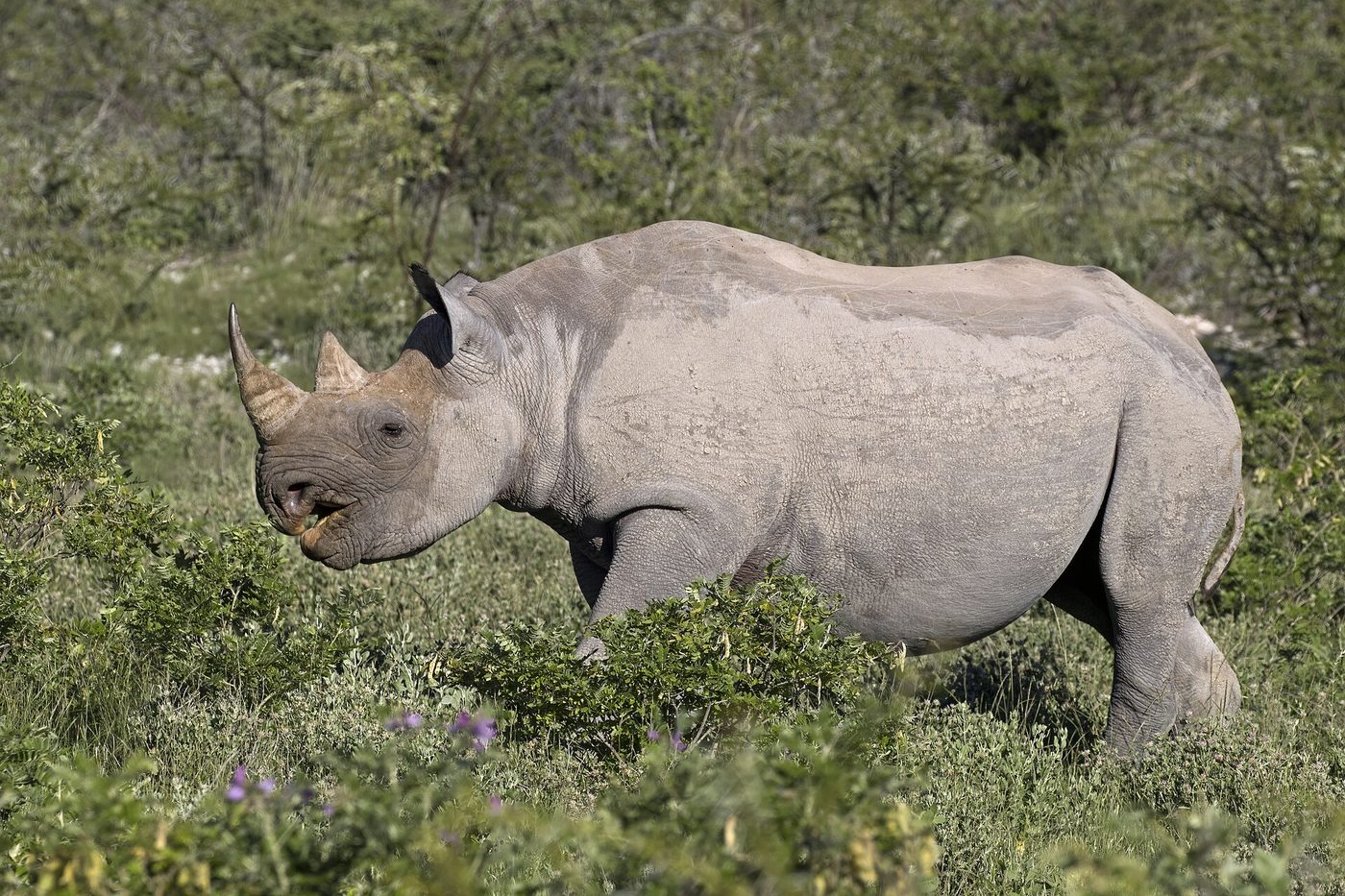
Between 1970 and 1993 black rhino numbers crashed from 65,000 to barely 2,300. Intensive protection zones, dehorning programmes and translocations to rebuild lost range have doubled the population since — yet a rhino is still poached in Africa roughly every day.
What's killing them
- Poaching for horn
- Habitat loss
- Small fragmented populations
Who's fighting for them
 Save the RhinoSave the Rhino International Donate
 International Rhino FoundationInternational Rhino Foundation Donate
 WWFWorld Wide Fund for Nature Donate
 African ParksAfrican Parks Network Donate
Logos are the property of their respective organisations and link to their official sites.
Quick answers
How many Black Rhinoceros are left in the world?
Approximately ~6,400. The Black Rhinoceros (Diceros bicornis) is listed as Critically Endangered on the IUCN Red List, and their population trend is recovering. Figures are estimates compiled from the IUCN Red List and conservation organisations.
Where does the Black Rhinoceros live?
The Black Rhinoceros is found in Namibia, South Africa, Kenya, Zimbabwe, Tanzania (Africa). Their habitat: Savannah, scrubland and desert margins of eastern and southern Africa.
Why is the Black Rhinoceros endangered?
The main threats to the Black Rhinoceros are: Poaching for horn; Habitat loss; Small fragmented populations.
Who is working to save the Black Rhinoceros?
Organisations working on Black Rhinoceros conservation include Save the Rhino International; International Rhino Foundation; World Wide Fund for Nature; African Parks Network.
Where they live
Etosha National Park, Namibia · Namibia · South Africa · Kenya · Zimbabwe · Tanzania · Africa — Approximate range. Click the map to zoom.