№ 11 of 100
Red Wolf
Canis rufus
America's own wolf — leaner and redder than their grey cousin — clings on as a few dozen animals in coastal North Carolina.
- Range
- United States
- Region
- North America
- Habitat
- Coastal plain forests, wetlands and farmland of eastern North Carolina
Field notes
- Weight
- 20–39 kg
- Size
- 1.36–1.65 m (length, incl. tail)
- Lifespan
- up to 14 years (captivity)
- Diet
- Carnivore
- Family
- Canidae
- Order
- Carnivora
The story
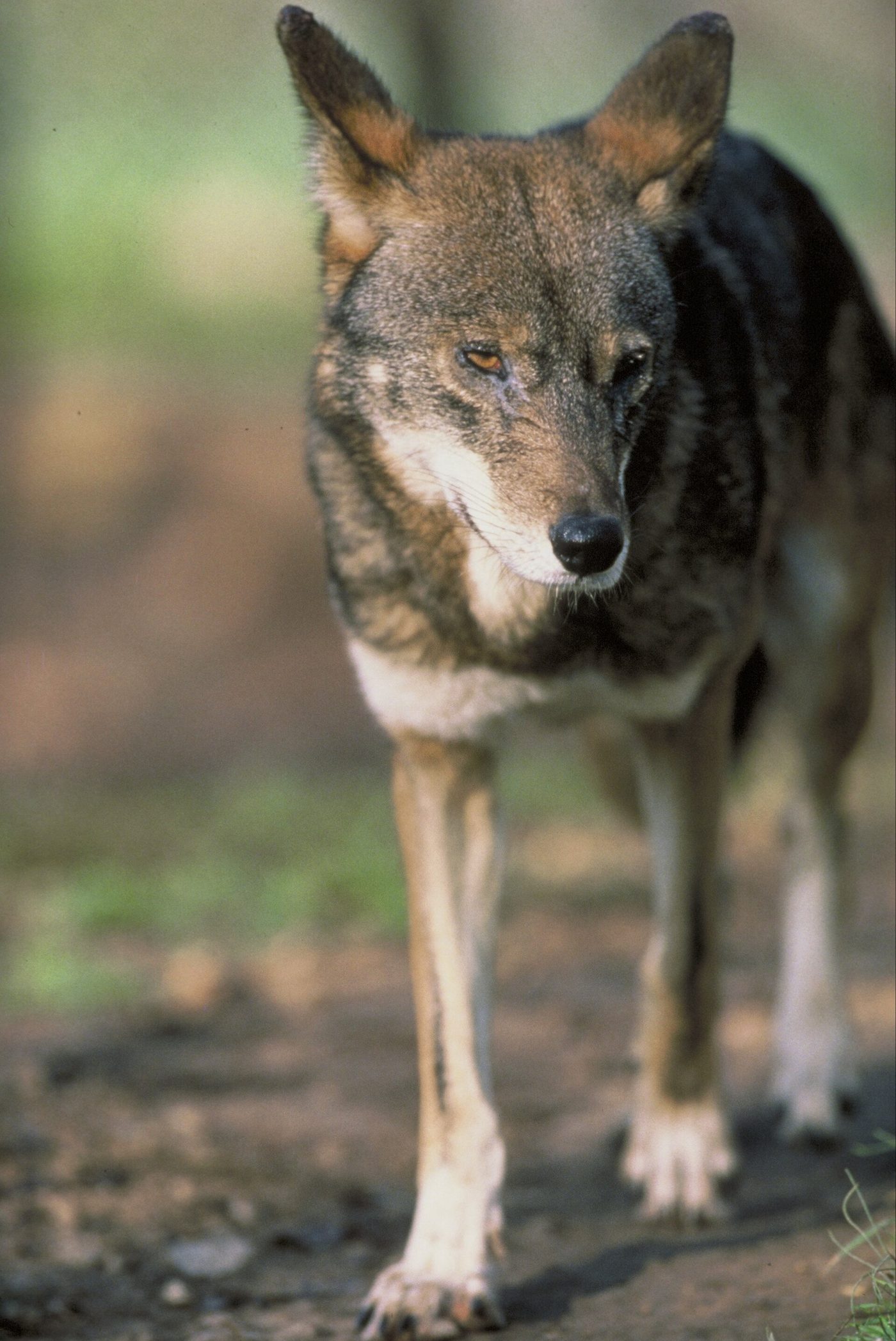
Declared extinct in the wild in 1980, the red wolf became the first carnivore ever successfully reintroduced from captivity. The recovered population once topped 100 before gunshot deaths and policy reversals cut it back to a few packs; new releases and coyote sterilisation are slowly rebuilding it.
What's killing them
- Vehicle strikes and gunshot mortality
- Hybridisation with coyotes
- Political and legal uncertainty
Who's fighting for them
 U.S. Fish & WildlifeUnited States Fish & Wildlife Service Donate
 Re:wildRe:wild — Global Wildlife Conservation Donate
 WCSWildlife Conservation Society Donate
Logos are the property of their respective organisations and link to their official sites.
Quick answers
How many Red Wolf are left in the world?
Approximately ~20 wild · ~270 captive. The Red Wolf (Canis rufus) is listed as Critically Endangered on the IUCN Red List, and their population trend is declining. Figures are estimates compiled from the IUCN Red List and conservation organisations.
Where does the Red Wolf live?
The Red Wolf is found in United States (North America). Their habitat: Coastal plain forests, wetlands and farmland of eastern North Carolina.
Why is the Red Wolf endangered?
The main threats to the Red Wolf are: Vehicle strikes and gunshot mortality; Hybridisation with coyotes; Political and legal uncertainty.
Who is working to save the Red Wolf?
Organisations working on Red Wolf conservation include United States Fish & Wildlife Service; Re:wild — Global Wildlife Conservation; Wildlife Conservation Society.
Where they live
Alligator River National Wildlife Refuge, North Carolina · United States · North America — Approximate range. Click the map to zoom.