№ 66 of 100
Plains-wanderer
Pedionomus torquatus
A bird so evolutionarily distinct they have no living relatives — 60 million years of history balancing on Australia's last native grasslands.
- Range
- Australia
- Region
- Oceania
- Habitat
- Sparse native lowland grassland of the Riverina, New South Wales and Victoria
Field notes
- Weight
- ≈65 g (range 40–95 g)
- Size
- 15–19 cm (body length)
- Diet
- Omnivore
- Family
- Pedionomidae
- Order
- Charadriiformes
The story
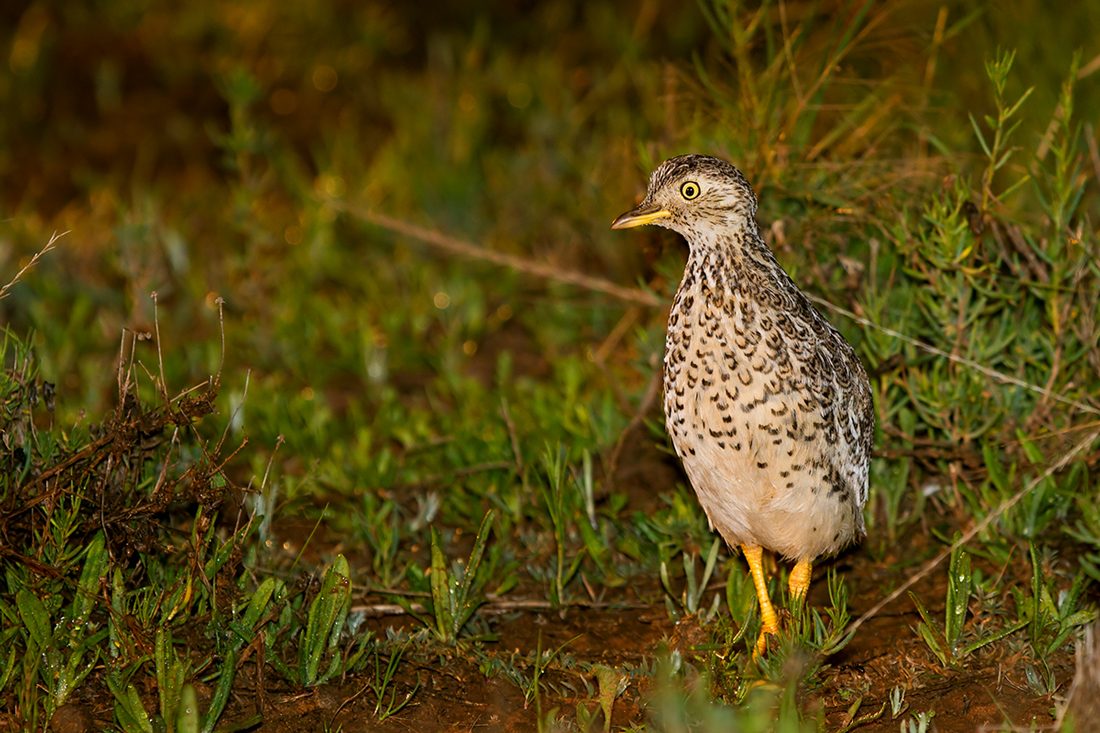
The quail-like plains-wanderer is ranked the world's most evolutionarily distinct endangered bird. They need grassland neither too thick nor too bare, so conservation here is delicate grazing management on private stations, paired with a growing zoo insurance population.
What's killing them
- Grassland conversion to crops
- Grazing pressure changing grass structure
- Drought and flood cycles
- Foxes
Who's fighting for them
 Australian Wildlife ConservancyAustralian Wildlife Conservancy Donate
 ZSL EDGEZoological Society of London — EDGE of Existence Donate
 BirdLife InternationalBirdLife International Donate
Logos are the property of their respective organisations and link to their official sites.
Quick answers
How many Plains-wanderer are left in the world?
Approximately ~250–1,000. The Plains-wanderer (Pedionomus torquatus) is listed as Critically Endangered on the IUCN Red List, and their population trend is declining. Figures are estimates compiled from the IUCN Red List and conservation organisations.
Where does the Plains-wanderer live?
The Plains-wanderer is found in Australia (Oceania). Their habitat: Sparse native lowland grassland of the Riverina, New South Wales and Victoria.
Why is the Plains-wanderer endangered?
The main threats to the Plains-wanderer are: Grassland conversion to crops; Grazing pressure changing grass structure; Drought and flood cycles; Foxes.
Who is working to save the Plains-wanderer?
Organisations working on Plains-wanderer conservation include Australian Wildlife Conservancy; Zoological Society of London — EDGE of Existence; BirdLife International.
Where they live
Riverina Plains near Deniliquin, New South Wales, Australia · Australia · Oceania — Approximate range. Click the map to zoom.