№ 59 of 100
Gharial
Gavialis gangeticus
A fish-eating crocodilian with a needle snout, down 98% in a century — males grow a pot on their nose to sing through.
- Range
- IndiaNepal
- Region
- Asia
- Habitat
- Deep, fast-flowing rivers with sandbanks — Chambal, Girwa and Rapti-Narayani
Field notes
- Weight
- 160–750 kg (adult males)
- Size
- 3–6 m (total length, males); 2.6–4.5 m (females)
- Lifespan
- 40–60 years (wild)
- Diet
- Piscivore
- Family
- Gavialidae
- Order
- Crocodilia
The story
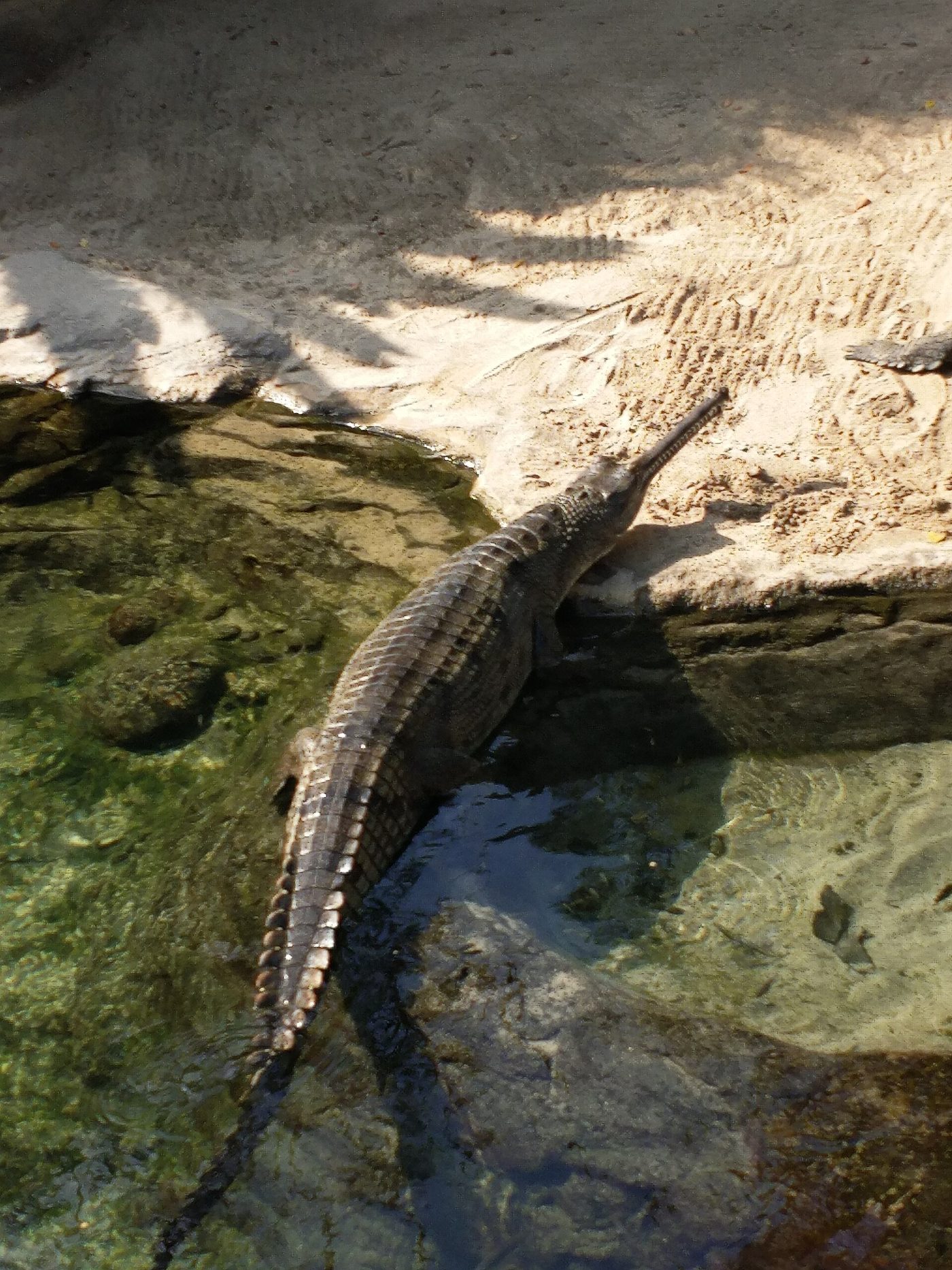
Gharials never attack humans; their slender jaws are built purely for fish. India's National Chambal Sanctuary holds most of the world's breeding adults, where annual nest counts, hatchling head-starting and campaigns against illegal sand mining are inching the species back.
What's killing them
- Dams and barrages fragmenting rivers
- Sand mining of nesting banks
- Fishing-net entanglement
- River pollution
Who's fighting for them
 Turtle Survival AllianceTurtle Survival Alliance Donate
 WWFWorld Wide Fund for Nature Donate
 ZSL EDGEZoological Society of London — EDGE of Existence Donate
Logos are the property of their respective organisations and link to their official sites.
Quick answers
How many Gharial are left in the world?
Approximately ~650 adults. The Gharial (Gavialis gangeticus) is listed as Critically Endangered on the IUCN Red List, and their population trend is recovering. Figures are estimates compiled from the IUCN Red List and conservation organisations.
Where does the Gharial live?
The Gharial is found in India, Nepal (Asia). Their habitat: Deep, fast-flowing rivers with sandbanks — Chambal, Girwa and Rapti-Narayani.
Why is the Gharial endangered?
The main threats to the Gharial are: Dams and barrages fragmenting rivers; Sand mining of nesting banks; Fishing-net entanglement; River pollution.
Who is working to save the Gharial?
Organisations working on Gharial conservation include Turtle Survival Alliance; World Wide Fund for Nature; Zoological Society of London — EDGE of Existence.
Where they live
National Chambal Sanctuary, India · India · Nepal · Asia — Approximate range. Click the map to zoom.