№ 34 of 100
Devils Hole Pupfish
Cyprinodon diabolis
The entire species lives in one desert pool smaller than a swimming lane — the smallest known range of any vertebrate.
- Range
- United States
- Region
- North America
- Habitat
- A single 3m × 22m limestone pool in the Mojave Desert, Nevada
Field notes
- Size
- up to 30 mm (body length)
- Lifespan
- 10–14 months
- Diet
- Omnivore
- Family
- Cyprinodontidae
- Order
- Cyprinodontiformes
The story
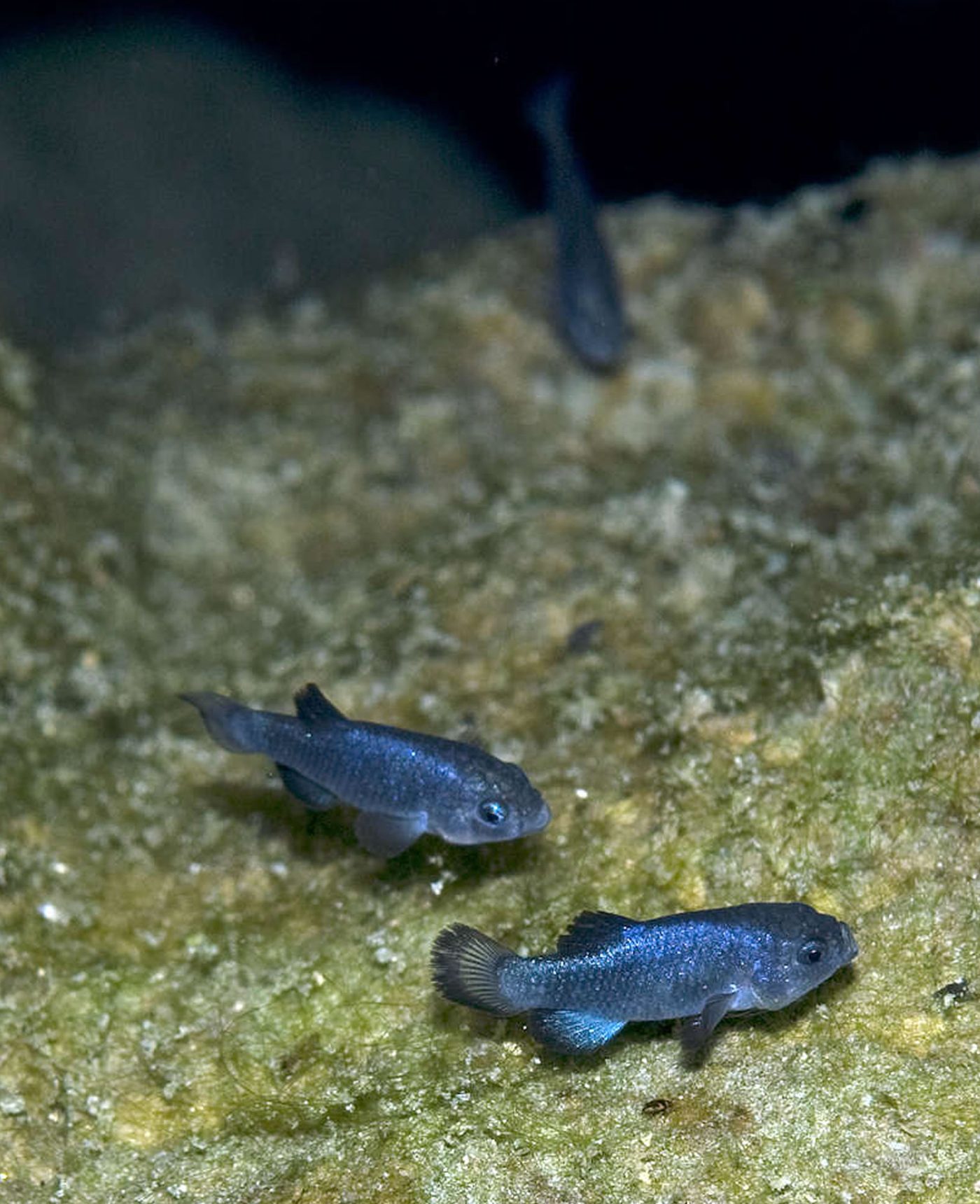
Devils Hole pupfish spawn on a single sunlit rock shelf in a water-filled cavern whose depths have never been mapped. The population fell to 35 fish in 2013; protected groundwater, supplemental feeding and a $4.5m replica refuge tank have lifted counts to their highest in 25 years.
What's killing them
- Groundwater extraction
- Flash floods and earthquakes
- Food scarcity on one shallow shelf
- Smallest range of any vertebrate
Who's fighting for them
 U.S. Fish & WildlifeUnited States Fish & Wildlife Service Donate
 IUCN Red ListInternational Union for Conservation of Nature — Species Survival Commission Donate
Logos are the property of their respective organisations and link to their official sites.
Quick answers
How many Devils Hole Pupfish are left in the world?
Approximately ~190 (2024 count). The Devils Hole Pupfish (Cyprinodon diabolis) is listed as Critically Endangered on the IUCN Red List, and their population trend is recovering. Figures are estimates compiled from the IUCN Red List and conservation organisations.
Where does the Devils Hole Pupfish live?
The Devils Hole Pupfish is found in United States (North America). Their habitat: A single 3m × 22m limestone pool in the Mojave Desert, Nevada.
Why is the Devils Hole Pupfish endangered?
The main threats to the Devils Hole Pupfish are: Groundwater extraction; Flash floods and earthquakes; Food scarcity on one shallow shelf; Smallest range of any vertebrate.
Who is working to save the Devils Hole Pupfish?
Organisations working on Devils Hole Pupfish conservation include United States Fish & Wildlife Service; International Union for Conservation of Nature — Species Survival Commission.
Where they live
Devils Hole, Death Valley National Park, Nevada · United States · North America — Approximate range. Click the map to zoom.