№ 21 of 100
Cat Ba Langur
Trachypithecus poliocephalus
Golden-headed and cliff-dwelling, this langur fell to 40 animals on one Vietnamese island — and is slowly climbing back.
- Range
- Vietnam
- Region
- Asia
- Habitat
- Limestone karst cliffs and forest of Cat Ba Island, Ha Long Bay
Field notes
- Weight
- ≈9 kg
- Size
- ≈50 cm (head-body)
- Lifespan
- ≈25 years
- Diet
- Folivore
- Family
- Cercopithecidae
- Order
- Primates
The story
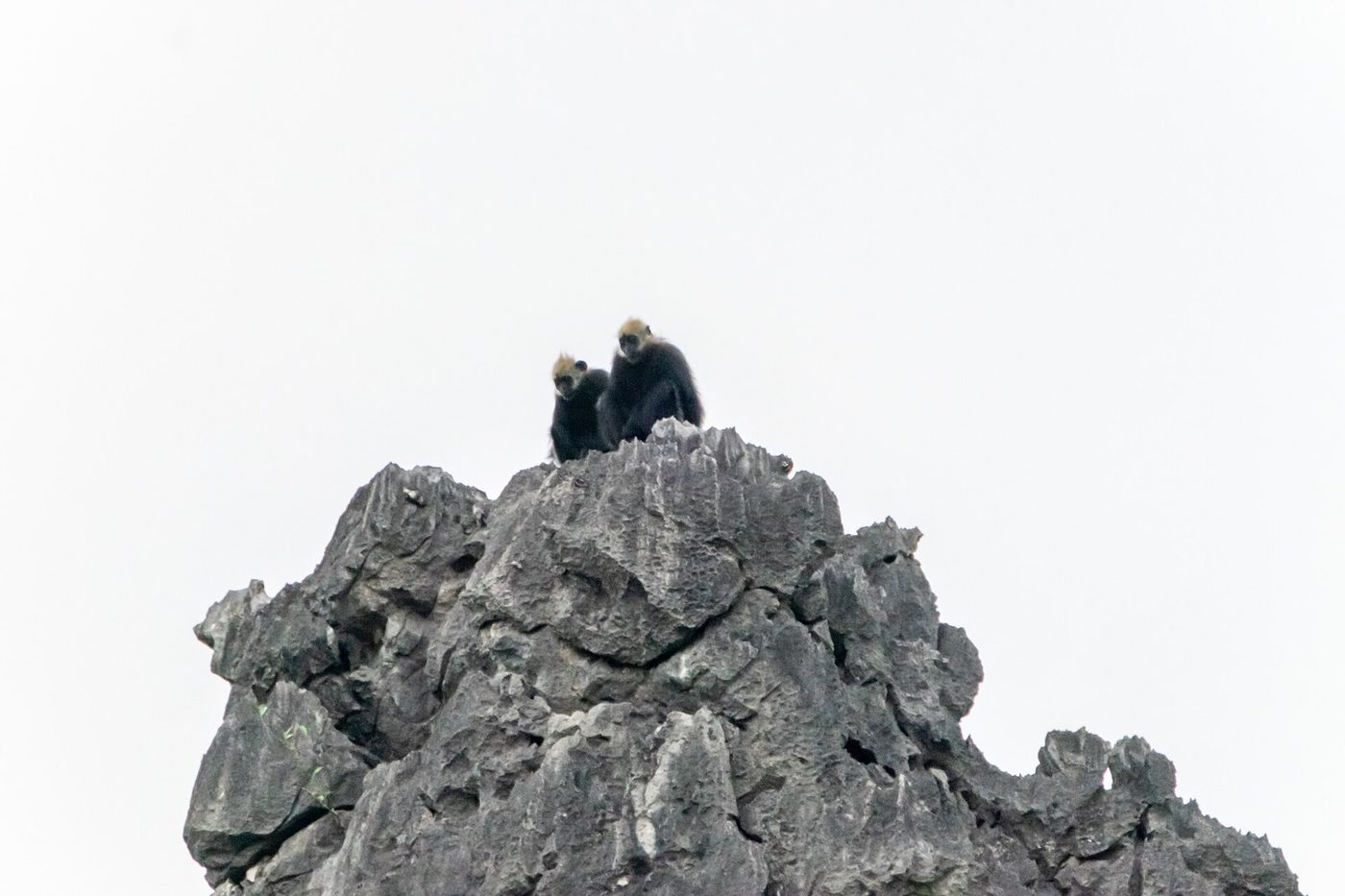
The Cat Ba langur sleeps in caves on sheer limestone cliffs rising from Ha Long Bay's emerald waters. Poaching cut the population to around 40 by 2000; two decades of guard patrols and community protection have roughly doubled it, though every birth still counts.
What's killing them
- Historic poaching for traditional medicine
- Tourism development
- Tiny single-island population
Who's fighting for them
 Fauna & FloraFauna & Flora International Donate
 Re:wildRe:wild — Global Wildlife Conservation Donate
 IUCN Red ListInternational Union for Conservation of Nature — Species Survival Commission Donate
Logos are the property of their respective organisations and link to their official sites.
Quick answers
How many Cat Ba Langur are left in the world?
Approximately ~85. The Cat Ba Langur (Trachypithecus poliocephalus) is listed as Critically Endangered on the IUCN Red List, and their population trend is recovering. Figures are estimates compiled from the IUCN Red List and conservation organisations.
Where does the Cat Ba Langur live?
The Cat Ba Langur is found in Vietnam (Asia). Their habitat: Limestone karst cliffs and forest of Cat Ba Island, Ha Long Bay.
Why is the Cat Ba Langur endangered?
The main threats to the Cat Ba Langur are: Historic poaching for traditional medicine; Tourism development; Tiny single-island population.
Who is working to save the Cat Ba Langur?
Organisations working on Cat Ba Langur conservation include Fauna & Flora International; Re:wild — Global Wildlife Conservation; International Union for Conservation of Nature — Species Survival Commission.
Where they live
Cát Bà National Park, Cát Bà Island, Vietnam · Vietnam · Asia — Approximate range. Click the map to zoom.